Traditional Row Gardening
The Way Grandma Did it
(And Why She Was Right)
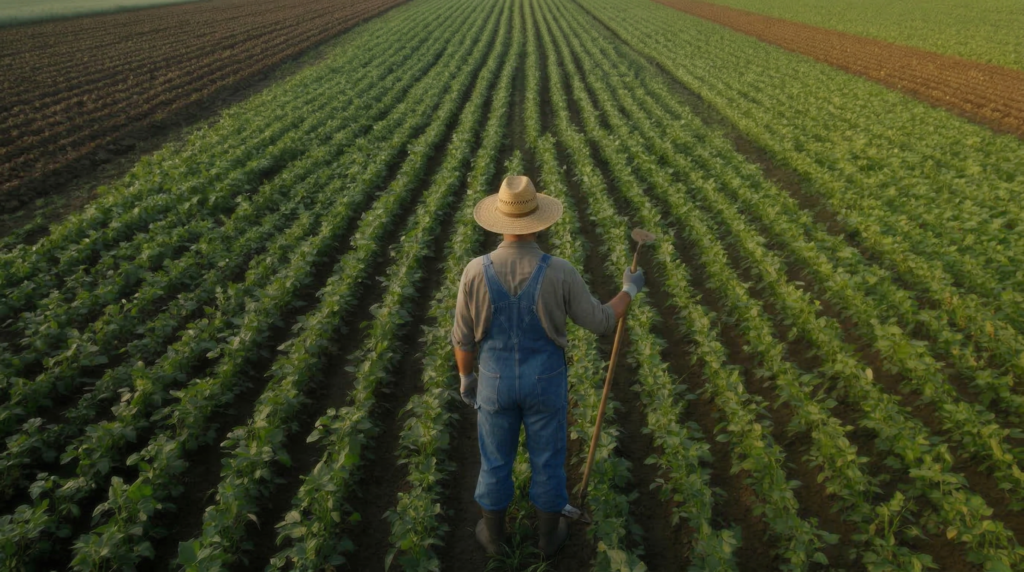
When you’ve spent your life on a farm, moving from the home place to your own and back again, you develop a deep respect for the “big garden.” Traditional row gardening is the method that fills our country’s pantries. It’s the practice of planting seeds in long, straight lines directly into the processed earth.
While there are plenty of modern ways to grow a vegetable, the row garden remains the gold standard for anyone looking to harvest in bulk. It’s a method built on the philosophy of “room to grow,” and when done right, it’s a beautiful sight to behold.
How It’s Done: Starting with the Soil
The heart of row gardening isn’t the seed—it’s the dirt. Because you are planting directly into the ground Mother Nature provided, the first step is always preparation.
- Breaking the Ground: You’ll start by tilling or plowing the area to loosen the soil. This turns under any winter weeds and wakes up the earth. No tractor? My advice is to choose another gardening method, or break out the hand tiller and hoe because you’ve got a “hard row to hoe” in the very real sense of the phrase.
- The String Line: This is my “bossy” tip for the day: don’t wing it. Stretch a piece of twine between two stakes to mark your row. It keeps your path straight, which makes every chore that follows—from watering to weeding—ten times easier.
- Mounding or Furrowing: Depending on your soil, you might pull the dirt up into a slight “hill” (great for drainage if you have heavy clay) or a “trench” (perfect for thirsty seeds in dry spells).
- Spacing: You generally want your rows about 30 to 36 inches apart.
The Benefits of Traditional Row Gardening
The biggest “pro” for row gardening is efficiency of scale. If you’ve got a big family or you’re the type who spends August hovering over a canning kettle, you need a lot of produce at once. Traditional row gardening is also typically used for “Market Gardens.”
- Tractor and Tool Friendly: Row gardening is designed for equipment. Whether it’s a grandaddy-sized tractor or a simple walk-behind tiller, the wide lanes mean the machine does the heavy lifting, saving your back and your knees.
- Low Cost of Entry: You don’t have to buy lumber for boxes or bags of expensive potting soil. You’re using the land you already have, which makes it the most budget-friendly way to plant a massive harvest.
- Deep Root Growth: Without the “walls” of a container or a raised bed, plant roots can dive deep into the subsoil to find moisture during those scorching summer droughts.
While these benefits are great, there is one thing you should know. Growing in the dirt “successfully” requires more than dirt.
It requires good dirt. GREAT dirt and the right fertilizer and the right amount of water. It is not “plant it and forget it.” It’s work to plant it then work to grow it and keep it alive then work more to harvest it.
Soil testing is a must, and providing the right living conditions for your plants is also a must.
Who is This Method Best For?
Traditional Row gardening is a specific lifestyle choice for the gardener. It’s not for everyone, but it’s a perfect fit for a certain kind of grower.
The Space-Rich Gardener: If you’re lucky enough to have a quarter-acre or more of open, sunny land, rows are the most logical way to fill it. It utilizes the natural landscape and keeps the garden feeling like a true extension of the farm.
The “Canner and Freezer” Crowd: If your goal is to put up 50 quarts of green beans or enough corn to last until Christmas, you need the volume that only long rows can provide. You can plant 50 feet of one crop in a single afternoon.
The Equipment Owner: If you enjoy the mechanical side of farming—tinkering with the tiller or or getting the tractor out of the shed—row gardening gives you a reason to use those tools. It turns gardening into a structured, rhythmic task.
The “Dirt Therapy” Seekers: There is a certain peace that comes with standing at the head of a 60-foot row. It’s a workout for the body and a rest for the mind. If you find joy in the “big picture” of a farm landscape, the traditional row garden will feel like home.
Row gardening is for you if:
- You have a large, flat area with plenty of sun.
- You own (or can borrow) a tiller or a small tractor.
- You’re planning on canning, freezing, or feeding the whole church.
- You don’t mind a little “dirt therapy” and some sweat on your brow.
- You need lots of produce to sell or to create other products to sell.
This is the “old school” method. It’s long, straight lines of turned earth, spaced out just enough to walk through—or, if you’re like me, spaced out just enough to get the tiller or the tractor through without taking out your prize peppers.
It’s how my daddy did it, how his daddy did it, it’s how his daddy before him did it and how I started out on mine and Jeremy’s farm before deciding raised beds were more in-line with my health issues. Have I mentioned that Lupus SUCKS??
But I don’t complain.
Traditional Row Gardening is a commitment, but there is something soulful about looking down a long, straight row of dark earth and seeing those first green sprouts popping up in a perfect line. It’s a connection to the land that you just can’t get from a plastic pot.