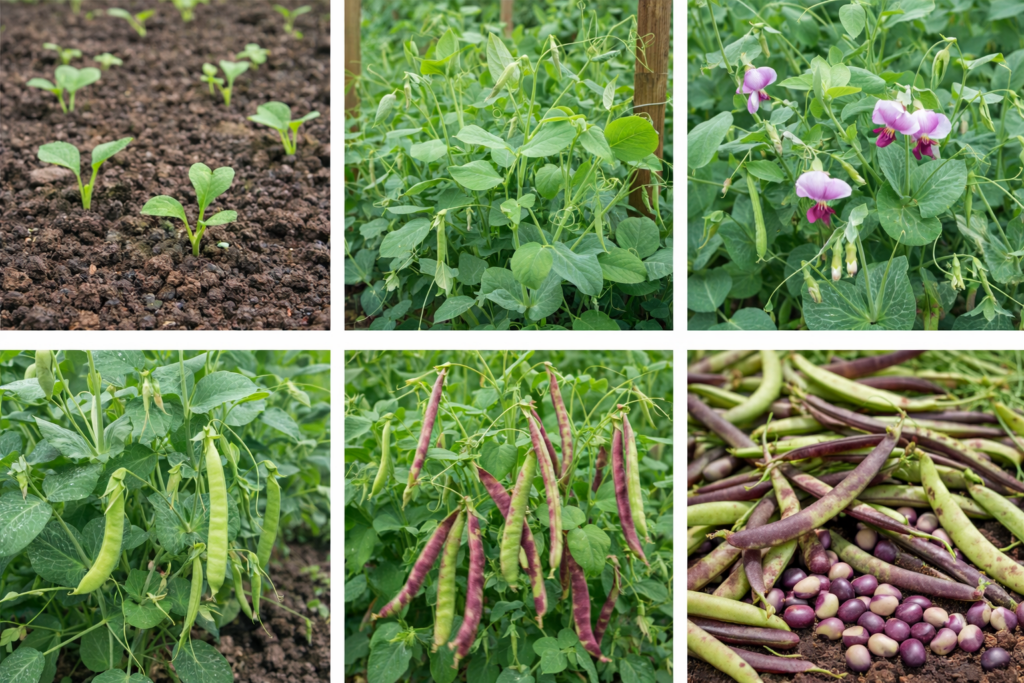
How to Grow Southern Peas
General Information
| Scientific Name: | Vigna unguiculata |
| Common Names: | Southern peas, cow peas, black-eyed peas, purple hull peas, cream peas, crowder peas |
| Plant Family: | Fabaceae |
| Vegetable Type: | Warm season legume |
| Popular Varieties: | Black-eyed peas, purple hull pinkeye peas, cream peas, crowder peas |
Know Before You Grow
| Growing Zones: | 7 to 11 |
| Crops per Year: | 1 crop per year, but if you have a really long season, you may get 2 crops with successive plantings. |
| Plants Per Person: | 10 to 15 feet of row per person. If preserving, make that 20 to 30 feet of row per person. |
| Frost Hardy: | No |
| Heat Tolerant: | Yes. This is one of southern peas selling points…other than their awesome flavor. |
| Stratification: | No |
| Scarification: | No |
| Resistances: | Their only real resistance is to heat. |
Rotation Schedule
Starting from Seed
| When: | Direct sow Southern peas. |
Garden Bed Prep
| Soil: | Loose, well-draining soil |
| pH: | 5.8 to 6.8 |
| Soil Depth: | 8 to 10 inches |
| Trellis: | Not for bush varieties, which most southern peas are. |
| Fertilizer: | Southern peas are light to moderate feeders. Work 1 to 2 inches of compost into the soil, and if the soil is poor, apply a light balanced fertilizer. Do NOT heavily fertilize with high-nitrogen fertilizer. |
Transplanting
| When: | Direct sown |
Direct Sowing
| When: | After all danger of frost has passed and the soil is truly warm. |
| Depth: | 1 to 1 1/2 inches |
| Spacing: | 3 to 4 inches apart. Rows 24 to 36 inches apart. |
| Water: | Keep soil evenly moist until germination and establishment. Avoid making the soil soggy. |
| Light: | Full sun |
| Soil Temperature: | 70° to 95°F |
| # in Sq. Ft. Planting: | 9 per square foot |
| Germination: | 5 to 10 days |
Growing Care
| Soil pH: | 5.8 to 6.8 |
| Fertilizer/Feed: | None beyond bed prep |
| Days to Maturity: | 60 to 90 days |
| Water: | Do not get the soil soggy, but do not let it get dry either. Once established, southern peas can handle dry conditions better than most beans or peas, but they produce better if the soil has steady moisture. |
| Pruning: | Just remove anything that is dead, diseased or damaged. |
| Mulching: | 1 to 2 inches, then more later if needed to keep moisture in and weeds out. |
| Pollination: | Self-pollinating |
Companions & Antagonists
| Plant Family: | Antagonists: |
| corn | onions |
| cucumbers | garlic |
| melons | leeks |
| radishes and carrots | – |
Attracts & Repels
| Attracts: | Repels: |
| bees and other flower visitors | Nothing |
Pests & Disease
| Pests: | Disease: |
| aphids | Powdery mildew |
| stink bugs | root rot |
| cowpea curculio | fusarium wilt |
| leafhoppers | mosaic viruses |
| spider mites | damping off |
| cutworms | – |
Seed Saving
| When: | When mature and dry on the vine. |
| Method: | Pick and shell the dried pea pods before rain damages them. Dry thoroughly if needed. |
| Storage: | store in a cool, dry place |
Harvest Time
| When: | Shelling Peas: Harvest when pods are full and peas are developed, but still tender. Dry Peas: Leave on the plant until they dry down well. For Snaps: This doesn’t really apply, since southern peas are almost always grown for shelling. |
| How: | Pick or snip the pea from the vine. |
| Storing: | Southern peas need to be cooked or preserved within a few days of being harvested. |
| Preservation Methods: | Canning, freezing, drying |
Troubleshooting
| Lots of vine and leaves, not many pods: | Usually too much nitrogen or too much shade. |
| Flowers but poor pod set: | Could be heat stress, drought stress during flowering or general plant stress. |
| Seeds rot in the ground: | Usually soil was too cold or too wet |
| Plants are stunted: | Could be poor soil, root problems, crowding, or planting too early into cool ground. |
| Leaves Yellowing: | Could be poor drainage, root trouble, nutrient imbalance or disease |
| Pods sparse or poorly filled: | Could be drought stress, low vigor or variety timing |
| Plants look fine but produce weakly: | Could be overfeeding with nitrogen, not enough sun or poor growing conditions early on. |