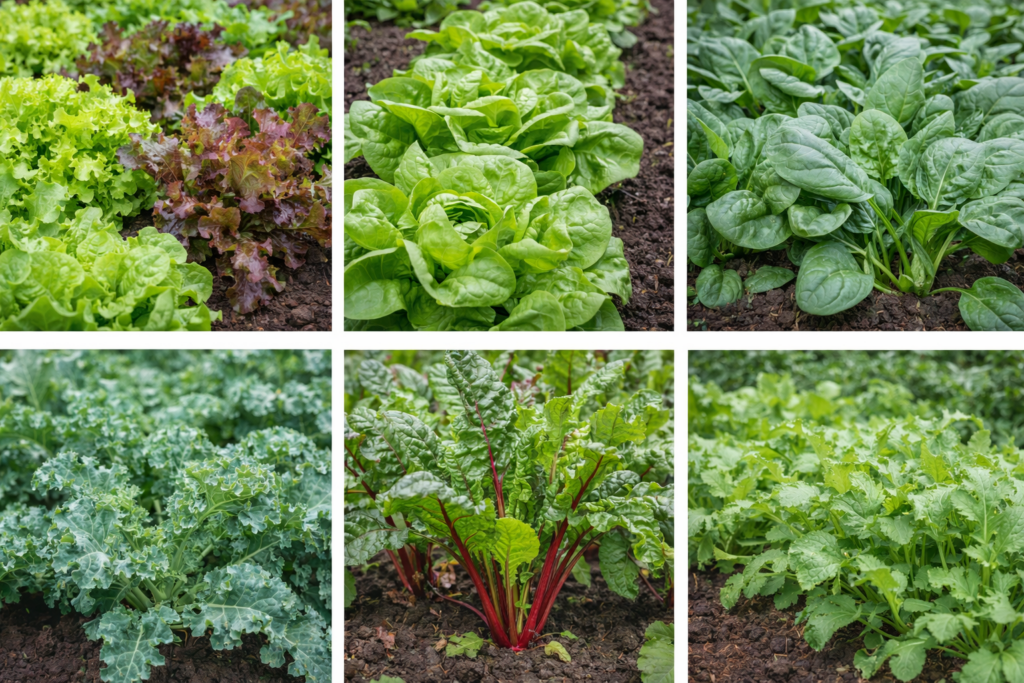
How to Grow Leafy Greens
General Information
| Scientific Name: | Varies by crop: Lactuca sativa (lettuce), Spinacia oleracea (spinach), Beta vulgaris subsp. cicla (Swiss Chard), Brassica rapa (bok choy, tatsoi), Brassica juncea (Mustard Greens), and Brassica oleracea (Kale, collards). |
| Plant Family: | Varies by crop, but most common leafy greens fall into the lettuce, amaranth, goosefoot or brassica families. |
| Vegetable Type: | Cool season leafy vegetables grown for their edible leaves. |
| Popular Varieties: | Lettuce, spinach, swiss chard, kale, collards, mustard greens, bok choy, arugula |
Know Before You Grow
| Growing Zones: | 2 to 11, depending on season and timing. |
| Crops per Year: | 1 to 3+ |
| Plants Per Person: | Fresh Eating: 4 to 8 per person, or a short row/repeated sowing Preserving: Usually not grown heavily for preserving except greens like kale, collards, mustard and spinach. However, your chickens and other livestock will enjoy some dehydrated leaves if you’ve got ’em. |
| Frost Hardy: | Many are, especially spinach, kale, collards, mustard and some asian greens. |
| Heat Tolerant: | Some better than others. Swiss chard and collards handle heat better than lettuce and spinach. |
| Stratification: | No |
| Scarification: | No |
Rotation Schedule
| Schedule: | 2 or 3 year rotation is a good general rule. |
| Follow ->: | Legumes, onions, garlic, fruiting crops |
| <-Following: | Beans, peas, tomatoes, peppers and cucumbers. |
Starting from Seed
| When: | Zones 2 – 5: Start indoors 4 to 6 weeks before last frost Zones 6 – 7: Start indoors 3 to 5 weeks before last frost Zones 8 – 11: Direct Sow only at the appropriate time (see Direct Sowing section). |
| Soil: | Seed starting mix |
| Depth: | 1/8″ to 1/4″ for most leafy greens |
| Water: | Keep evenly moist, never crusted or soggy. |
| Germination: | 4 to 10 days |
| Up Pot: | Usually not needed unless you’ve started too early or grown in cell trays too long. |
| Harden Off: | 5 to 7 days |
| Light: | 14 to 16 hours per day |
| Humidity: | Moderate. Remove dome after sprouting. |
| Soil Temperature: | 45°F to 75°F |
| Heat Mat: | No |
Garden Bed Prep
| Soil: | Loose, fertile, well draining soil rich in organic matter. |
| pH: | 6.0 to 7.0 |
| Soil Depth: | 6 to 8 inches minimum…8 to 10 inches is better. |
| Trellis: | No |
| Fertilizer: | Leafy greens like fertile soil and appreciate nitrogen for steady leaf production, but don’t overdo it. |
| Compost: | New: Work 3 to 5 inches into the top 6 to 8 inches of soil. Existing: About 1 inch mixed in lightly to the top layer. Containers: Mix compost into potting mix, but do not use straight compost alone. |
Transplanting
| When: | Transplant in cooler weather when seedlings are sturdy enough to handle it. |
| How: | Harden off first. Transplant gently, disturbing the roots as little as possible. |
| Depth: | Plant at the same depth they were growing in the pot. |
| Spacing: | Depends on the crop: Leaf Lettuce: 6 to 8 inches Head Lettuce: 10 -12 in Spinach: 3 – 6 in Swiss Chard: 6 – 12 in Kale: 12 – 18 in Collards: 12 – 18 in Mustard Greens: 6 – 12 in Bok Choy: 6 – 12 in Arugula: 4 – 6 in |
| Mulch: | Optional for tiny greens, helpful for larger ones. |
| Water: | Water in well after transplanting. |
Direct Sowing
| When: | Zones 2-5: Sow in early spring as soon as the soil can be worked, then again in late summer for fall. Zones 6-7: Sow around last spring frost, then again 6 to 10 weeks before the first fall frost. Zones 8-9: Sow from fall through winter and into very early spring. Zones 10-11: Sow during the coolest months of the year. |
| Depth: | Sow shallowly, usually 1/8″ to 1/4″ deep. |
| Spacing: | Depends on the crop: Leaf Lettuce: 6 to 8 inches Head Lettuce: 10 -12 in Spinach: 3 – 6 in Swiss Chard: 6 – 12 in Kale: 12 – 18 in Collards: 12 – 18 in Mustard Greens: 6 – 12 in Bok Choy: 6 – 12 in Arugula: 4 – 6 in |
| Water: | Keep the soil bed moist. |
| Light: | Full sun, unless you live in a hotter region, then afternoon shade will be appreciated. |
Growing Care
| Soil pH: | 6.0 to 7.0 |
| Fertilizer/Feed: | At Planting: Add compost and if needed, a balanced fertilizer. During active growth: Feed lightly with nitrogen if leaves pale or growth slows |
| Days to Maturity: | Baby Greens: 20-35 days Leaf lettuce: 30-50 days Head lettuce: 55-75 days Spinach: 35-50 days Swiss chard: 50-65 days Kale: 50-75 days Collards: 60-85 days Mustard Greens: 30-50 days Bok Choy: 30-50 days Arugula: 20-40 days |
| Water: | About 1 inch of water per week. More will be needed in raised beds or in windy weather. As a rule, keep the soil consistently moist for tender leaves. |
| Pruning: | Harvest outer leaves first on cut and come again types. Remove any dead, damaged, diseased or yellowing leaves, but be careful not to harvest too much of the plant at once if you want to continue to harvest it. |
| Pollination: | Not needed for the leaves. Pollination only matters if growing for seed. Then these plants are insect/bee pollinated. |
Companions & Antagonists
| Plant Family: | Antagonists: |
| Radishes | None |
| Beets | – |
| Carrots | – |
| Onions | – |
| Garlic | – |
| Strawberries | – |
| Dill, cilantro | – |
Attracts & Repels
| Attracts: | Repels: |
| Bees and beneficial insects if allowed to flower. | Nothing |
| Hoverflies | – |
Pests & Disease
| Pests: | Disease: |
| Aphids | Downy mildew |
| Slugs | Damping off |
| Snails | Leaf spot |
| Flea beetles | Powdery mildew |
| Leaf miners | – |
| Cabbage worms | – |
Seed Saving
| When: | After plants bolt, flower and set seed. |
| Method: | Let seed heads mature and dry as much as possible before collecting in a dry, brown paper bag. |
| Storage: | In envelopes or airtight containers |
Harvest Time
| When: | Harvest when leaves are young and tender, or wait for full size depending on the crop. |
| How: | Snip outer leaves, cut whole heads, or harvest the full plant. |
| What: | Leaves |
| Curing: | None |
| Storing: | Most leafy greens keep about 5 to 10 days refrigerated. |
| Preservation Methods: | Refrigeration, freezing, dehydrating |
Troubleshooting
| Yellowing Leaves: | Nutrient deficiency, overwatering, underwatering or age. |
| Wilting: | Heat, thirst, root stress, transplant shock |
| Bitter taste: | Often heat, age or bolting |
| Bolting: | Triggered by heat, length of day or stress. |
| Holes in leaves: | Usually slugs, flea beetles, cabbage worms or other chewing pests. |