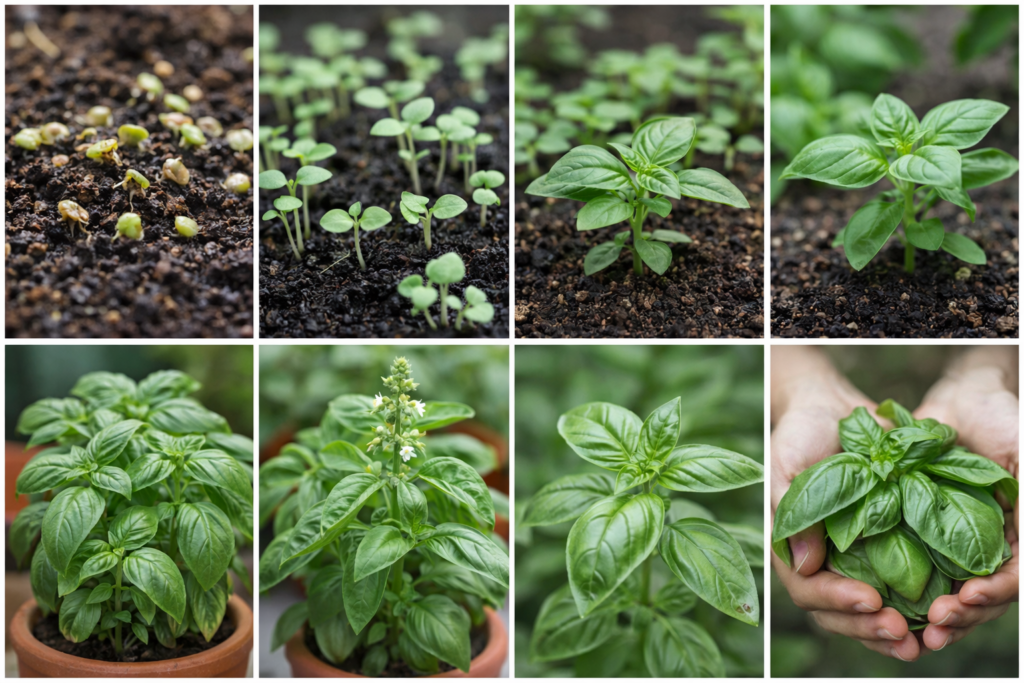
How to Grow Basil
General Information
| Botanical Name: | Ocimum basilicum |
| Common Names: | Basil, Sweet Basil |
| Plant Family: | Lamiaceae |
| Type: | Annual; Culinary; Aromatic; Medicinal; Warm-Season Herb |
| Our Favorite Varieties: | Sweet Basil, Italian Basil, Lemon Basil, Thai Basil, |
Know Before You Grow
| Growing Zones: | 2 – 11 |
| Frost Hardy: | No |
| Heat Tolerant: | Yes, as long as you don’t let it go dry. |
| Stratification: | No |
| Rows, Beds, Containers: | Yes to all three. Basil grows well in rows, raised beds and containers…happily if all other conditions are met. |
Starting from Seed Indoors
| When: | Start indoors about 4 to 6 weeks before the last frost. |
| Soil: | Seed starting mix |
| Depth: | 1/8″ to 1/4″ |
| Water: | Keep soil evenly moist, but never soggy. |
| Germination: | 5 to 14 days |
| Up Pot: | Pot up when seedlings have several true leaves and need more root room before transplanting. |
| Light: | 14 to 16 Hours under grow lights each day. |
| Soil Temperature: | 65°F to 80°F, with best germination around 70°F |
| Heat Mat: | Yes |
| Harden Off: | Yes. 7 to 10 days, increasing exposure each day. |
Row, Bed, Container Prep
| Soil: | Fertile, well-drained soil. A light weight potting mix for containers. |
| pH: | 6.0 to 7.0 |
| Soil Depth or Pot Size: | At least 8 to 12 inches of workable soil, or a pot about 6 to 8 inches deep an 8 to 10 inches wide per plant. |
| Trellis: | None |
| Fertilizer/Feed: | Mix compost into the soil before planting. Basil does best in nutrient-rich soil. feed lightly, not heavily. |
| Compost: | Mix in several inches of aged compost or rich organic matter before planting. |
Transplanting/Up Potting
| When: | After danger of frost has passed and the weather is reliably warm. |
| How: | Transplant carefully without disturbing roots more than necessary. Harden off first. |
| Depth: | Plant at the same depth it was growing in the cell or pot. This is the standard transplant practice. |
| Spacing: | 6 to 12″ apart minimum; 10 – 18″ is a common full-size spacing range. |
| Mulch: | Optional light mulch once soil is warm. |
| Water: | Water in well after transplanting and keep evenly moist while while it establishes. |
Direct Sowing
| When: | After danger of front has passed and the soil is warm. |
| Depth: | 1/8″ to 1/4″ |
| Spacing: | Sow thickly, then thin to 4 to 8″ for smaller plants or 10 to 18″ for larger plants. |
| Water: | Keep the seed zone evenly moist until germination and establishment. |
| Light: | Full Sun |
| # in Sq. Ft. Planting: | 1 for large plants; 4 for smaller plants harvested often. This is a practical square foot conversion from common spacing ranges. |
Growing Care
| Fertilizer/Feed: | Feed lightly. Too much fertilizer can reduce flavor quality. Rich soil with compost is usually enough, with occasional light feeding if growth is pale or slow. |
| Days to Maturity: | About 60 – 90 days from seed, depending on variety and harvest stage. |
| Water: | About 1 to 1 1/2 inches of water per week; keep evenly moist, but not soggy. |
| Pruning/Harvesting: | Pinch tips often to encourage branching. Remove flower buds if you want continued leaf production. |
| Mulching: | Light mulch can help hold moisture once soil is warm. |
| Pollination: | Not needed for leaf production. Basil flowers will attract pollinators if allowed to bloom. |
Companions & Antagonists
| Plant Family: | Antagonists: |
| Tomatoes | None |
| Peppers | – |
| Beans | – |
| Squash | – |
Attracts & Repels
| Attracts: | Repels: |
| Pollinators when flowering, bees and butterflies. | Mosquitoes |
| – | Aphids |
| – | White flies |
| – | Beetles |
Pests & Disease
| Pests: | Disease: |
| Aphids | Downy Mildew |
| Japanese Beetles | Fusarium Wilt |
| Slugs | Damping Off |
| Spider Mites | Leaf Spots |
Seed Saving
| When: | When flowers dry and seed heads mature on the plant. |
| Method: | Let flowers brown and dry, then collect and dry the seed fully before storage. The paper bag method usually works well. |
Harvest Time
| When: | Once plants are well established, regular harvesting should begin. |
| How: | Pinch or snip stems just above a leaf pair to encourage branching. |
| What: | Leaves and tender stem tips |
| Storing: | Fresh basil is best used quickly. Short term storage at room temperature in water is often better than cold storage. Dry only if needed. |
| Preservation Methods: | Drying, freezing, freeze drying, pesto, herb butter, infused vinegar. |
Medicinal Uses:
| Traditionally Used for: | Used for various systems of digestive complaints, colds, coughs, fever headaches, stress. In some cultures, it is a symbol of love and protection. |
| Forms: | Infusion/tea, fresh herb, dried herb, infused oil, poultice, tincture. |
| Dosage or Application: | Traditional dosages and applications: 2 to 6 grams of basil leaves per day. Applied topically in infused oils or poultices for bug bites, rashes, irritation or itching. When used as a tincture, a few drops in water once or twice a day. |
| NOTICE: | This information is based on historical/traditional fact. It is for educational purposes only. Lowe Bridges Farm will not be held liable for your use of this information. Your use of this information and the results thereof is your responsibility, and yours alone. |
Culinary Uses:
| Flavor Profile: | Sweet, aromatic, slightly peppery, sometimes clove-like depending on the variety. |
| Best Used In: | Tomatoes, sauces, soups, salads, meats, cheese dishes, pesto, butters, vegetables. |
| Forms: | Fresh leaf, dried leaf, whole leaf, chopped, pesto, infused oil. |
| NOTE: | As you can see, Basil is more than just a culinary herb. Therefore, if a certified herbalists or naturopath has prescribed the use of basil in medicinal forms, do not assume that basil that is cooked in food will provide the same benefits. It most likely will not. |
As an Aromatic:
| Used for: | Fragrance, sachets, herb blends, garden scent, soaps, cleansers. |
| How: | Use fresh or dried leaves in bundles, sachets, or in products, such as lotions and soaps. |
Troubleshooting
| Leggy Plants: | Not enough light or not enough pinching. |
| Yellow Leaves: | Often overwatering, poor drainage, or nutrient stress. |
| Blackened leaves/stems: | Cold damage. Basil is frost tender. |
| Bitter Flavor: | Usually flowering or heat stress. |
| Small plants: | Cool weather, poor fertiity, root crowding, or low sun. |
| Wilting in wet pot: | Possible Root Rot |
| White/Yellow leaf spotting with grayish underside: | Probably downy mildew. |