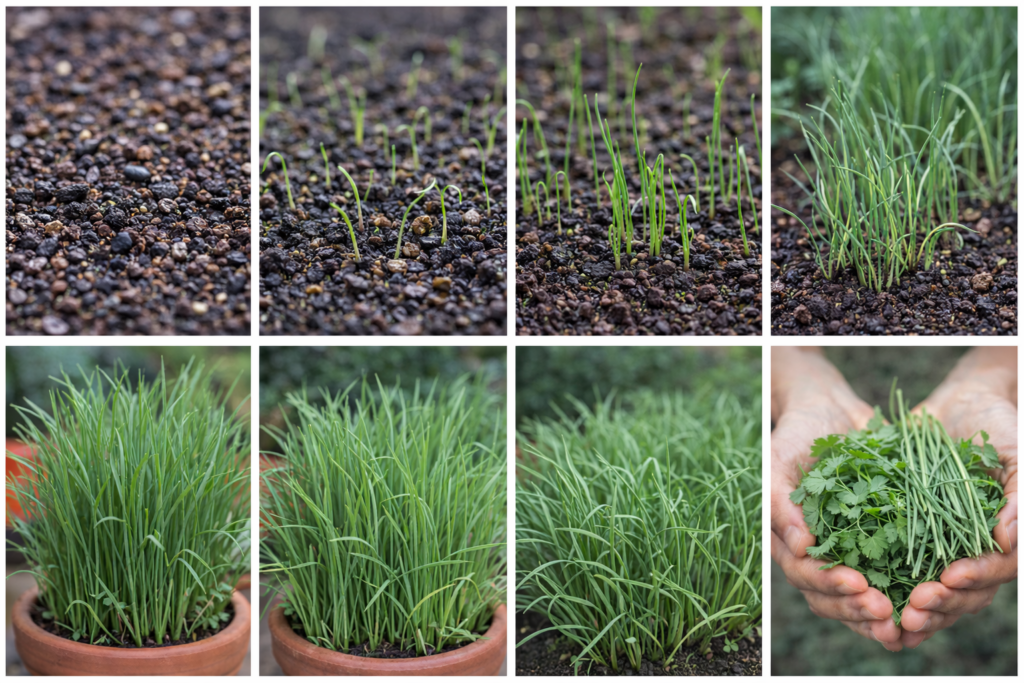
How to Grow Chives
General Information
| Botanical Name: | Allium schoenoprasum |
| Common Names: | Chives, flowering onion, wild chives |
| Plant Family: | Amaryllidaceae |
| Type: | Culinary; Medicinal; Aromatic; Cool Season to Mild Warm Season Grower depending on the climate. |
| Our Favorite Varieties: | Grolau, Kobold, Yellow Chives Flowering Chives |
Know Before You Grow
| Growing Zones: | 3 – 9 |
| Frost Hardy: | Yes. Chives are a hardy perennial. |
| Heat Tolerant: | Moderate. They handle warmth, but grow best in cooler conditions and with moisture. |
| Stratification: | No |
| Rows, Beds, Containers: | Yes to all three. |
Starting from Seed
| When: | Start indoors 6–10 weeks before last frost, or direct sow outdoors after frost danger passes and soil can be worked. |
| Soil: | Seed-starting mix |
| Depth: | 1/4″ |
| Water: | Keep evenly moist, not soggy |
| Germination: | 7–14 days |
| Up Pot: | Up pot when seedlings are large enough to handle and need more root room. |
| Light: | 14–16 hours under grow lights indoors; full sun to part shade outdoors |
| Soil Temperature: | 65°F–70°F |
| Heat Mat: | Helpful, but not required. |
| Harden Off: | Yes, 7–10 days before transplanting outdoors. |
Row, Bed, Container Prep
| Soil: | Average, well-drained soil |
| pH: | 6.0–7.0 is a good working range for garden chives. |
| Soil Depth or Pot Size: | 6–8 inches of workable soil is enough; one clump does well in an 8–10 inch pot or larger |
| Trellis: | No |
| Fertilizer/Feed: | Light feeding is enough. Compost-rich soil is usually sufficient, with a light balanced feed if growth is weak. |
| Compost: | Mix in compost before planting |
Transplanting/Up Potting
| When: | Transplant after frost danger passes, or once seedlings are sturdy enough and outdoor conditions are suitable. |
| How: | Transplant gently, keeping seedling clusters intact if grown that way. |
| Depth: | Same depth it was growing before. |
| Spacing: | 2–8 inches apart depending on how large you want the clump; rows 18 inches apart |
| Mulch: | Light mulch is fine once established |
| Water: | Water in well after transplanting and keep evenly moist while establishing |
Direct Sowing
| When: | In spring after frost danger passes and soil can be worked; later sowings can be made for continued harvest. |
| Depth: | 1/4″ |
| Spacing: | Place 4–6 seeds every 6″ or 1–2 seeds per inch, then thin to 2–3 plants every 2–8″ |
| Water: | Keep the seed zone evenly moist until germination and establishment |
| Light: | Full sun to part shade |
| # in Sq. Ft. Planting: | 4 for roomy clumps; up to 9 for smaller clumps harvested often. |
Growing Care
| Fertilizer/Feed: | Feed lightly if needed. Rich, composted soil is usually enough. |
| Days to Maturity: | About 80–90 days from seed for a good harvestable clump; sooner from divisions or established plants. |
| Water: | Keep evenly moist, especially during active growth. Established chives tolerate some drought, but best growth comes with regular moisture. |
| Pruning/Harvesting: | Harvest once plants are about 6 inches tall by clipping leaves at the base. Leaves can be cut several times per season. Deadhead flowers if you do not want self-seeding. Divide mature clumps every 3–4 years |
| Mulching: | Optional light mulch to conserve moisture |
| Pollination: | Not needed for leaf production. Flowers attract bees and other pollinators |
Companions & Antagonists
| Plant Family: | Antagonists: |
| Carrots | None |
| Tomatoes | – |
| Brassicas | – |
| Strawberries | – |
Attracts & Repels
| Attracts: | Repels: |
| Bees and other pollinators when flowering. | Often included in mixed plantings because its onion scent may help confuse some pests |
Pests & Disease
| Pests: | Disease: |
| Aphids | Root Rot |
| Onion Thrips | – |
| Other sap-sucking pests. | – |
Seed Saving
| When: | After flowers dry and seed heads mature on the plant |
| Method: | Let flower heads dry, cut them, dry further if needed, then shake or rub out the seed. |
Harvest Time
| When: | Once plants are at least 6 inches tall and established. |
| How: | Clip leaves at the base rather than cutting halfway up the blade. |
| What: | Leaves and flowers are both edible |
| Storing: | Best used fresh; short-term refrigeration works, and leaves can also be dried |
| Preservation Methods: | Drying, freezing, herb butter, compound spreads, vinegar infusions |
Medicinal Uses:
| Traditionally Used for: | Traditionally used like other alliums for digestive support and as a mild tonic herb in folk use. |
| Forms: | Fresh herb, dried herb, infusion, vinegar infusion |
| Dosage or Application: | Traditional household use is mostly culinary or food-as-medicine style rather than strongly standardized medicinal dosing |
| NOTICE: | This information is based on historical/traditional fact. It is for educational purposes only. Lowe Bridges Farm will not be held liable for your use of this information. Your use of this information and the results thereof is your responsibility, and yours alone. |
Culinary Uses:
| Flavor Profile: | Mild onion flavor |
| Best Used In: | Potatoes, eggs, soups, salads, wraps, vegetables, dips, butter, cheese dishes |
| Forms: | Fresh leaves, chopped, whole blades, flowers, dried |
As an Aromatic:
| Used for: | Fresh green onion scent and light savory brightness |
| How: | Fresh in kitchen herb use, herb vinegars, butter blends, bouquets, and edible flower garnish |
Troubleshooting
| Weak thin growth: | Needs division, more sun, or a light feeding |
| Yellowing: | Often overwatering, poor drainage, or an aging clump |
| Poor regrowth after cutting: | Cut at the base and give the clump time to rebound |
| Flopping or crowded clump: | Divide mature clumps every 3–4 years |
| Too many volunteer seedlings: | Deadhead flowers before seeds mature |