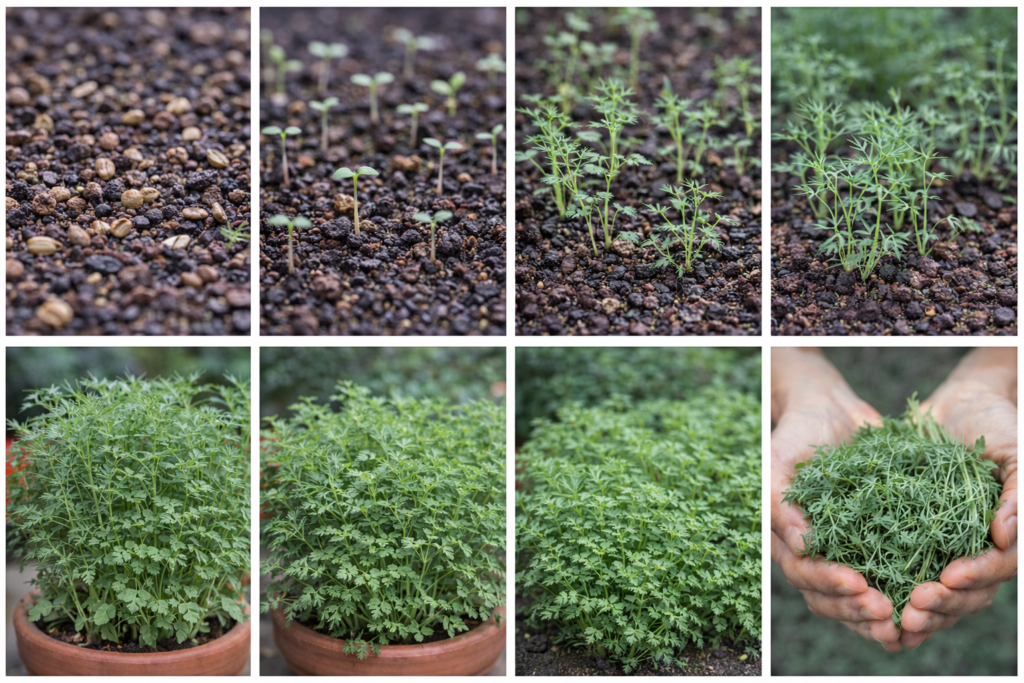
How to Grow Dill
General Information
| Botanical Name: | Anethum graveolens |
| Common Names: | Dill, dill weed |
| Plant Family: | Apiaceae |
| Type: | Annual; Culinary; Medicinal; Aromatic; Cool Season to Mild Warm Season Grower depending on climate |
| Our Favorite Varieties: | Long Island Mammoth, Bouquet |
Know Before You Grow
| Growing Zones: | Usually grown as an annual in Zones 2–11 |
| Frost Hardy: | Yes, light frost tolerant |
| Heat Tolerant: | Moderate, but heat speeds bolting |
| Stratification: | no |
| Rows, Beds, Containers: | Yes to all three |
Starting from Seed
| When: | Start indoors 4–6 weeks before last frost if needed, but direct sowing is usually preferred. Sow outdoors in spring, and in many climates you can sow again in late summer or fall for another cool-season crop. Successive sowings every 2–3 weeks help extend harvest. |
| Soil: | Seed-starting mix |
| Depth: | 1/4″ to 1/2″ |
| Water: | Keep evenly moist, not soggy |
| Germination: | 7–14 days |
| Up Pot: | Not ideal. Dill prefers direct sowing because it dislikes root disturbance |
| Light: | 14–16 hours under grow lights indoors; full sun outdoors |
| Soil Temperature: | 60°F–70°F |
| Heat Mat: | Helpful, but not required |
| Harden Off: | Yes, if started indoors |
Row, Bed, Container Prep
| Soil: | Rich, light, well-drained soil, though dill will grow in most soils |
| pH: | 6.0–7.5 |
| Soil Depth or Pot Size: | 8–12 inches of workable soil; use a container at least 10–12 inches deep for best root room |
| Trellis: | no |
| Fertilizer/Feed: | Go light. Too much fertility can reduce flavor and encourage weak, lush growth |
| Compost: | Mix in compost before planting |
Transplanting/Up Potting
| When: | Only while seedlings are still small, and only if needed |
| How: | Transplant very gently and disturb roots as little as possible |
| Depth: | Same depth it was growing before |
| Spacing: | 6–12 inches apart |
| Mulch: | Light mulch can help hold moisture and keep roots cooler |
| Water: | Water in well and keep evenly moist while it establishes |
Direct Sowing
| When: | In spring after frost danger passes and soil can be worked. In many climates, sow again in late summer or fall. Successive sowings every 2–3 weeks will give a steadier harvest. |
| Depth: | 1/4″ to 1/2″ |
| Spacing: | Sow thinly, then thin to 6–12 inches apart |
| Water: | Keep the seed zone evenly moist until germination and establishment |
| Light: | Full Sun |
| # in Sq. Ft. Planting: | 1 for full-size plants; 4 for tighter planting harvested young and often |
Growing Care
| Fertilizer/Feed: | Feed lightly if needed. Compost and moderately fertile soil are usually enough |
| Days to Maturity: | 40–60 days for leaf harvest; longer for mature seed heads |
| Water: | Keep evenly moist. Dill needs more moisture than Mediterranean herbs, but it still needs drainage |
| Pruning/Harvesting: | Cut foliage once plants are established, right up to flowering. Harvest seed heads just as the seeds begin turning golden brown |
| Mulching: | Light mulch helps conserve moisture |
| Pollination: | Not needed for leaf production. Flowers attract beneficial insects and pollinators |
Companions & Antagonists
| Plant Family: | Antagonists: |
| Brassicas | None |
| Onions | – |
| Lettuce | – |
| Cucumbers | – |
Attracts & Repels
| Attracts: | Repels: |
| Pollinators, parasitic wasps, and other beneficial insects | Often included in mixed plantings for insect confusion, but strong source-backed claims for a specific repellent effect are limited |
Pests & Disease
| Pests: | Disease: |
| Aphids | Damping Off |
| Caterpillars | Leaf Spots |
| – | Root Rot |
Seed Saving
| When: | When seed heads dry and seeds turn tan to brown |
| Method: | Cut seed heads, dry them further if needed, then rub or shake out the seeds |
Harvest Time
| When: | Harvest leaves once plants are established. Harvest seed heads just as seeds begin turning golden brown |
| How: | Snip foliage as needed, or cut seed heads and dry them |
| What: | Leaves, flowers, and seeds |
| Storing: | Use fresh leaves quickly, or dry leaves and seeds thoroughly before storing airtight |
| Preservation Methods: | Drying, freezing, pickles, vinegars, seed storage for spice use |
Medicinal Uses:
| Traditionally Used for: | Traditionally used for digestion, gas, stomach discomfort, and as a calming or soothing herb |
| Forms: | Tea/infusion, seed, tincture, dill water, essential oil, culinary use |
| Dosage or Application: | Traditional use is more strongly documented for the seed than for the leaf. Historical and traditional references describe dill seed as a carminative, stomachic, and soothing digestive herb, but household dosing varies by preparation |
| NOTICE: | This information is based on historical/traditional fact. It is for educational purposes only. Lowe Bridges Farm will not be held liable for your use of this information. Your use of this information and the results thereof is your responsibility, and yours alone. |
Culinary Uses:
| Flavor Profile: | Fresh, grassy, slightly lemony, slightly anise-like |
| Best Used In: | Fish, potatoes, eggs, cucumbers, pickles, dips, yogurt sauces, salads, soups, vegetables |
| Forms: | Fresh leaves, dried leaves, flowers, whole seed, ground seed |
As an Aromatic:
| Used for: | Fresh green herbal scent, bright pickling aroma, and warm aromatic seed scent |
| How: | Fresh herb in kitchen use, seed in spice blends, pickling blends, sachets, and aromatic culinary storage mixes |
Troubleshooting
| Bolting Fast: | Normal in heat or long days |
| Weak Floppy Plants: | Needs more sun or less crowding |
| Poor Germination: | Keep the seed zone evenly moist and do not let it dry out |
| Yellowing: | Often uneven water, poor fertility, or aging foliage |
| Rotting at Base: | Usually soggy soil or poor drainage |