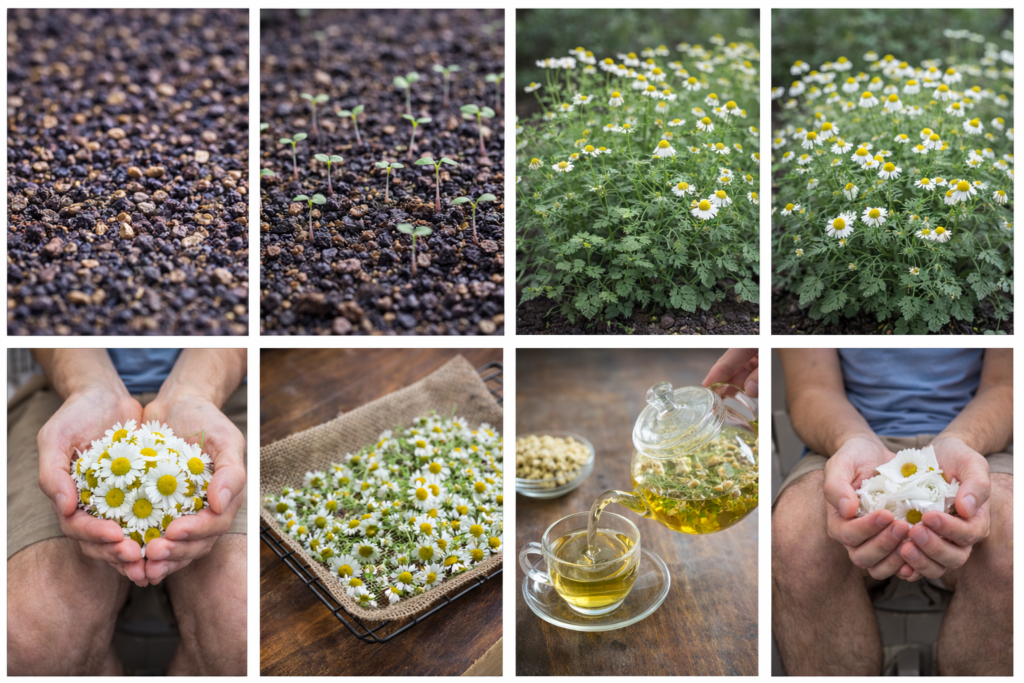
How to Grow Chamomile
General Information
| Botanical Name: | Matricaria chamomilla or Matricaria recutita for German chamomile; Chamaemelum nobile for Roman chamomile. |
| Common Names: | Chamomile, German chamomile, Roman chamomile. |
| Plant Family: | Asteraceae. |
| Type: | German chamomile: Annual; Medicinal; Aromatic; Culinary; Cool Season. Roman chamomile: Perennial; Medicinal; Aromatic; Culinary; Cool Season. |
| Our Favorite Varieties: | German and Roman Chamomile |
Know Before You Grow
| Growing Zones: | German chamomile: Usually grown as an annual in Zones 2–11. Roman chamomile: Usually perennial in Zones 5–8. |
| Frost Hardy: | Yes, lightly frost tolerant. |
| Heat Tolerant: | Poor to Moderate. |
| Stratification: | No |
| Rows, Beds, Containers: | Yes to all three. |
Starting from Seed
| When: | Start indoors 4–6 weeks before last frost, or direct sow outdoors in spring. Roman chamomile can also be sown in fall in some climates |
| Soil: | Seed-starting mix |
| Depth: | Surface sow and press in lightly. Do not cover, or only barely dust with mix, because the seed needs light to germinate |
| Water: | Keep the soil surface evenly moist, not soggy |
| Germination: | 10–14 days |
| Up Pot: | Up pot when seedlings are 1–2 inches tall and have 3–4 true leaves. Older seedlings do not transplant as well |
| Light: | 14–16 hours under grow lights indoors; full sun outdoors; Roman chamomile also tolerates part shade |
| Soil Temperature: | 68°F–86°F |
| Heat Mat: | Helpful, but not required |
| Harden Off: | Yes, 7–10 days before transplanting outdoors |
Row, Bed, Container Prep
| Soil: | Well-drained soil. German chamomile prefers fertile, sandy loam. Roman chamomile likes slightly acidic to neutral garden soil with good drainage |
| pH: | 5.6–7.5 |
| Soil Depth or Pot Size: | 6–8 inches of workable soil is enough; use an 8–10 inch pot or larger for one plant or small clump |
| Trellis: | no |
| Fertilizer/Feed: | Go light. Chamomile does not need heavy feeding |
| Compost: | Mix in a modest amount before planting, but do not make the soil too rich |
Transplanting/Up Potting
| When: | After frost danger has passed, while weather is still cool to mild |
| How: | Transplant gently and avoid letting seedlings get too old before moving them |
| Depth: | Same depth it was growing before |
| Spacing: | German chamomile: 8 inches apart Roman chamomile: 8–12 inches apart |
| Mulch: | Light mulch is fine once plants are established |
| Water: | Water in well after transplanting, then keep evenly moist while plants establish |
Direct Sowing
| When: | In spring after frost danger passes and soil can be worked. Roman chamomile can also be sown in fall in some areas |
| Depth: | Surface sow and press in lightly. Do not bury deeply |
| Spacing: | Sow thinly, then thin to 8 inches for German chamomile or 8–12 inches for Roman chamomile |
| Water: | Keep the seed zone evenly moist until germination and establishment |
| Light: | Full sun; Roman chamomile also tolerates part shade |
| # in Sq. Ft. Planting: | 1 Plant per square foot |
Growing Care
| Fertilizer/Feed: | Feed lightly if needed. Too much fertility can give you more leafy growth and fewer flowers |
| Days to Maturity: | 60–75 days from seed for flower harvest, depending on type and weather |
| Water: | Keep evenly moist while establishing. After that, water regularly but do not keep the soil soggy |
| Pruning/Harvesting: | Harvest flowers regularly to encourage continued blooming. Trim lightly to keep plants neat. Roman chamomile can also be clipped to maintain a lower habit |
| Mulching: | Light mulch is fine, but keep the crown from staying wet |
| Pollination: | Not needed for flower harvest. Flowers attract pollinators and beneficial insects |
Companions & Antagonists
| Plant Family: | Antagonists: |
| Brassicas | None |
| Onions | – |
Attracts & Repels
| Attracts: | Repels: |
| Pollinators and beneficial insects | Sometimes included in companion plantings for insect confusion, but no major specific repellent effect is strongly established |
Pests & Disease
| Pests: | Disease: |
| Aphids | Damping Off |
| Thrips | Powdery Mildew |
| Mealybugs | Root Rot |
Seed Saving
| When: | When flower heads dry and seeds mature on the plant |
| Method: | Let flower heads dry, cut them, dry more if needed, then rub or shake out the seed |
Harvest Time
| When: | Harvest flowers when they are fully open and fresh. German chamomile is usually harvested for flowers throughout bloom. Roman chamomile leaves and flowers can both be harvested |
| How: | Snip flower heads or cut stems with flowers attached |
| What: | German chamomile: Flowers Roman chamomile: Flowers and sometimes leaves |
| Storing: | Dry thoroughly out of direct sunlight with good airflow, then store airtight away from light |
| Preservation Methods: | Drying for tea, sachets, potpourri, bath blends, and infused preparations |
Medicinal Uses:
| Traditionally Used for: | Minor digestive complaints such as bloating and mild spasms, common cold support, minor inflammation of the mouth and throat, and mild skin irritation |
| Forms: | Tea/infusion, tincture, liquid extract, steam inhalation, mouth rinse, bath, wash, salve, infused oil |
| Dosage or Application: | Traditionally used as a tea/infusion, steam preparation, mouth rinse, skin wash, or bath additive. Chamomile flower is most commonly used as an infusion for digestive and calming support and externally for soothing skin and mouth or throat tissues |
| NOTICE: | This information is based on historical/traditional fact. It is for educational purposes only. Lowe Bridges Farm will not be held liable for your use of this information. Your use of this information and the results thereof is your responsibility, and yours alone. |
Culinary Uses:
| Flavor Profile: | Mild, floral, slightly sweet, apple-like |
| Best Used In: | Teas, syrups, desserts, jellies, honey blends, and gentle floral drinks |
| Forms: | Fresh flowers, dried flowers, whole flower heads, infused |
As an Aromatic:
| Used for: | Calming, soothing, soft floral fragrance, and relaxing bedtime-style blends |
| How: | Dried flowers in sachets, pillows, bath blends, potpourri, steam, and infused aromatic preparations |
Troubleshooting
| Poor germination: | Seed needs light and steady surface moisture. Do not bury deeply |
| Leggy seedlings: | Not enough light |
| Plants collapse in wet soil: | Usually damping off or root rot |
| Short bloom time: | Heat speeds flowering and finish |
| Too much self-seeding: | Harvest flowers before seed fully matures |
| Weak flowering: | Too much fertilizer, too much shade, or too much heat |