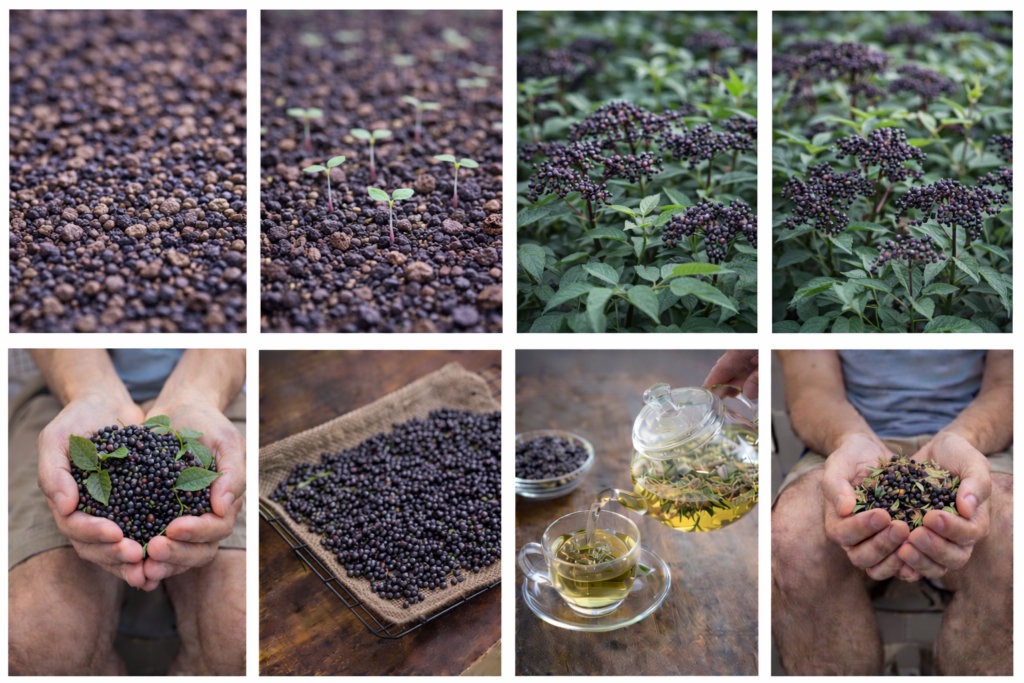
How to Grow Elderberry
General Information
| Botanical Name: | Sambucus nigra subsp. canadensis or Sambucus canadensis |
| Common Names: | Elderberry, American Elderberry, Common Elderberry |
| Plant Family: | Viburnaceae |
| Type: | Perennial; Medicinal; Culinary; Aromatic; Warm Season to Mild Cool Season Grower depending on climate |
| Our Favorite Varieties: | Bob Gordon, Wyldewood |
Know Before You Grow
| Growing Zones: | 3-9 |
| Frost Hardy: | Yes |
| Heat Tolerant: | Moderate to good once established |
| Stratification: | Yes, if growing from seed |
| Rows, Beds, Containers: | Best in rows or beds; possible in very large containers, but not ideal long-term |
Starting from Seed
| When: | Start indoors after proper stratification, or sow outdoors in fall for natural winter chilling |
| Soil: | Seed-starting mix |
| Depth: | About 1/8″ to 1/4″ |
| Water: | Keep evenly moist, not soggy |
| Germination: | Often slow and uneven; may take several weeks after stratification |
| Up Pot: | Up pot when seedlings have several true leaves and enough root growth to handle transplanting |
| Light: | 14–16 hours under grow lights indoors; full sun outdoors once established |
| Soil Temperature: | About 65°F–70°F after stratification |
| Heat Mat: | Helpful after stratification, but not required |
| Harden Off: | Yes, 7–10 days before transplanting outdoors |
Row, Bed, Container Prep
| Soil: | Fertile, moist, well-drained soil |
| pH: | 5.5–6.5 is ideal, though elderberry tolerates a wider range |
| Soil Depth or Pot Size: | At least 12–18 inches of workable soil; use a very large container if growing in a pot |
| Trellis: | no |
| Fertilizer/Feed: | Feed moderately. Elderberry responds well to fertile soil and benefits from compost and balanced feeding |
| Compost: | Mix in compost before planting |
Transplanting/Up Potting
| When: | Plant in spring or fall while weather is mild |
| How: | Transplant gently and water in well. Plant more than one variety if you want the best fruit set |
| Depth: | Same depth it was growing before |
| Spacing: | 6–10 feet apart |
| Mulch: | Yes. Mulch helps hold moisture and suppress weeds |
| Water: | Water deeply after planting and keep evenly moist while establishing |
Direct Sowing
| When: | Fall is best if sowing outdoors naturally |
| Depth: | 1/8″ to 1/4″ |
| Spacing: | Sow thicker, then thin to final spacing once plants are established |
| Water: | Keep the seed zone evenly moist |
| Light: | Full sun to partial shade |
| # in Sq. Ft. Planting: | Not recommended. |
Growing Care
| Fertilizer/Feed: | Feed moderately. Compost yearly and use balanced feeding if growth is weak |
| Days to Maturity: | Usually 2–3 years before meaningful berry production |
| Water: | Keep evenly moist, especially while establishing and during flowering and fruiting |
| Pruning/Harvesting: | Prune out dead, weak, and old canes. Fruit is usually best on younger vigorous wood |
| Mulching: | Yes, very helpful |
| Pollination: | Not always strictly required, but cross-pollination between varieties usually improves fruit set and yield |
Companions & Antagonists
| Plant Family: | Antagonists: |
| Other moisture-loving herbs and pollinator plants nearby; additional elderberry varieties for better fruit set | Do not crowd it with plants that need very dry soil or with aggressive large shrubs that will shade it out |
Attracts & Repels
| Attracts: | Repels: |
| Pollinators, birds, and other wildlife | None |
Pests & Disease
| Pests: | Disease: |
| Aphids | Powdery Mildew |
| Borers | Leaf Spots |
| Spider Mites | Cankers |
| Scale | Root Problems |
| Birds | – |
Seed Saving
| When: | When berries are fully ripe |
| Method: | Remove seed from ripe fruit, clean it well, and give it the needed stratification before sowing |
Harvest Time
| When: | Harvest when berry clusters are fully ripe and dark purple to black |
| How: | Cut whole clusters, then strip berries from the stems after harvest |
| What: | Berries and flowers |
| Storing: | Refrigerate fresh fruit short-term; process quickly for best quality |
| Preservation Methods: | Syrup, jelly, jam, juice, wine, drying, freezing |
Medicinal Uses:
| Traditionally Used for: | Traditionally used for colds, flu, coughs, fever support, and immune support |
| Forms: | Syrup, tea/infusion, tincture, lozenges, jelly, juice |
| Dosage or Application: | Traditional household use varies by preparation. Elderberry is most commonly used as syrup, tea, tincture, or food-based medicine during cold and flu season. Use only properly prepared ripe berries or flowers |
| NOTICE: | This information is based on historical/traditional fact. It is for educational purposes only. Lowe Bridges Farm will not be held liable for your use of this information. Your use of this information and the results thereof is your responsibility, and yours alone. |
Culinary Uses:
| Flavor Profile: | Tart, dark, fruity, earthy |
| Best Used In: | Syrups, jams, jellies, pies, juice, wine, tea |
| Forms: | Fresh cooked berries, dried berries, juice, syrup, jelly |
As an Aromatic:
| Used for: | Floral-fruity aroma from the flowers and cooked berry products |
| How: | Flowers in teas, syrups, cordials, and dried blends; berries in cooked aromatic preparations |
Troubleshooting
| Weak Fruiting: | Needs more sun, more moisture, or another variety nearby for better pollination |
| Yellowing or Poor Growth: | Often poor fertility, drought stress, or root stress |
| Wilting in wet soil: | Poor drainage or root problems |
| No Germination from seed: | Elderberry seed usually needs stratification and can germinate slowly and unevenly |
| Raw plant safety problems: | Leaves, stems, roots, seeds, and unripe berries should not be eaten raw; use only properly prepared ripe berries or flowers |