How to Grow Vanilla
General Information
| Botanical Name: | Vanilla planifolia |
| Common Names: | Vanilla, Vanilla Bean, Bourbon Vanilla |
| Plant Family: | Orchidaceae |
| Type: | Tropical perennial vine; Culinary/Medicinal/Aromatic; Warm season |
| Our Favorite Varieties: | Tropical perennial vine; Culinary/Medicinal/Aromatic; Warm season |
Know Before You Grow
| Growing Zones: | 10–12 |
| Frost Hardy: | No |
| Heat Tolerant: | Moderate; requires warm, humid, stable conditions |
| Stratification: | No |
| Rows, Beds, Containers: | Best grown in containers or controlled environments outside tropical climates |
Starting from Seed
| When: | Not recommended; extremely difficult and slow |
Row, Bed, Container Prep
| Soil: | Loose, airy, well-draining orchid mix; roots must not sit in dense soil |
| pH: | 6.0–7.0 |
| Soil Depth or Pot Size: | Container at least 12 inches deep with excellent drainage; larger as vine grows |
| Trellis: | Yes, strong support required (post, trellis, or tree) |
| Fertilizer/Feed: | Light feeding with diluted orchid fertilizer or balanced liquid fertilizer every 2–4 weeks during active growth |
| Compost: | Not typically used; rely on appropriate orchid media instead |
Transplanting/Up Potting
| When: | When plant outgrows container or roots fill space |
| How: | Handle gently; avoid damaging aerial roots and vine |
| Depth: | Plant base at same level; allow aerial roots to contact support or soil surface |
| Spacing: | One vine per container or support |
| Water: | Water lightly after transplanting |
| Mulch: | Not typically used; maintain humidity instead |
Direct Sowing
| When: | Not recommended |
Growing Care
| Fertilizer/Feed: | Feed lightly every 2–4 weeks during active growth with diluted fertilizer |
| Days to Maturity: | 2–3+ years before flowering; beans develop several months after pollination |
| Water: | Keep lightly moist; allow slight drying between watering; high humidity required |
| Pruning/Harvesting: | Prune to control vine length and encourage branching; flowers must be hand pollinated for bean production outside native range |
| Mulching: | Not used; instead maintain high humidity (60–80%) |
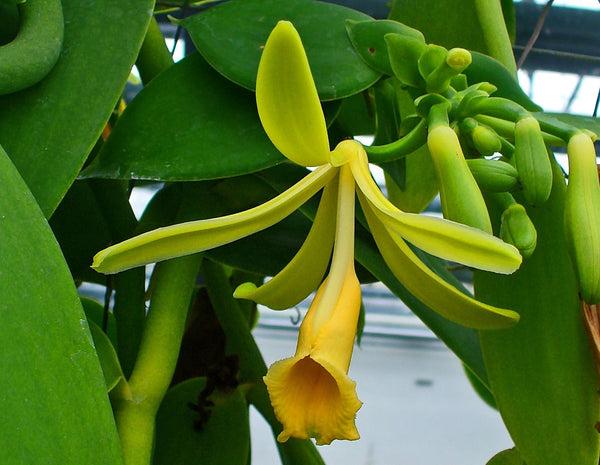
| Pollination: | Hand pollination required within hours of flower opening |
Companions & Antagonists
| Plant Family: | Antagonists: |
| Tropical Shade Plants | Dry soil plants |
| Orchids | Desert Plants |
| Ferns | Full Sun Crops |
Attracts & Repels
| Attracts: | Repels: |
| Limited pollinator activity outside native range | No known repellent effect |
Pests & Disease
| Pests: | Disease: |
| Mealybugs | Root Rot |
| Scale | Stem Rot |
| Spider Mites | – |
Seed Saving
| When: | Not practical; propagation is done by cuttings |
| Method: | Use vine cuttings with several nodes; root in humid conditions |
Harvest Time
| When: | Harvest beans when they turn yellow at the tip but before splitting |
| How: | Cut beans from vine carefully |
| What: | Vanilla pods (beans) |
| Storing: | Begin curing process immediately after harvest |
| Preservation Methods: | Curing (sweating, drying, conditioning over several months) |
Medicinal Uses:
| Traditionally Used for: | Mood support, calming, mild digestive support |
| Forms: | Extract, infusion, tincture |
| Dosage or Application: | Used in small amounts in food or preparations |
| NOTICE: | This information is based on historical/traditional fact. It is for educational purposes only. Lowe Bridges Farm will not be held liable for your use of this information. Your use of this information and the results thereof is your responsibility, and yours alone. |
Culinary Uses:
| Flavor Profile: | Sweet, rich, creamy, aromatic |
| Best Used In: | Desserts, baked goods, custards, drinks, extracts |
| Forms: | Whole beans, extract, paste, powder |
As an Aromatic:
| Used for: | Warm, sweet scent in perfumes, candles, and body products |
| How: | Beans, extract, infused products |
Troubleshooting
| No Flowers: | Plant too young, not enough warmth or humidity. |
| No beans: | Lack of hand pollination |
| Yellowing leaves: | Overwatering or poor drainage |
| Wrinkled vine: | Underwatering or low humidity |
| Root rot: | Media staying too wet or compacted |