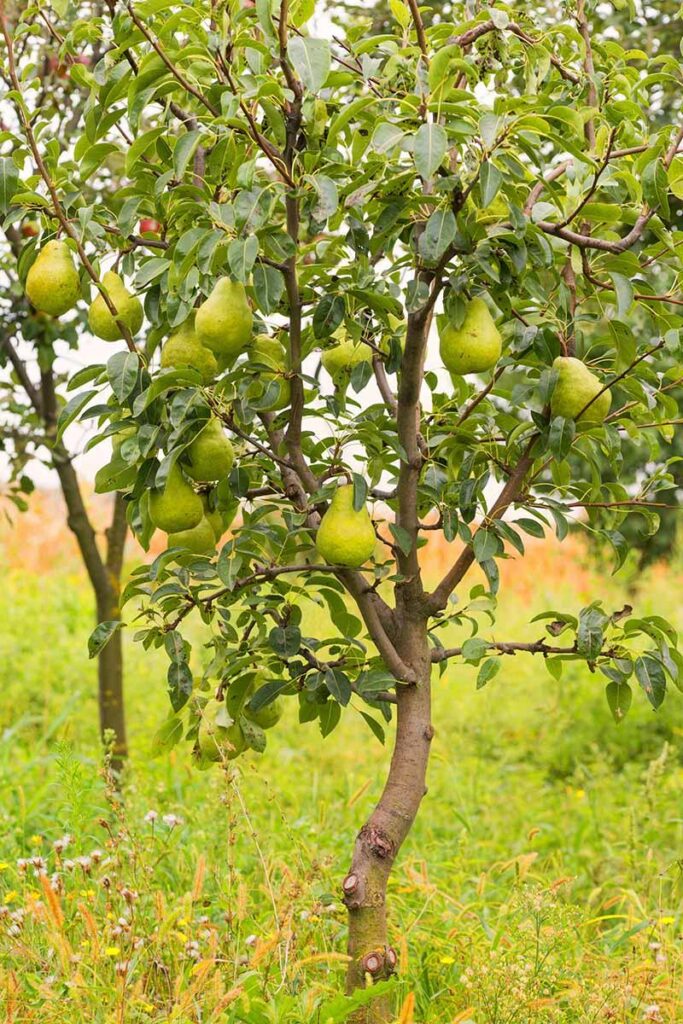
How to Grow Pear Trees
General Information
| Botanical Name: | Pyrus communis (European), Pyrus pyrifolia (Asian) |
| Common Names: | Pear, Pear Tree |
| Plant Family: | Rosaceae |
| Type: | Deciduous; Fruit |
| Our Favorite Varieties: | Bartlett, Kieffer, Anjou, Bosc, Orient, Shinseiki (Asian) |
Know Before You Grow
| Growing Zones: | 4–9 (varies by variety) |
| Frost Hardy: | Yes |
| Heat Tolerant: | Moderate to high (some varieties handle heat well) |
| Chill Hours: | 300–900 (varies by variety) |
| Pollination Needs: | Most require cross-pollination with another compatible pear variety |
| Rootstock: | Dwarf, semi-dwarf, or standard (affects size and vigor) |
| Full Size: | 10–30 feet depending on rootstock |
| Years to Produce: | 3–6 years |
| In-Ground or Container: | Best in ground; dwarf varieties can be grown in large containers |
Starting from Seed
| When: | Fall or stratify and plant in late winter |
| Stratification: | Yes, 60–90 days cold stratification required |
| Scarification: | No |
| Soil | Loose, well-draining seed-starting mix |
| Depth: | ½ inch |
| Water: | Keep evenly moist |
| Germination: | 3–8 weeks after stratification |
| Up Pot: | When seedlings are strong and established |
| Light: | Full sun once sprouted |
| Soil Temperature: | 65–75°F after stratification |
| Heat Mat: | Optional after stratification |
| Harden Off: | 7–10 days |
Planting Site Prep:
| Soil: | Well-draining loam or sandy loam |
| pH: | 6.0–7.0 |
| Drainage: | Must drain well; tolerates heavier soil better than apples |
| Sun: | Full sun (6–8+ hours) |
| Spacing: | Dwarf: 10–12 feet; Semi-dwarf: 15–20 feet; Standard: 20–30 feet |
| Hole Size: | 2–3 times wider than root ball, same depth |
| Fertilizer/Feed: | Avoid heavy fertilizing at planting; feed lightly after establishment |
| Compost: | Mix 2–3 inches into backfill soil |
| Mulch: | 2–3 inches, kept away from trunk |
Planting:
| When: | Late winter to early spring (bare root) or fall in mild climates |
| How: | Plant at same depth as nursery line; spread roots outward |
| Depth: | Graft union 2–3 inches above soil line |
| Spacing: | Based on rootstock size. Dwarf trees: 10–12 feet apart; semi-dwarf trees: 15–20 feet apart; standard trees: 20–30 feet apart. Plant at least two compatible pear varieties within about 50 feet of each other for pollination. |
| Water: | Water deeply after planting |
| Mulch: | Apply 2–3 inches, keep 3–4 inches away from trunk |
| Staking: | Stake young trees if in windy areas |
Growing Care
| Fertilizer/Feed: | Light feeding in early spring with balanced fertilizer or compost |
| Water: | Deep water during dry periods; more consistent moisture during fruiting |
| Pruning: | Prune annually to shape and maintain airflow; central leader or modified central leader common |
| Thinning: | Thin fruit to prevent overloading and improve size |
| Mulching: | Maintain 2–3 inches of mulch to retain moisture and reduce weeds |
| Pollination: | Most varieties need a second pear tree nearby; bees improve fruit set |
| Winter Protection: | Protect young trunks from sunscald and rodents |
| Summer Protection: | Maintain moisture during heat |
Companions & Antagonists
| Plant Family: | Antagonists: |
| Clover | Black Walnut |
| Comfrey | – |
| Chives | – |
| Garlic | – |
| Yarrow | – |
Attracts & Repels
| Attracts: | Repels: |
| Bees, pollinators, birds | No strong repellent effect |
Pests & Disease
| Pests: | Disease: |
| Pear Psylla | Fire Blight |
| Aphids | Pear Scab |
| Codling Moth | Leaf Spot |
| Scale | Powdery Mildew |
Propagation
| Seed: | Possible but not true to type |
| Cuttings: | Rarely used |
| Grafting: | Standard method |
| Layering: | Occasionally used |
Harvest Time
| When: | Late summer through fall depending on variety |
| How: | Harvest when mature but still firm; pears ripen off the tree |
| What: | Fruit |
| Storing: | Store in a cool place; allow to ripen at room temperature |
| Preservation Methods: | Canning, drying, freezing, jams |
Uses:
| Culinary Uses: | Fresh eating, baking, canning, drying, sauces |
| Medicinal Uses: | Digestive support, fiber intake |
| Wildlife Uses: | Food source for birds and animals |
| Landscape Uses: | Shade, ornamental blossoms |
| Wood Uses: | Small woodworking, smoking wood |
Troubleshooting
| No fruit: | Lack of pollinator or poor pollination timing |
| Blackened shoots: | Fire blight; prune out infected areas |
| Small fruit: | Not thinned or nutrient imbalance |
| Leaf spotting: | Fungal disease; improve airflow and sanitation |
| Poor ripening: | Harvested too early or improper storage |