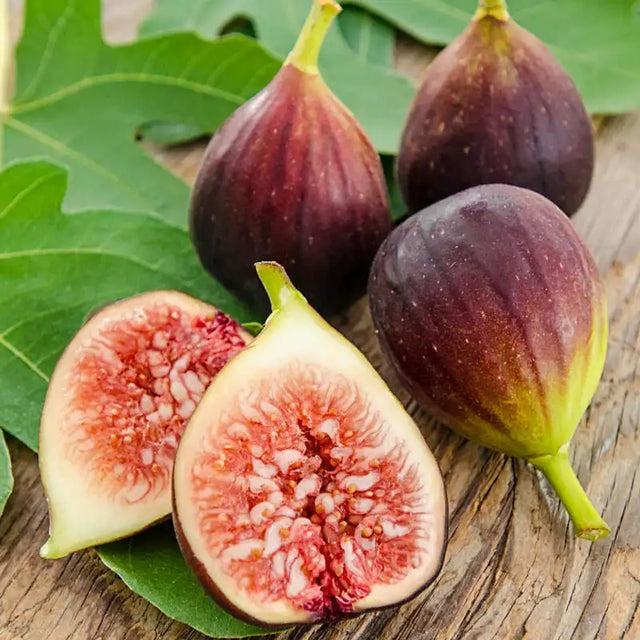
How to Grow Fig Trees

General Information
Botanical Name: Ficus carica
Common Names: Fig, Common Fig, Fig Tree
Plant Family: Moraceae
Type: Deciduous; Fruit
Our Favorite Varieties: Brown Turkey, Celeste, Black Mission, Chicago Hardy, LSU Purple
Know Before You Grow
Growing Zones: 7–10 (some varieties hardy to zone 6 with protection)
Frost Hardy: Moderate; young growth and fruit damaged by late frost
Heat Tolerant: Yes
Chill Hours: 100–300 (varies by variety; relatively low requirement)
Pollination Needs: Most common figs are self-fertile (do not require pollination)
Rootstock: Typically grown on own roots
Full Size: 10–30 feet depending on variety and pruning
Years to Produce: 2–4 years
In-Ground or Container: Both; does very well in containers
Starting from Seed
When: Spring
Stratification: Not required
Scarification: Not required
Soil Light, well-draining seed-starting mix
Depth: Surface sow; press lightly into soil
Water: Keep lightly moist
Germination: 2–4 weeks
Up Pot: When seedlings are strong
Light: Bright light
Soil Temperature: 70–80°F
Heat Mat: Helpful
Harden Off: 7–10 days
Planting Site Prep:
Soil: Well-draining soil; tolerates poor soils better than most fruit trees
pH: 6.0–7.5
Drainage: Must drain well; does not tolerate standing water
Sun: Full sun (6–8+ hours)
Spacing: 10–15 feet apart for most varieties; can be kept smaller with pruning or in containers
Hole Size: 2–3 times wider than root ball, same depth
Fertilizer/Feed: Minimal; too much fertilizer reduces fruiting
Compost: Mix 1–2 inches into soil if needed
Mulch: 2–3 inches, kept away from trunk
Planting:
When: Spring after frost or fall in mild climates
How: Plant at same depth as container; spread roots if bare root
Depth: Same as nursery depth
Spacing: 10–15 feet apart (closer if pruning heavily)
Water: Water deeply after planting
Mulch: Apply 2–3 inches, keep 3–4 inches away from trunk
Staking: Not usually needed
Growing Care
Fertilizer/Feed: Light feeding only if growth is weak; avoid heavy nitrogen
Water: Moderate; water deeply during dry periods, especially while establishing and during fruiting
Pruning: Prune to control size and shape; figs fruit on new growth
Thinning: Not required
Mulching: Maintain 2–3 inches of mulch to retain moisture and reduce weeds
Pollination: Most varieties do not require pollination
Winter Protection: Protect in colder zones by mulching heavily or covering
Summer Protection: Maintain watering during extreme heat
Companions & Antagonists
Plant Family: Antagonists:
Clover –
Comfrey –
Herbs –
Pollinator Plants –
Attracts & Repels
Attracts: Repels:
Birds, wildlife, pollinators No strong repellent effect
Pests & Disease
Pests: Disease:
Fig Beetles Root Rot
Aphids Leaf Spot
Scale Rust
Birds –
Propagation
Seed: Possible but not true to type
Cuttings: Very easy; most common method
Grafting: Not usually needed
Layering: Also effective
Harvest Time
When: Late summer through fall depending on variety
How: Harvest when fruit is soft, drooping, and fully colored
What: Fruit
Storing: Refrigerate short term
Preservation Methods: Drying, freezing, jams, preserves
Uses:
Culinary Uses: Fresh eating, drying, baking, jams, preserves
Medicinal Uses: Digestive support, fiber source
Wildlife Uses: Food for birds and animals
Landscape Uses: Shade, ornamental edible tree
Wood Uses: Limited; small projects or firewood
Troubleshooting
No fruit: Too much nitrogen, too much shade, or tree too young
Fruit drop: Stress from drought or temperature swings
Splitting fruit: Too much water after dry period
Yellow leaves: Overwatering or poor drainage
Poor growth: Soil too poor or root restriction
How to Grow Fig Trees
  • Home
  • Down on the Farm
  • How to Grow…
  • The Apothecary
  • Our Stores

Homesteader’s Creed


Use it up, Wear it out
Make it do...
Or do without!

Homesteading Defined…

A lifestyle of self-sufficiency and sustainability, characterized by food production and preservation, knowing or learning new skills to become less dependent on outside sources. Homesteading can be done anywhere, at any age, by anybody who wants a simpler way of life…

Follow Us


  • Facebook
  • Instagram
  • Pinterest
  • TikTok
  • X
  • YouTube
  • LinkedIn

Inspiration


From Philippians, Chapter 4:

6 Do not be anxious about anything, but in every situation, by prayer and petition, with thanksgiving, present your requests to God.7 And the peace of God, which transcends all understanding, will guard your hearts and your minds in Christ Jesus”

Resources


  • USDA
  • NIFA
  • Farmers
  • Our Printables
  • Territorial Seed Co.
  • Privacy Policy
  • Terms of Use
  • Disclaimer
  • Cookie Policy

Copyright © 2026 by Lowe Bridges Farm


×

Log In

Forgot Password?

Not registered yet? Create an Account