
Medicinal Profile of Lamb’s Ear
Herb Overview
| Common Names: | Lamb’s Ear, Woolly Betony |
| Botanical Name: | Stachys byzantina |
| Plant Family: | Lamiaceae |
| Origins: | Native to parts of the Middle East and Central Asia; widely grown as an ornamental and cottage-garden plant |
| Parts Used: | Leaves |
| Primary Preparations: | Poultice, compress, infused oil, salve |
Plant Identification
Full Plant (in ground): 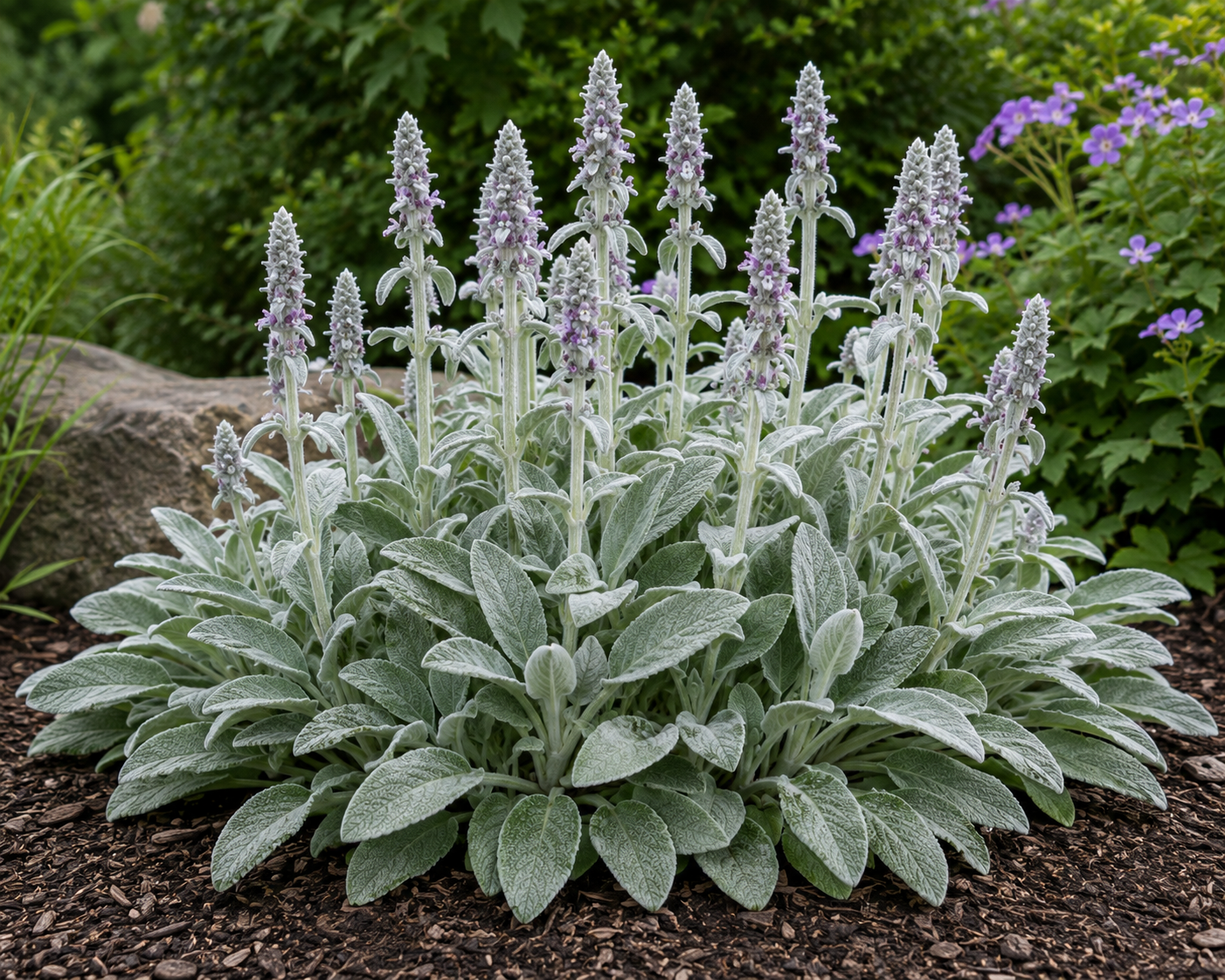
Low-growing perennial with soft silver-gray fuzzy leaves forming dense clumps and occasional upright flower spikes.
Leaves (mature): 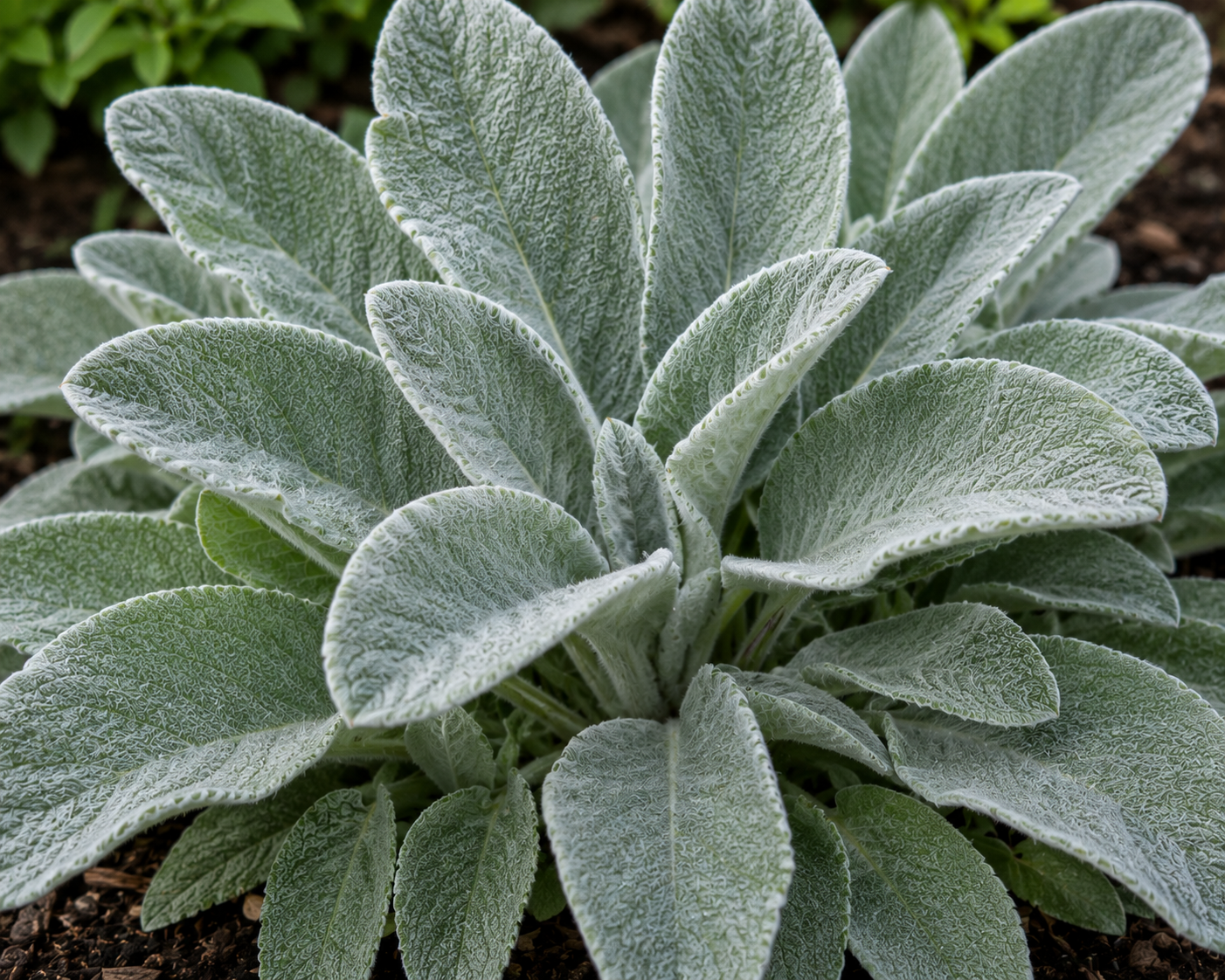
Thick, velvety, oval leaves covered in dense silvery hairs, giving them an extremely soft texture similar to lamb’s ears.
Leaves (early growth): 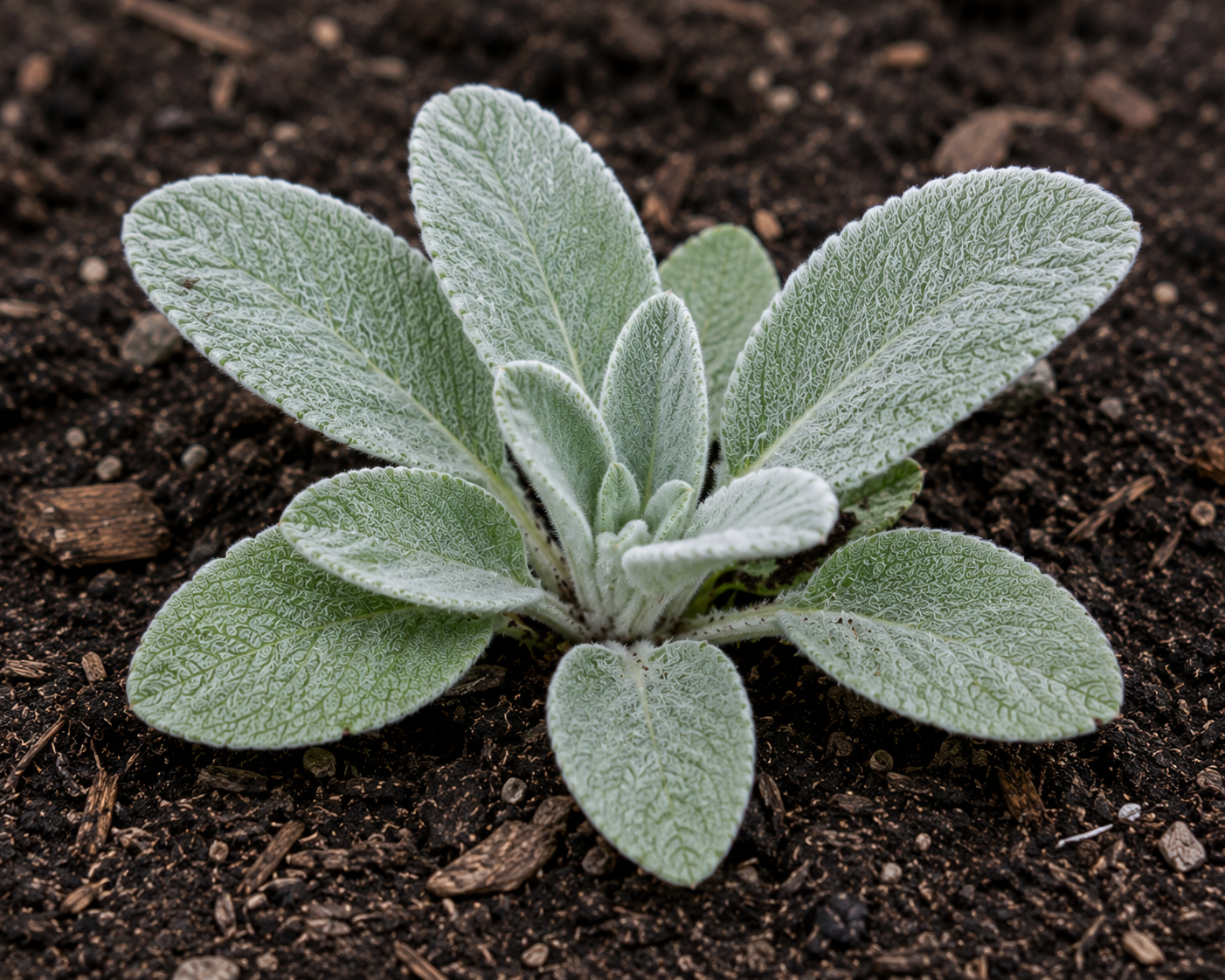
Young leaves emerge smaller, tightly clustered, and very fuzzy.
Stem: 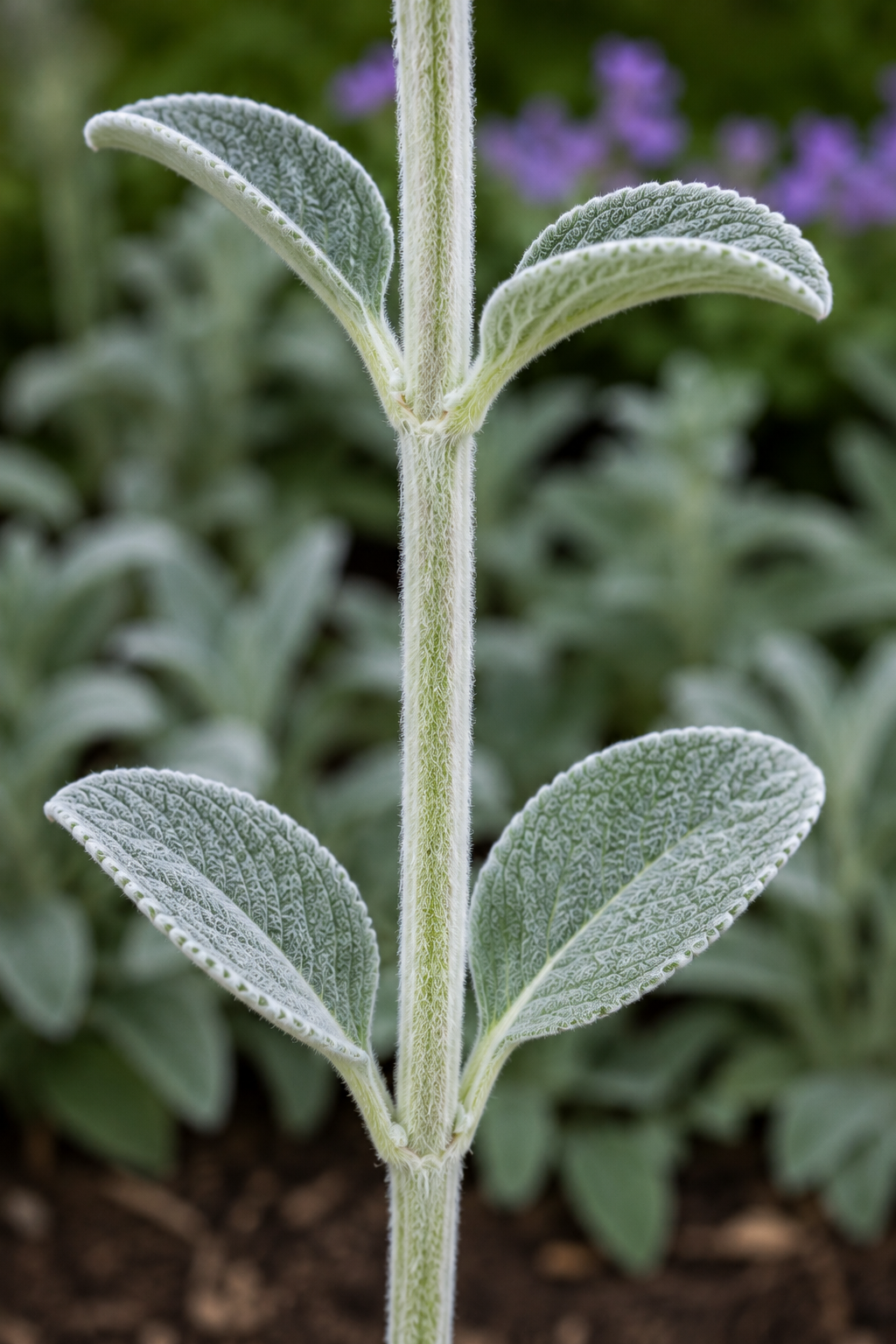
Soft, upright flower stems covered in fine hairs.
Flower (Top View): 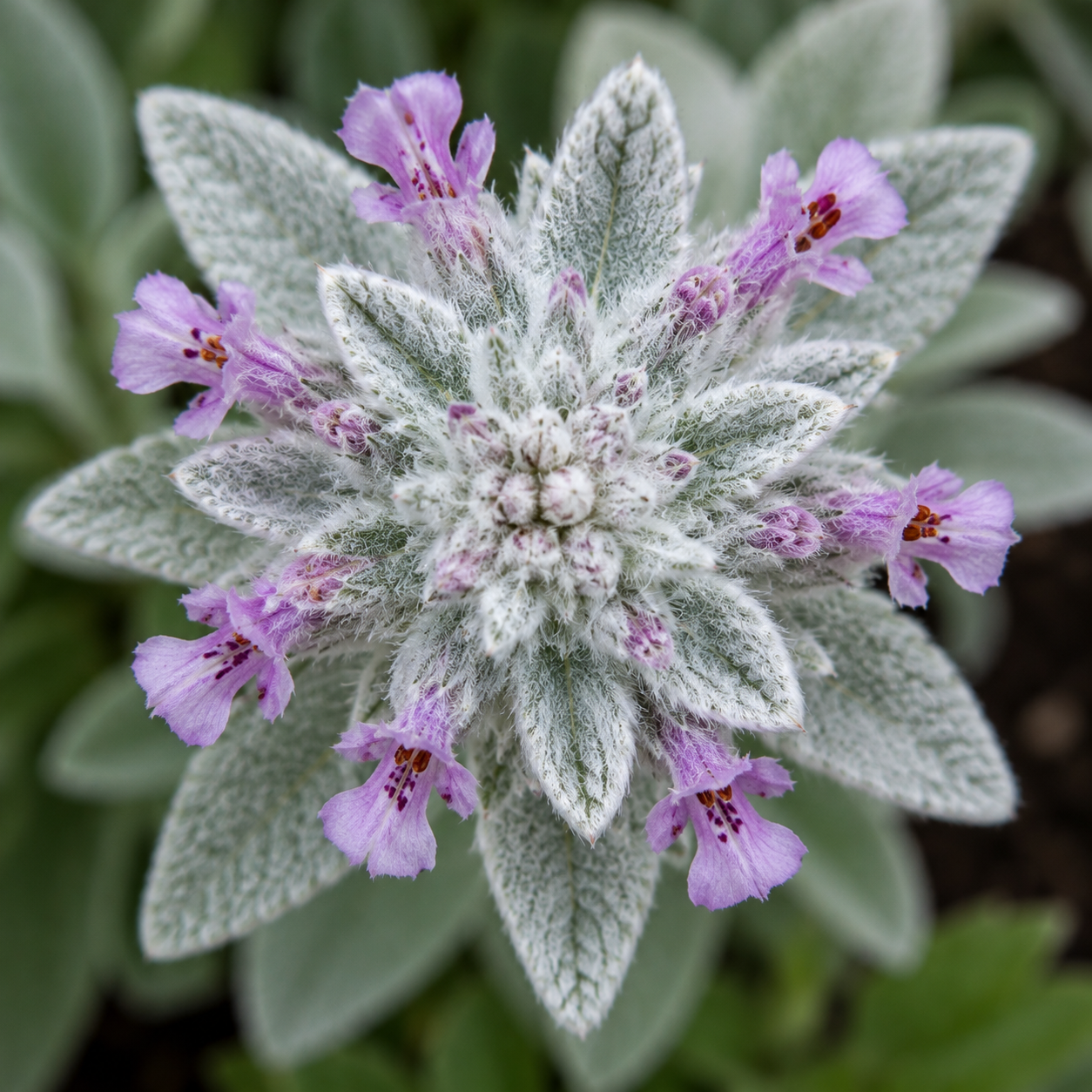
Small pink to purple flowers arranged along upright spikes.
Flower (Side View): 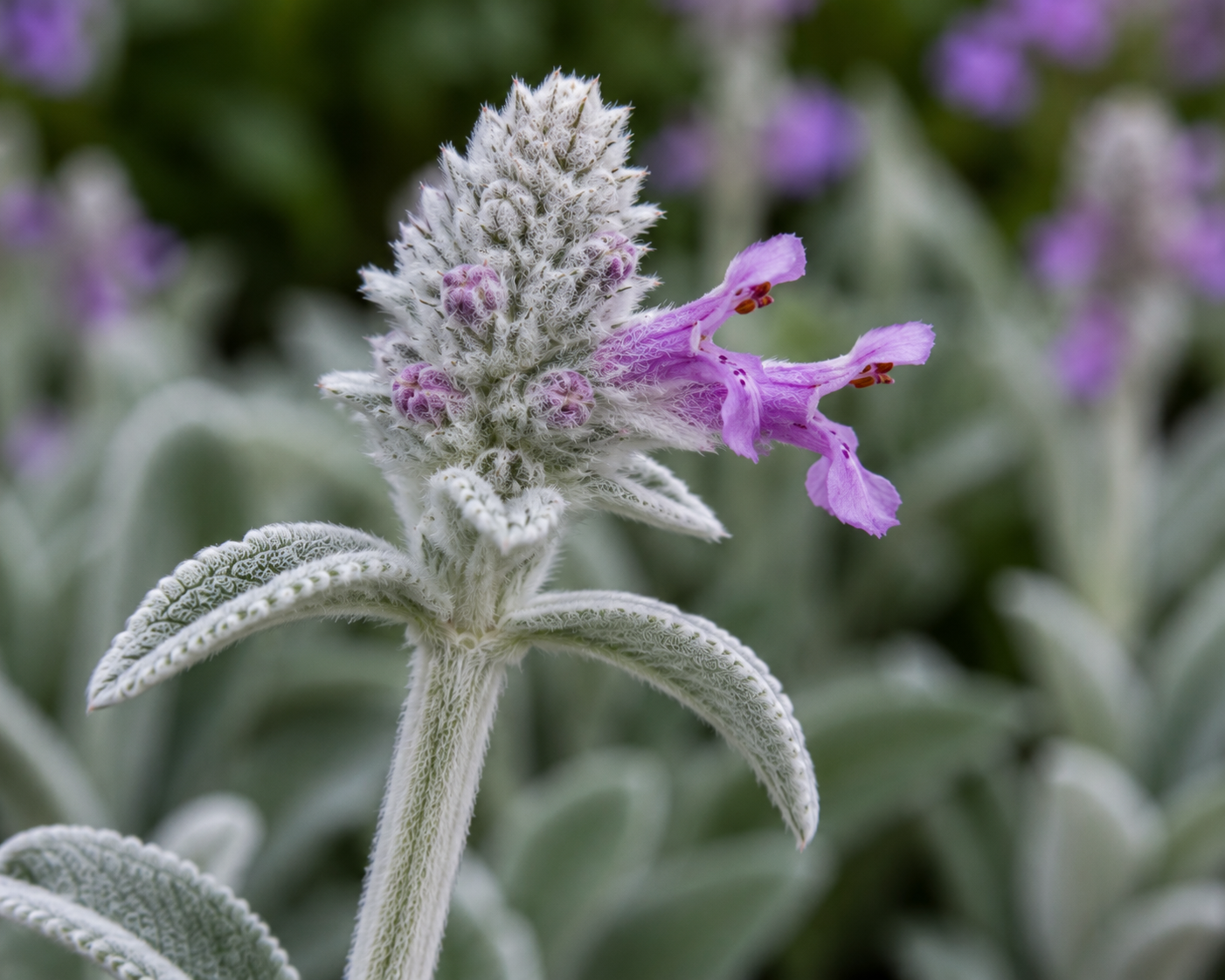
Flowers emerge in tiers along tall stems rising above the foliage.
Flower Base (bracts):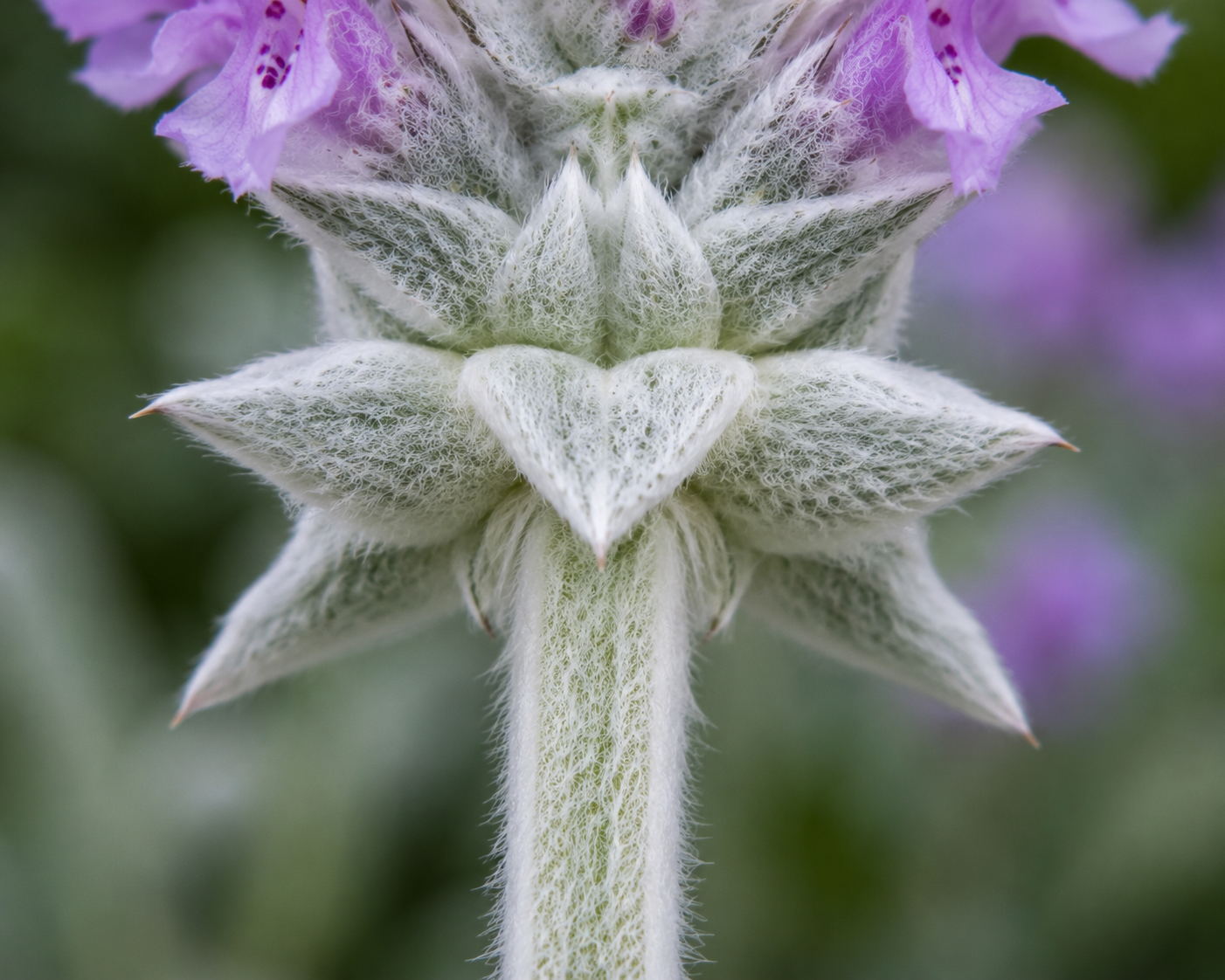
Fuzzy green-gray bracts beneath each flower cluster.
Seed Head / Seeds: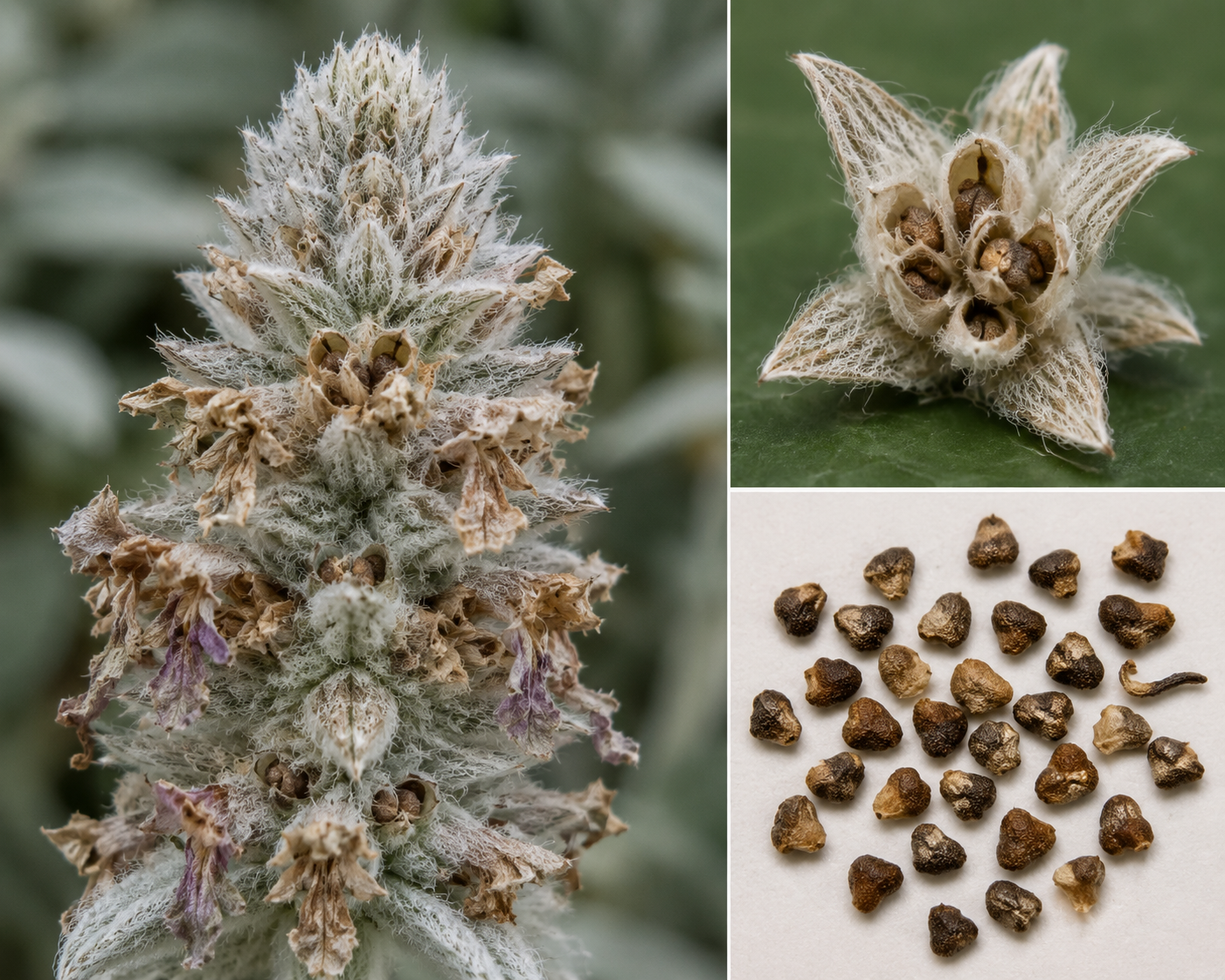
Dry flower spikes containing tiny seeds after blooming.
Root: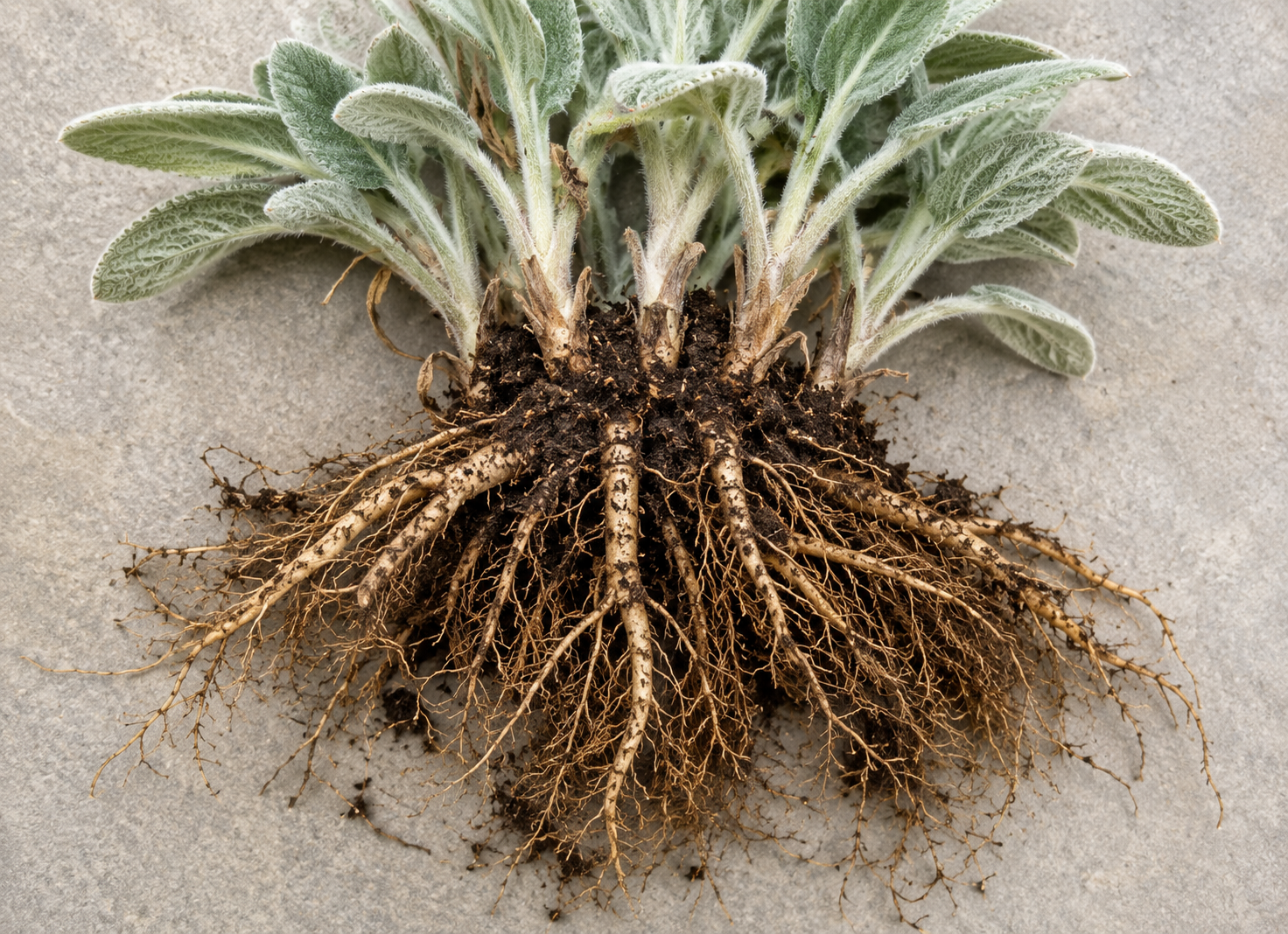
Shallow fibrous root system that slowly spreads outward.
| Growth Form: | Low spreading perennial groundcover with upright flowering stalks. |
| Typical Size: | Usually 6–18 inches tall; spreads 1–3 feet wide. |
| Aroma/Smell: | Mild earthy or green scent when crushed. |
| Where it Commonly Grows: | Cottage gardens, herb gardens, borders, dry sunny beds, walkways, and ornamental plantings. |
| Common Lookalikes: | Some fuzzy ornamental salvias or mints may resemble it from a distance, but lamb’s ear leaves are thicker, softer, and distinctly silvery. |
| Foraging Safety Note: | Lamb’s ear is usually cultivated rather than wild foraged. Only harvest clean plants free from sprays, pet contamination, or roadside pollutants. Never forage any plant unless you are completely certain of identification. Use multiple features, not just one. |
What It’s Used For
| Traditionally Used For: | – Minor cuts and scrapes – Wound support – Skin irritation – Emergency field dressing use – Minor insect bites – External soothing support |
How It Works:
| It Works By: | Lamb’s ear has traditionally been valued mainly for external use because of its soft absorbent leaves and mild soothing qualities. Historically, the leaves were sometimes used similarly to bandaging material in field situations. |
How to Use It
| Tea: | NA |
| Decoction: | NA |
| Tincture: | Rarely Used |
| Glycerite: | NA |
| Infused Oil: | Leaves infused into carrier oil for external skin preparations. |
| Salve/Balm: | Used externally in soothing skin preparations. |
| Poultice: | Fresh clean leaves applied directly to the skin. |
| Compress/Fomentation: | NA |
| Syrup: | NA |
| Oxymel: | NA |
| Powder: | NA |
| Capsule: | NA |
| Fresh Use: | Fresh leaves traditionally used externally as soft wound coverings or soothing leaf applications (used as toilet tissue). |
Safety & Considerations
| Avoid If: | Avoid using on deep wounds, infected wounds, or serious injuries without medical care. |
| Possible Side Effects: | Skin irritation or allergic reaction in sensitive individuals. |
| Interactions with Pharmaceuticals, OTCs, and Other Herbs: | No major commonly known interactions for normal topical use. |
| General Safety Note: | Primarily used externally. Always clean leaves before applying to skin. This information is for educational and traditional-use purposes only and is not medical advice. |
Sourcing:
| Grow It: | Grow It |
| Forage: | Usually cultivated in gardens rather than wild harvested |
| Purchase: | Lowe Bridges Farm |
Additional Notes & Information:
Lamb’s ear is especially popular in cottage gardens because of its unusual texture and drought tolerance. Children are often drawn to the soft leaves, making it one of the most recognizable sensory plants in the garden.