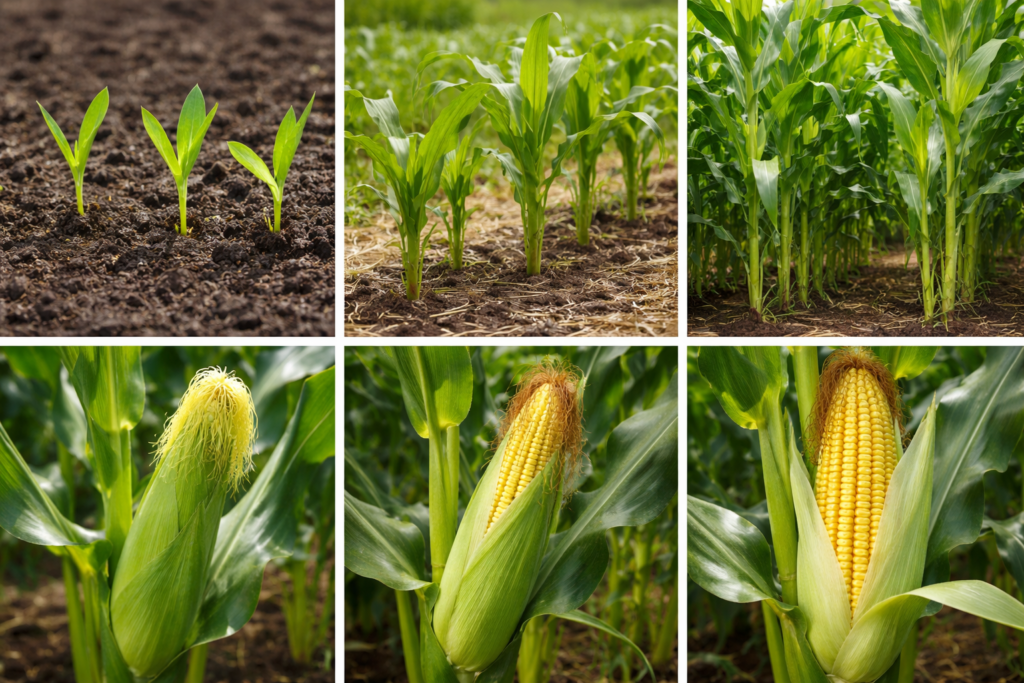
Corn
General Information
| Scientific Name: | Zea mays |
| Common Names: | Corn, Sweet Corn, Field Corn, Dent Corn and Popcorn |
| Plant Family: | Poaceae |
| Vegetable Type: | Warm Season cereal grain grown as a vegetable when harvested young for fresh eating or preservation. |
| Popular Varieties: | Sweet corn is what most gardeners prefer for fresh eating. Popcorn and dent corn are grown more often for drying and storage. |
Know Before You Grow
| Growing Zones: | 3 to 11 |
| Crops per Year: | 1 crop per year, but if you have a very long warm season 2 plantings are possible. |
| Plants Per Person: | 15 to 25 feet of row per person. If freezing or preserving, plan 30 to 50 feet of row per person. |
| Frost Hardy: | No |
| Heat Tolerant: | Yes, as long as the plants get enough water. With that said, extreme heat during pollination can reduce kernel set. |
| Stratification: | No |
| Scarification: | No |
| Resistances: | Some varieties have been grown that are resistance to certain rusts, smuts or leaf disease, but corn as a general rule is not resistant to anything. |
Rotation Schedule
Starting from Seed
| When: | Not recommended. Seed should be direct sown. |
Garden Bed Prep
| Soil: | Fertile, loose, well-draining soil with good moisture-holding ability. |
| pH: | 6.0 to 6.8 |
| Soil Depth: | at least 8 to 12 inches of workable soil. |
| Trellis: | No |
| Fertilizer: | Corn is a heavy feeder, and needs lots of nitrogen. When prepping the field or bed, work in 1 to 2 inches of compost and apply a balanced garden fertilizer. |
| Compost: | 1 to 2 inches worked in well before planting. |
Transplanting
| When: | NOT RECOMMENDED. DIRECT SOW ONLY. |
Direct Sowing
| When: | After all danger of frost has passed and the soil is at least 60°F, though warmer is better. |
| Depth: | 1 to 1 1/2 inches |
| Spacing: | seeds: 8 to 12 inches apart. rows: 24 to 36 inches apart. |
| Water: | Water seeds in after planting. The soil needs to stay moist, but not soggy, until the plants have fully emerged. |
| Light: | Full Sun |
| Soil Temperature: | At least 60°F, warmer is better |
| # in Sq. Ft. Planting: | Not recommended for square foot gardening. |
Growing Care
| Soil pH: | 6.0 to 6.8 |
| Fertilizer/Feed: | When plants are 12 to 18 inches tall, side dress with a nitrogen supporting fertilizer. Fertilize again when the tassels are beginning with a side dressing as before. |
| Days to Maturity: | 60 to 100 days, depending on variety. |
| Water: | Water deeply so that the moisture reaches the root zone. Keep the soil evenly moist, but never soggy. This is vital during germination, tasseling, silking and ear fill. |
| Pruning: | None |
| Mulching: | Mulch is always beneficial, but only after the plants are fully established. |
| Pollination: | Corn is wind pollinated. The wind blows the pollen from the top tassels, and that pollen has to land on the silks in order to form kernals. This is why it is important to plant corn in “blocks” |
Companions & Antagonists
| Plant Family: | Antagonists: |
| beans (3 sisters) | tomatoes |
| squash (3 sisters) | Plants that crowd |
| cucumbers | Plants that decrease airflow |
| pumpkins | Any plant that attracts earworms. |
Attracts & Repels
| Attracts: | Repels: |
| Deer | Nothing |
| Racoons | NA |
| Other wild life | NA |
Pests & Disease
| Pests: | Disease: |
| Corn earworms | rust |
| aphids | smut |
| cutworms | leaf blights |
| armyworms | seedling rots |
Seed Saving
| When: | Corn cross pollinates very easily, so if two different varieties were planted near each other, you really don’t know what you are going to get. With that said, the ears must be fully mature, then further drying is usually needed after harvest. |
| Method: | Shell kernels off of the dried cob. |
| Storage: | Store in a cool dry spot. |
Harvest Time
| When: | When the ears fill out, silks are brown and drying and the kernels release a milky juice when pierced. |
| How: | For smaller beds or fields of corn, harvest by hand, cutting or slicing the ears from the stalk. Large fields usually require the use of a tractor with harvesting equipment. |
| What: | The ears of corn. |
| Curing: | none. When harvesting, harvest quickly because sweet corn starts to loose its quality fast after picking. |
| Storing: | Regular corn, such as sweet corn really isn’t stored until it has been dried, and the kernels harvested from the cobs. |
| Preservation Methods: | Freezing, drying, canning |
Troubleshooting
| Ears have missing kernels: | Usually due to poor pollination |
| Plants are pale and weak: | Often caused by low fertility, especially low nitrogen. |
| Seeds rot or fail to sprout: | Usually cold wet soil or poor seed conditions. |
| Corn falls over: | Could be wind, shallow rooting, poor establishment, or root/stalk issues. |
| Tiny or poor ears: | Could be poor pollination, crowding, low fertility, or drought stress. |
| Smut growths on ears or plants: | Likely corn smut |
| Plants look good but ears are disappointing: | Often a pollination problem, especially if corn was planted in too few rows or too sparsely |