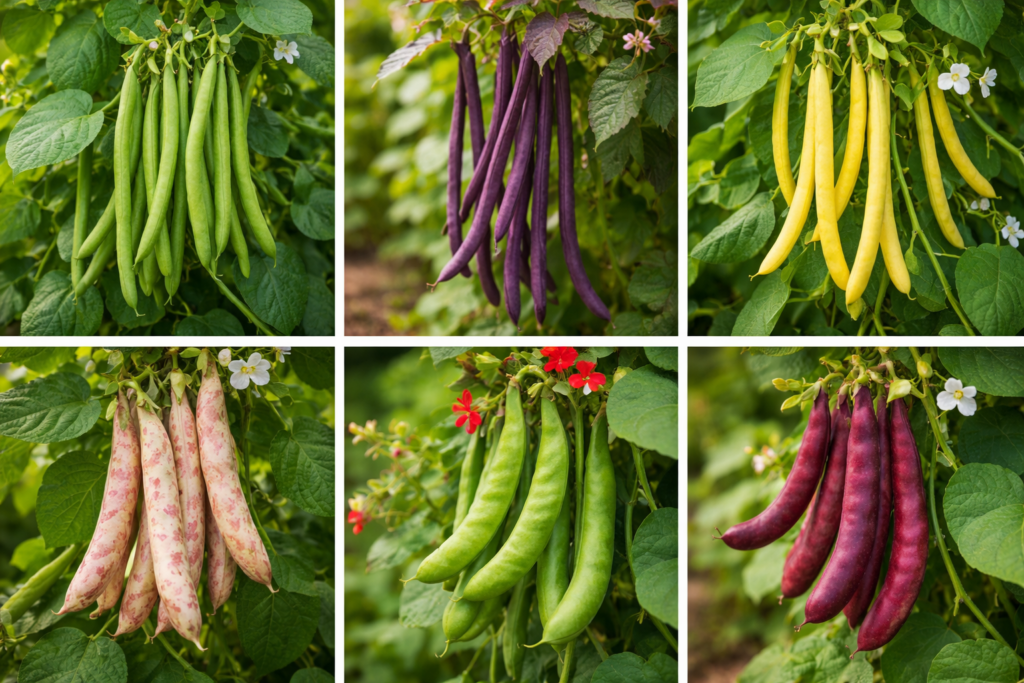
Beans
General Information
| Scientific Name: | phaseolus vulgaris |
| Common Names: | Beans, green beans, snap beans, bush beans, pole beans, dry beans |
| Plant Family: | Fabaceae |
| Vegetable Type: | Warm season Legume |
| Popular Varieties: | Bush, pole, snap and dry, including Blue Lake, black beans, kidney beans, lima beans, great northern beans, etc. |
Know Before You Grow
| Growing Zones: | 3 to 10 |
| Crops per Year: | 1 to 2, depending on length of season and heat |
| Plants Per Person: | Bush Beans: 10 to 15 row feet per person. Pole Beans: 3 to 5 hills per person For Preservation: Bush beans: about 20 to 30 feet of row per person. Pole beans: double the number of hills per person. |
| Frost Hardy: | No |
| Heat Tolerant: | Moderate heat tolerance. They love warmth, but extreme heat can reduce flowering and pod set. |
| Stratification: | No |
| Scarification: | No |
| Resistances: | Some varieties have resistance to rust, mosaic viruses, or common bean diseases. |
Rotation Schedule
Starting from Seed
| When: | Beans are best direct sown. They do NOT like transplanting. |
Garden Bed Prep
| Soil: | Loose, fertile, well-draining |
| pH: | 6.0 to 6.8 |
| Soil Depth: | 8 to 10 inches |
| Trellis: | Bush Beans: no Pole Beans: Yes |
| Fertilizer: | Beans are light to moderate feeders. Work 1 to 2 inches of compost. If your soil is poor, add a balanced fertilizer. Do NOT add a lot of nitrogen, as beans produce plenty of their own nitrogen. |
Transplanting
| When: | Not recommended. Direct sow only. |
Direct Sowing
| When: | After all danger of frost has passed, and the soil has warmed. |
| Depth: | 1 inch |
| Spacing: | Bush: 2 to 4 inches, rows 18 to 24 inches apart. As bush beans grow, thin as needed. Pole: 4 to 6 inches apart along a trellis. Same row spacing as bush. |
| Water: | Water after planting, and keep the soil evenly moist at least to the seed level during germination. |
| Light: | Full Sun |
| Soil Temperature: | 70°F to 85°F |
| # in Sq. Ft. Planting: | Bush: 9 per square foot Pole: 8 per square foot, as long as all are growing on support. |
Growing Care
| pH: | 6.0 to 6.8 |
| Fertilizer/Feed: | Usually not necessary beyond bed prep. |
| Days to Maturity: | Bush: 50 to 60 days Pole: 60 to 75 days |
| Water: | Enough to keep the soil evenly moist, especially during flowering and pod formation. |
| Pruning: | No. Just remove anything dead, damaged or diseased. |
| Mulching: | After seedlings are well established mulch 1 to 2 inches. |
| Pollination: | Beans are perfect flowers (Self-Pollinating), but they do benefit from pollination by bees and other insects. |
Companions & Antagonists
| Plant Family: | Antagonists: |
| Corn | Onions |
| Carrots | Garlic |
| Cucumbers | Leeks |
| Radish | – |
Attracts & Repels
| Attracts: | Repels: |
| bees and other beneficial insects and pollinators, including ladybugs and lacewings. | Nothing |
Pests & Disease
| Pests: | Disease: |
| aphids | rust |
| mexican bean beetles | bacterial blights |
| spider mites | mosaic viruses |
| leaf hoppers | powdery mildew |
| cutworms | damping off |
| stink bugs | root rot |
Seed Saving
| When: | Just leave some beans on the plant until they are completely dried out. They should rattle a bit inside the pod. Harvest these pods before rain gets them wet. |
| Method: | Shell, dry (if not thoroughly dry) and store. |
| Storage: | Store in a cool, dry place |
Harvest Time
| When: | Snap Beans: Harvest when pods are young, tender, smooth and before the seeds inside get too large. |
| How: | Gently break or cut the beans from the vine. Pick often so the plant keeps producing. |
| Storing: | For fresh eating, beans store for a couple of days in the refrigerator, but once they are snapped or shelled, they need to be either cooked or preserved immediately. Dried beans are usually the ones that are stored long term. |
| Preservation Methods: | Canning, freezing |
Troubleshooting
| Lots of leaves, not many beans: | Usually too much nitrogen or too much shade. |
| Flowers, but poor pod set: | Can be from heat stress, drought stress, or general plant stress. |
| Seeds rot in the ground: | Usually due to cold, overly wet soil. |
| Plants yellowing: | Could be poor drainage, nutrient imbalance, root trouble or disease. |
| Pods tough and stringy: | Harvested too late |
| Plants stop producing early: | Heat, drought, disease, or just the natural end of a bush bean’s production window. |
| Leaves speckled or damaged: | Could be bean beetles, mites, or disease issues. |