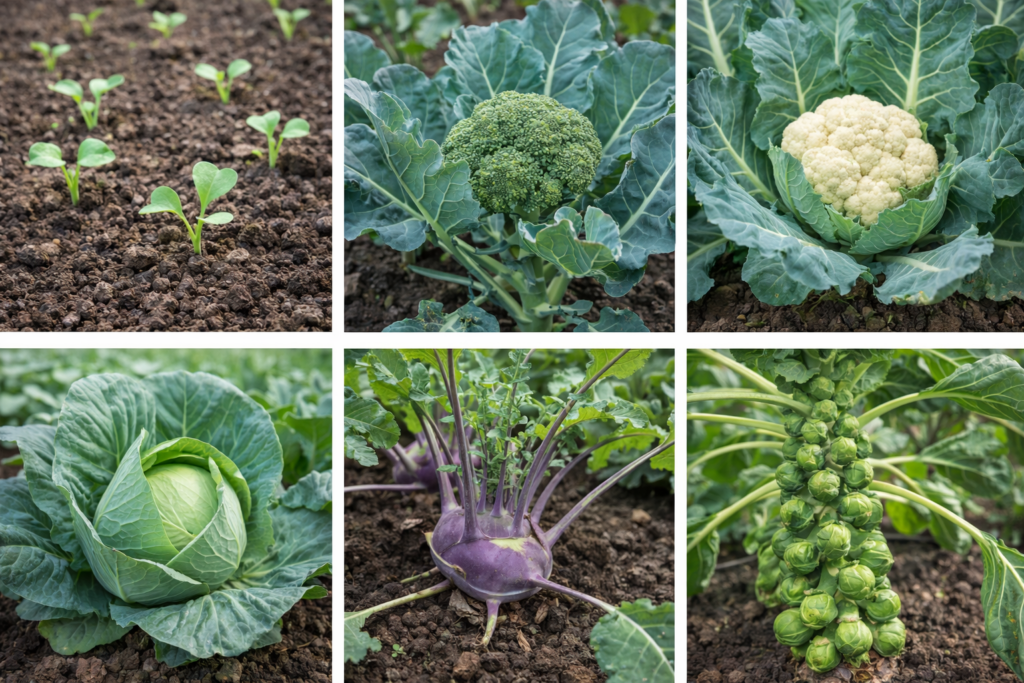
How to Grow Brassicas
General Information
| Scientific Name: | Brassica spp. |
| Plant Family: | Brassicaceae |
| Vegetable Type: | Cool-season vegetables which are grown either for their leaves, stems or flower parts. |
| Popular Varieties: | Heading Types: Cabbage, Napa Cabbage, Brussel Sprouts Flower/Head Types: Broccoli, Cauliflower Leafy Types: Kale, Collards, Mustard Greens, Bok Choy Stem/Root Types: Kohlrabi, Turnips, Rutabagas |
| Note: | Brassicas are often called Cole Crops or Cold Crops…depending on who you ask. It is important to understand the difference between Brassicas and Leafy Greens. All Brassicas are leafy greens, but not all leafy greens are Brassicas. Leafy greens are any vegetable grown specifically for their leaves leaves. Not all leafy greens are green in color. Brassicas are cool season vegetables whose stems, leaves, flower buds or flowers are all edible. Not all leafy greens are cool season crops, but all Brassicas are. |
Know Before You Grow
| Growing Zones: | 2 to 11 |
| Crops per Year: | 1 or 2, often more for fast leafy types in cold zones. |
| Plants Per Person: | 2 to 4 leafy plants, 3 to 5 heading plants per person. Double these numbers if you will be storing, freezing or fermenting. |
| Frost Hardy: | Yes |
| Heat Tolerant: | No |
| Stratification: | No |
| Scarification: | No |
Rotation Schedule
| Schedule: | 3 or 4 year rotation schedule. |
| Follow ->: | Legumes, onions, garlic or other non-brassica crops |
| <-Following: | Nightshades, legumes, cucurbits, or root crops. |
Starting from Seed
| When: | Zones 2 – 5: Start indoors 6 to 8 weeks before last spring frost for spring crops; start indoors again in mid to late summer for fall crops. Zones 6 – 7: Start indoors 4 to 6 weeks before your last expected frost date. Zones 8 – 11: Start indoors or direct sow in late summer through fall for winter growing. |
| Soil: | Seed starting mix |
| Depth: | 1/4″ to 1/2″ |
| Water: | Keep moist but not soggy |
| Germination: | Usually 5 to 10 days. |
| Up Pot: | When the plant has at least 2 sets of true leaves, if needed before transplanting. |
| Harden Off: | 7 to 10 days before transplanting. Start in shade for a couple of hours and increase the amount of time spent outdoors and in sunlight each day. |
| Light: | 14 to 16 hours per day |
| Humidity: | Moderate humidity is fine. Remove dome after sprouting. |
| Soil Temperature: | 65°F to 75°F |
| Heat Mat: | Not required |
Garden Bed Prep
| Soil: | Loose, fertile, well-draining soil rich in organic matter. |
| pH: | 6.0 to 7.0 |
| Soil Depth: | 8 to 12 inches |
| Trellis: | No |
| Fertilizer: | Brassicas are moderate to heavy feeders. Mix in balanced fertilizer before planting. They especially appreciate a nitrogen boost early during leafy growth. |
| Compost: | New: Work 3 to 5 inches of compost into the top 6 to 8 inches of soil. Established: Mix in 1 inch of compost into the top few inches. |
Transplanting
| When: | Transplant in cool weather. Spring crops go out before heat arrives. Fall crops go out late enough to mature in the cooler weather. |
| How: | Harden off 7 to 10 days. Transplant on a cloudy day or in early evening if possible. Dig a hole slightly larger than the rootball. |
| Depth: | Plant at the same depth they were growing in the pot. |
| Spacing: | Broccoli: 18 to 24 inches Cabbage: 12 to 24 inches Cauliflower: 18 to 24 in. Brussel Sprouts: 18 to 30 Kale/Collards: 12 to 18 Turnips/Bok Choy/Mustard: 4 to 8. |
| Mulch: | Yes. Apply mulch after the plants are established to hold moisture, reduce weeds, and keep soil temperatures more even. |
| Water: | Water immediately after transplanting and keep the soil evenly moist while the plants get established. |
Direct Sowing
| When: | Best direct sown brassicas include: kale, collards, mustard, bok choy, turnips, rutabagas, and kohlrabi. Broccoli, cabbage, cauliflower, and brussel sprouts are more often started indoors and transplanted. Zones 2 – 5: Direct sow in early spring as soon as the soil can be worked, and again in mid to late summer for fall crops. Zones 6 – 7: Direct sow around your last frost date for spring crops and again about 8 to 10 weeks before your first fall frost for fall harvests. Zones 8 – 9 Direct sow in late fall or winter for a winter or early spring harvest, and avoid midsummer when it’s too hot. Zones 10 – 11: Direct sow in the coolest part of the year, often late fall through winter, so plants mature before the heat sets in. |
| Depth: | 1/4″ to 1/2″ deep |
| Spacing: | Broccoli: 18 to 24 inches Cabbage: 12 to 24 inches Cauliflower: 18 to 24 in. Brussel Sprouts: 18 to 30 Kale/Collards: 12 to 18 Turnips/Bok Choy/Mustard: 4 to 8. |
| Water: | 1 to 1 1/2 inches of water per week. Keep the soil moist, but not soggy. |
| Light: | Full sun |
| Soil Temperature: | 65°F to 75°F |
| # in Sq. Ft. Planting: | Broccoli, cabbage and cauliflower: 1 per sq. ft. Brussel Sprouts: 1 for every 2 sq. feet. Kale and Collards: 1 per sq. ft. Kohlrabi: 4 per square foot. Turnips for roots: 9 per sq. ft. |
Growing Care
| Soil pH: | 6.0 to 7.0 |
| Fertilizer/Feed: | 2 Weeks after transplant: Side dress with a balanced fertilizer or a nitrogen supportive feed. During Active Growth: Feed again if growth slows, leaves pale or heads are developing poorly. |
| Days to Maturity: | Leafy Baby Greens: 25-40 days Mustard, Turnip Greens: 35 to 50 days Kohlrabi: 45 to 65 days Broccoli: 60 to 90 days Cabbage: 70 to 110 days Cauliflower: 55 to 100 days Brussel Sprouts: 80 to 120+ days |
| Water: | 1 to 1.5 inches per week, including rainfall. |
| Pruning: | Remove dead, damaged or diseased leaves. For kale, collards and mustard harvest outer leaves first. For broccoli remove the main head on time so side shoots can develop. Do not heavily prune heading crops. |
| Mulching: | 1 to 3 inches once plants are established. Keep mulch a little bit away from the stems. |
| Pollination: | Pollination only matters if you are growing for seed. |
Companions & Antagonists
| Plant Family: | Antagonists: |
| Onions, garlic | Avoid other brassicas. |
| Dill, Thyme, Sage | Avoid crowding |
| Beets, Lettuce | – |
| Spinach, Celery | – |
Attracts & Repels
| Attracts: | Repels: |
| Bees | Nothing. |
| Hoverflies | – |
| Parasitic Wasps | – |
| Other beneficial insects when allowed to flower | – |
Pests & Disease
| Pests: | Disease: |
| Cabbage Worms and cabbage loppers | Black rot |
| Aphids | Clubroot |
| Flea Beetles | Downy mildew |
| Harlequin Bugs | leaf spot |
Seed Saving
| When: | In the second year for most brassicas, after flowering and seed pod formation. |
| Method: | Collect pods in paper bag before they shatter. |
| Storage: | Seed envelop or airtight container. |
Harvest Time
| When: | Broccoli: When heads are tight, before flower opens. Cauliflower: When heads are full and still compact Brussel Sprouts: When sprouts are firm, starting from the bottom. Kale/Collards/Mustard: When leaves are large enough to use. Kohlrabi: When swollen stem is still tender. Turnips/Rutabagas: When roots reach useable size. |
| How: | Use a knife, pruners, or garden shears. Do not yank or rip from the plants, unless you are harvesting the whole crop. |
| What: | Leaves, heads, flower buds, stems, side shoots, or roots depending on the brassica. |
| Curing: | None |
| Storing: | Leafy types: about 5 to 10 days refrigerated. Broccoli/Cauliflower: about 1 to 2 weeks refrigerated. Cabbage: Several weeks or longer in cold storage Brussel Sprouts: a few weeks refrigerated Turnips/Rutabagas: weeks to months in proper cold storage |
| Preservation Methods: | Freezing, dehydrating greens, fermenting, pickling |
Troubleshooting
| Yellowing leaves: | Often nutrient deficiency, especially nitrogen or water stress. |
| Wilting: | Usually water stress, root damage, or heat |
| Curling leaves: | Heat stress, aphids, or other pests |
| Dark spots or rotting areas: | Disease, poor airflow, wet foliage, or rot issues. |
| Small or loose heads: | Heat, poor fertility, inconsistent watering or wrong timing. |
| Bolting? | Usually caused by temperature swings, heat, age or stress. |
| Leaves full of holes: | Likely cabbage worms, loppers, flea beetles, or other chewing pests. |
| Poor roots or bulbs: | Crowding, shallow soil, poor fertility, or inconsistent watering. |