Botany – A Homesteader’s Guide to Plant Science
Botany is a division of science that is entirely focused on plants. Botany is essentially a subset of Natural Science and/or Biology. The study focuses on what makes a plant a plant, how they are structured by nature, how they grow, how they live, and even how they die. Botany becomes easier to understand if you think of plants as a whole different culture of “people.”
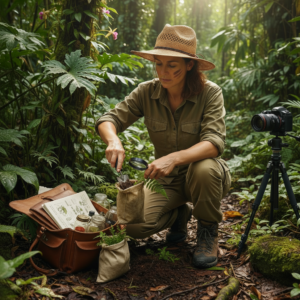
Botany is often referred to, in its simplest terms, as Plant Science. It is also commonly called Phytology, because of the focus on the photosynthesis process of plant life. Botanists, the scientist who have the education and experience in the field of plant life, only study plants that grow on or in the earth, as opposed to those who study plant life in bodies of water, who are referred to as Aquatic Botanists.
The earliest known Botanists were called Herbalists. Today, we (sadly) just think of Herbalists as people who grow herbs and make soaps from them, as a hobby. But, I (Kelley) can assure you that an Herbalist is every bit as educated as a Botanist…An herbalist is a botanist who zeroed their study in on the production and uses of herbs, for food and medicine primarily. End of rant…

Without plants and the people who study them, we wouldn’t have healthy food to eat or fresh air to breathe. Plants create the oxygen that is necessary for every human to stay alive. They also provide the materials for our homes, like wood from trees, and the fabrics for our clothes, like cotton. Even the modern medicines that save lives today got their start from ancient herbalism.
Human life simply cannot last without plants. Because our environment and the climate are always shifting, we have to keep studying how plants react. Just like a small change in a person’s health can affect their whole body, a small change in the weather or the earth can change an entire plant species. As technology gets better, botanists must continue their work to make sure we always have the food, medicine, and air we need to survive.
To Read Next: The Anatomy of a Plant
For more in-depth information on the science of Botany, visit: Botanical Society of America
Disclaimer: Some of the links in this content may be ‘affiliate links.’ This means if you click on the link and purchase the item, we will receive an affiliate commission. We are also Amazon Associates, and we do earn from qualifying purchases. Regardless, please know that we only recommend products or services we use personally, or have throughly researched, and that we believe will add value to our readers.