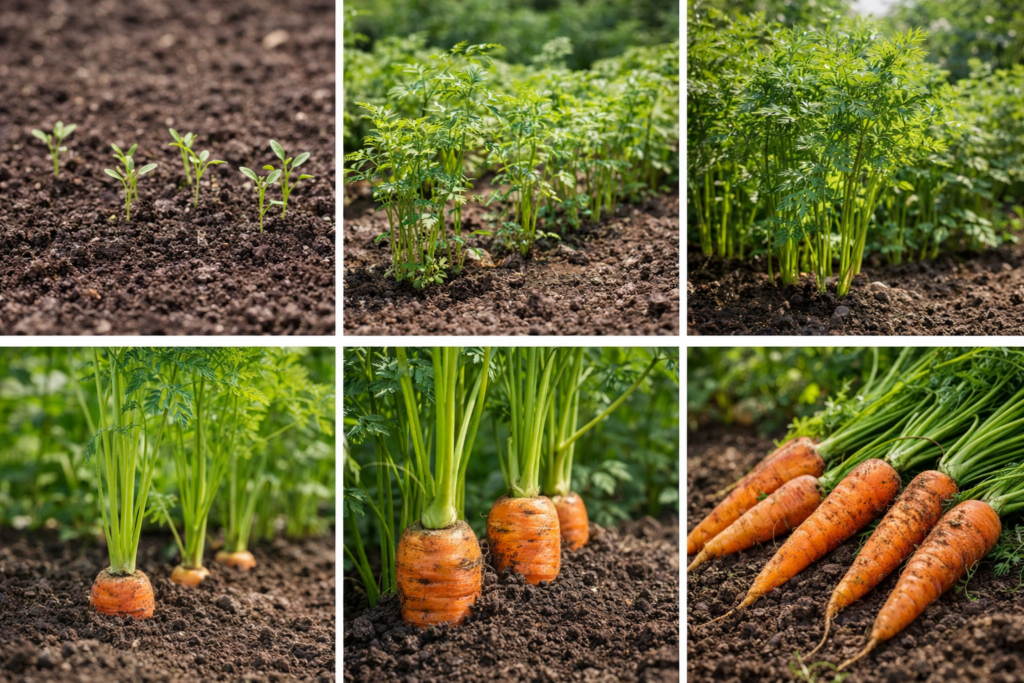
Carrots
General Information
| Scientific Name: | Daucus carota subsp. sativus |
| Common Names: | Carrot, garden carrot |
| Plant Family: | Apiaceae |
| Vegetable Type: | Cool season root vegetable |
| Popular Varieties: | Nantes, Danvers, Imperator, Chantenay, Parisian |
Know Before You Grow
| Growing Zones: | 3 to 10 |
| Crops per Year: | 1 to 2, sometimes more in milder climates with succession planting. |
| Plants Per Person: | 5 to 10 feet of row per person. If storing or preserving, plant 10 to 15 feet of row per person. |
| Frost Hardy: | Yes. Carrots tolerate light frost and often taste sweeter after cool weather. |
| Heat Tolerant: | Poor to moderate. They do not love high heat, especially during germination and root development |
| Stratification: | No |
| Scarification: | No |
| Resistances: | No |
Rotation Schedule
| Schedule: | 3 year rotation |
| Follow ->: | beans, peas, lettuce, onions, garlic, other crops that leave the soil reasonably loose and clean. |
| <-Following: | bassicas, beans, peas, corn, cucurbits |
Starting from Seed
| When: | Direct Sow Only. |
Garden Bed Prep
| Soil: | Loose, fine stone-free, well-draining soil |
| pH: | 6.0 to 6.8 |
| Soil Depth: | 8 to 12 inches |
| Trellis: | No |
| Fertilizer: | Work in finished compost lightly, and only if needed. Use a balanced low to moderate fertilizer. Do Not Use Fresh Manure. Do not overdo the nitrogen. |
Transplanting
| When: | Direct Sow Only |
Direct Sowing
| When: | Sow in cool weather at least 2 to 3 weeks before the last spring frost for spring harvest. For a fall crop, sow in very late summer, if your climate isn’t too hot for germination. |
| Depth: | 1/4 inch |
| Spacing: | Sow seed thinly in rows, then thin later. The seeds are too tiny for proper spacing. When the carrots emerge, carefully thin them to 2 to 3 inches apart. |
| Water: | Water after planting lightly. Keep the soil moist, without making it soggy. |
| Light: | Full sun |
| Soil Temperature: | 55°F to 75°F |
| # in Sq. Ft. Planting: | 16 carrots per square foot for standard carrots. 9 per square foot for larger storage carrots. up to 25 per square foot for baby carrots. |
Growing Care
| Soil pH: | 6.0 to 6.8 |
| Fertilizer/Feed: | None other than bed prep before planting. |
| Days to Maturity: | 55 to 80, depending on variety |
| Water: | Keep the soil evenly moist until well established. Then, give the carrots a good soaking a couple of times per week. Watering should be consistent and about the same amount each time. |
| Pruning: | None other than weeding |
| Mulching: | Light mulching only after the plants are well established. |
| Pollination: | Since carrots are usually grown for the root (what we call the carrot), and not for seed, pollination does not play a part in the growth of the root. |
Companions & Antagonists
| Plant Family: | Antagonists: |
| onions | dill |
| garlic | fennel |
| leeks | parsnips |
| chives | other close relatives if pest pressure is a concern. |
Attracts & Repels
| Attracts: | Repels: |
| Beneficial wasps | none |
| hoverflies | none |
| lacewings | none |
| other beneficial insects | none |
Pests & Disease
| Pests: | Disease: |
| carrot rust fly | leaf blights |
| aphids | damping off |
| flea beetles | root rot |
| cutworms | aster yellows |
| wireworms | cavity spot |
| nematodes | Other |
Seed Saving
| When: | Carrots are actually biennial…so if you don’t harvest your carrots during the year they are planted, you can over-winter them, or you can store and replant them (overwintering is best). During the second year, let them flower, then harvest the dry seed heads. |
| Method: | The paper bag method is preferred. |
| Storage: | Store in a cool, dry place |
Harvest Time
| When: | When they’ve reached the desired or expected size. |
| How: | Loosen soil if needed, then gently pull by the tops near the crown. If you have heavier soil, use a fork, but be very careful! You do not want to snap the top off, leaving the carrot underground and you don’t want to damage the carrots with the fork. |
| Curing: | None. Get your carrots out of the heat and off hot soil as soon as possible. |
| Storing: | Trim tops, store in a cool, dark place. |
| Preservation Methods: | Freezing, drying, canning |
Troubleshooting
| Forked or misshapen roots: | Usually rocky soil, clods, fresh manure, rough compost, or root disturbance |
| Short stubby roots: | Heavy soil, shallow soil, or compacted soil. |
| Poor germination: | Usually seed bed dried out, soil too hot or seed too old. |
| Roots crack or split: | Often caused by uneven watering or leaving roots too long after a growth surge. |
| Tiny roots and huge tops: | Too much nitrogen or crowding |
| Yellow or weak tops: | Could be poor fertility, water stress or root trouble. |
| Roots taste bitter or poor quality: | Heat stress, old age, or poor growing conditions |
| Hairy Roots: | Can be from overly rich soil, un-decomposed organic matter or root stress. |