Container Gardening
Grow Food Anywhere
You know, growing up here in East Texas, I used to think “gardening” meant you had to have at least an acre plowed up, a tractor that occasionally cooperated, and enough sweat equity to fill a stock tank. My daddy, grandaddy and great-granddaddy grew everything in long, straight rows in that red East Texas dirt.
But as I’ve gotten a bit older—and let’s just say “wiser” rather than “older”—I’ve realized that you don’t need a massive plot of land to have a green thumb. Sometimes, the most joyful growing happens right on your back porch…or up on your Herb Deck. That’s where container gardening comes into play, and honey, it’s a game-changer.
Why Container Gardening Can Be Your Best Friend
Whether you’re living on a farm like Lowe Bridges Farm or you’ve moved into a place with just a little concrete patio, container gardening lets you get your hands in the dirt without breaking your back, and without the need for acres of dirt or numerous raised garden beds.
I’m sixty now, and with Lupus, my days don’t always go as I hope they will. So, I’ve learned to work smarter, not harder, in a way that works for my life. We have what we refer to as the big vegetable garden, which currently contains over 40 raised beds and 17 grow bags…with arhes and trellises, etc. We are constantly improving on it and will continue to do so.
But now that I also take care of my almost 90 year old Daddy, who has Alzheimers and cannot be left alone, I needed another solution for my herbs.
Why a new solution for the herbs, but not the vegetables? Because my business is reliant on the herbs I grow. I needed a way to give them the special attention they need and the ability to harvest them without leaving my daddy to go walk down to the big garden. Jeremy takes care of the vegetables in that garden…I just turn the water on and off on schedule while he’s working his J.O.B during the week.
But I digress. Container gardening gives you a level of control you will be hard pressed to find with other forms of gardening. As with several other gardening methods, you control the soil and you control the water, but what sets container gardening apart is that you control where the plant sits, and in most cases, it’s easy to move it to sit somewhere else.
If the Texas sun is beating down too hard in July, you just scoot that pot into the shade. If we get one of those surprise “blue northers” in the winter, you tuck your green babies into the garage. It’s gardening on your own terms.
Choosing Your Vessels: From Fancy to Funky
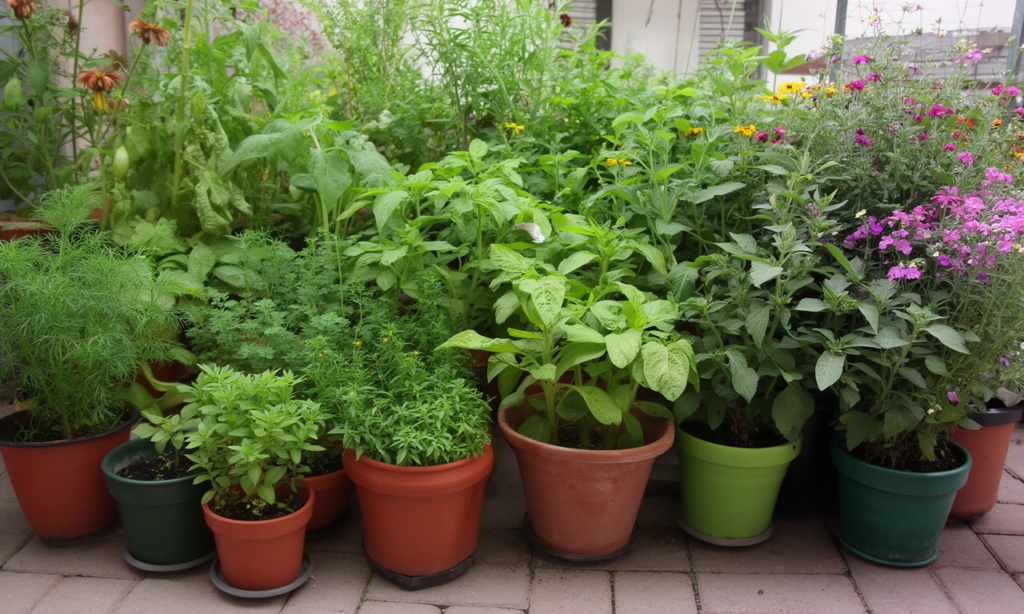
When it comes to container gardening, don’t feel like you have to go out and buy those expensive glazed pots from the big-box stores—unless you just want to! Being a country girl, I love a bit of “repurposed” charm. Old buckets, wooden crates, or even a sturdy old boot can become a home for a plant.
And if you are a homesteader, you learn to avoid waste wherever and whenever possible. You can grow in anything…there are only 3 real rules when it comes to container gardening containers…1)It must be food safe, 2) It must hold soil and 3)It must have drain holes in the bottom.
First, if food came in it, such as an egg carton (excellent for seed starting) or an old butter container, it’s food safe. Otherwise, according to the FDA, to identify food safe or food grade plastic check the bottom of the container for a triangle recycling symbol that contains the numbers 1,2,4, or 5. The safest and most common food-grade plastics are HDPE (#2), LDPE (#4), and PP (#5). Look for a “cup and fork” symbol (EU standard) or FDA/USDA approval labels.
You should never plant in old tires, painted objects, old paint cans, old cans that held chemicals, and cans that are galvanized. or treated wood containers.
The most important thing to remember for successful container gardening is drainage. If your container doesn’t have holes in the bottom, that water is just going to sit there and turn your roots to mush. I usually take my drill and add a few extra holes just to be sure. If it can hold dirt and let water out, you can grow something in it!
The Secret is in the Soil (and the Water)
Now, don’t you go digging up that red clay from the backyard and dumping it in a pot. In container gardening, your plants need a “potting mix” that’s light and fluffy so the roots can breathe. Since I’m a big believer in the “raw and organic” way of doing things—just like the beeswax in my salves—I always look for a high-quality organic mix, although these days I’m leaning more towards making my own mixes.
And let’s talk about water. In the East Texas heat, containers dry out faster than a gossip’s tongue. You’ve got to stay on top of it. I like to check my pots every morning with my coffee. If the soil feels dry an inch down, give ’em a good soak.
What to Grow: Flowers, Herbs, Vegetables
You can grow almost anything in container gardening! This is why it is the perfect option for my herbs. You can grow just about any kind of herb in containers – from culinary to medicinal herbs. Even the herbs that grow in the wild can grow well in containers if you need them to. If you do not have an actual need to grow an herb best suited to the wild in a container…then leave it in its wild habitat, please, and harvest it lightly.
Vegetables and even fruit trees can be grown in containers. The trick here is to look for varieties of vegetables or trees that are ideal for containers. If you are growing vegetables from seed, this information is usually on the package. You can do “patio” versions of tomatoes and peppers.
Fruit trees that are “dwarf” varieties usually grow to be about eight to 10 feet tall, which may be too big for a container. And do not make the mistake of thinking that a semi-dwarf variety will be smaller. Semi-dwarf are larger than dwarfs. For container gardening, you want trees that are described as either mini or micro dwarf. Either type will work.
There’s nothing like the taste of a sun-warmed tomato you grew yourself, or the crisp flavor of a fresh picked apple…even if it came off a plant or tree sitting next to your rocking chair.
Making It Your Own
The best part of container gardening is that it can easily reflect you. A tomato may not “reflect” the grower in its appearance…but if it is growing in a pot, the appearance of the container will definitely reflect the gardener. Decorate your pots, mix and match your colors, and don’t be afraid to experiment.
And, If a plant doesn’t like where it is, move it! Gardening should be a joy, not a chore…for you or the plant. The magic of watching something grow never gets old. Whether you’re twenty or sixty, a city slicker or a country gal like me, give container gardening a try. Your soul (and your porch) will thank you.