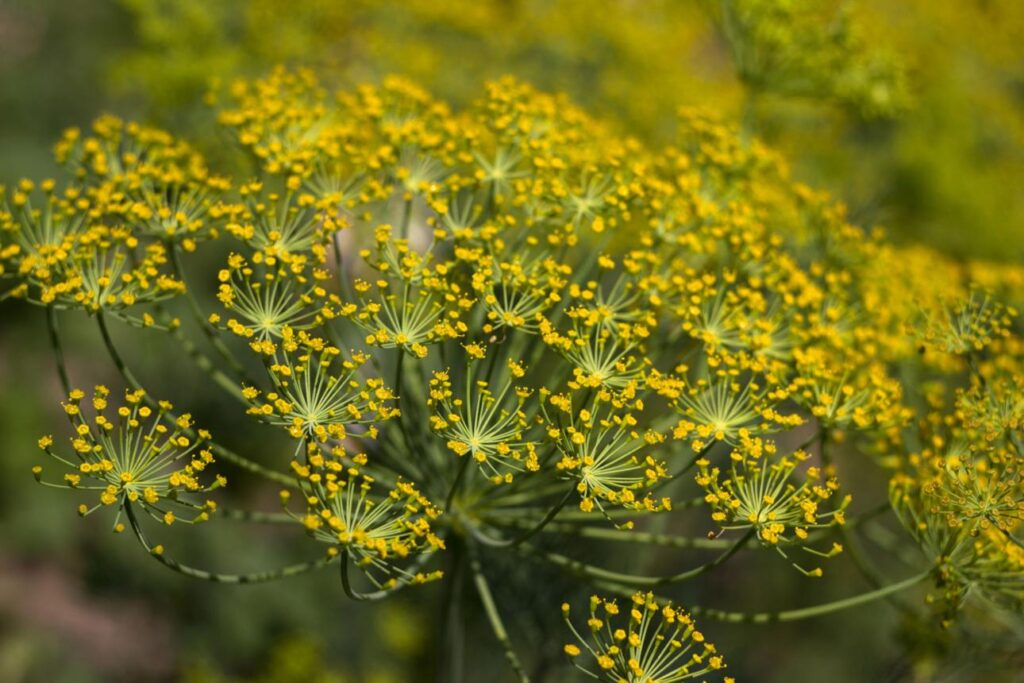
Dill Seed
General Information
| Botanical Name: | Anethum graveolens |
| Common Names: | Dill Seed, Dill |
| Plant Family: | Apiaceae |
| Type: | Annual; Culinary/Medicinal/Aromatic; Cool season |
| Our Favorite Varieties: | Bouquet, Mammoth, Fernleaf, Dukat |
Know Before You Grow
| Growing Zones: | 2–11 |
| Frost Hardy: | Yes (light frost) |
| Heat Tolerant: | Moderate |
| Stratification: | No |
| Rows, Beds, Containers: | Rows, beds, and containers all work; best in ground or deeper containers because of taproot |
Starting from Seed
| When: | Direct Sow Only, even if it is in a container. Plant it where you want it…because it really dislikes being dug up and moved! |
Row, Bed, Container Prep
| Soil: | Loose, well-draining, moderately fertile soil |
| pH: | 5.5–7.5 |
| Soil Depth or Pot Size: | 10–12 inches deep minimum; containers at least 10–12 inches deep |
| Trellis: | no |
| Fertilizer/Feed: | Light feeder; mix a small amount of balanced fertilizer like 5-5-5 into the soil before planting if needed |
| Compost: | Mix 1–2 inches into the soil before planting |
Transplanting/Up Potting
| When: | Not recommended. |
Direct Sowing
| When: | Early spring; succession sow every 2–3 weeks if growing for leaf and seed production over time |
| Depth: | ¼–½ inch |
| Spacing: | Thin to 8–12 inches apart |
| Water: | Keep evenly moist until established |
| Light: | Full sun |
| # in Sq. Ft. Planting: | 1–2 plants per square foot |
Growing Care
| Fertilizer/Feed: | Usually needs little feeding; too much fertilizer makes weak, floppy growth |
| Days to Maturity: | 40–60 days for leaves; 90–120 days for seed |
| Water: | About 1 inch per week; more in hot, dry weather |
| Pruning/Harvesting: | Let plants flower and set seed if growing for dill seed; do not keep cutting all flower heads off |
| Mulching: | Use a light layer of mulch to help hold moisture and reduce soil splash; keep it pulled back from the stems |
| Pollination: | Insect pollinated; bees and other beneficial insects improve seed production |
Companions & Antagonists
| Plant Family: | Antagonists: |
| Cabbage | Carrots |
| Onions | Fennel |
| Lettuce | – |
| Cucumbers | – |
Attracts & Repels
| Attracts: | Repels: |
| Bees | Aphids |
| Butterflies | Cabbage Pests |
| Ladybugs | – |
| Parasitic Wasps | – |
| Hoverflies | – |
Pests & Disease
| Pests: | Disease: |
| Aphids | Powdery Mildew |
| Caterpillars | Damping Off |
| Spider Mites | Leaf Blight |
Seed Saving
| When: | When seed heads turn brown and dry on the plant |
| Method: | Cut whole seed heads, hang or lay flat to dry completely, then rub or shake seeds free and store dry |
Harvest Time
| When: | Harvest seed heads when they turn tan to brown and the seeds are fully formed and hard |
| How: | Cut whole umbels or stems and finish drying indoors if needed |
| What: | Seeds |
| Storing: | Store fully dried seeds in an airtight container in a cool, dark place |
| Preservation Methods: | Drying |
Medicinal Uses:
| Traditionally Used for: | Gas relief, digestion, appetite support |
| Forms: | Tea, crushed seeds, tincture |
| Dosage or Application: | Tea: 1–2 teaspoons crushed seeds per cup; Seeds: used as needed in food or tea; Tincture: 20–40 drops |
| NOTICE: | This information is based on historical/traditional fact. It is for educational purposes only. Lowe Bridges Farm will not be held liable for your use of this information. Your use of this information and the results thereof is your responsibility, and yours alone. |
Culinary Uses:
| Flavor Profile: | Warm, slightly bitter, aromatic, and lightly caraway-like |
| Best Used In: | Pickles, breads, soups, sauerkraut, spice blends, vinegar |
| Forms: | Whole seed, crushed seed, ground seed |
As an Aromatic:
| Used for: | Warm herbal-spice scent |
| How: | Dried seeds in sachets, spice blends, and pantry mixes |
Troubleshooting
| Weak Plants: | Too much shade or overfeeding |
| Poor Seed Set: | Not enough time, too much cutting, or poor pollination |
| Plants Falling Over: | Too much nitrogen or overcrowding |
| Mildew: | Improve airflow and avoid crowding |