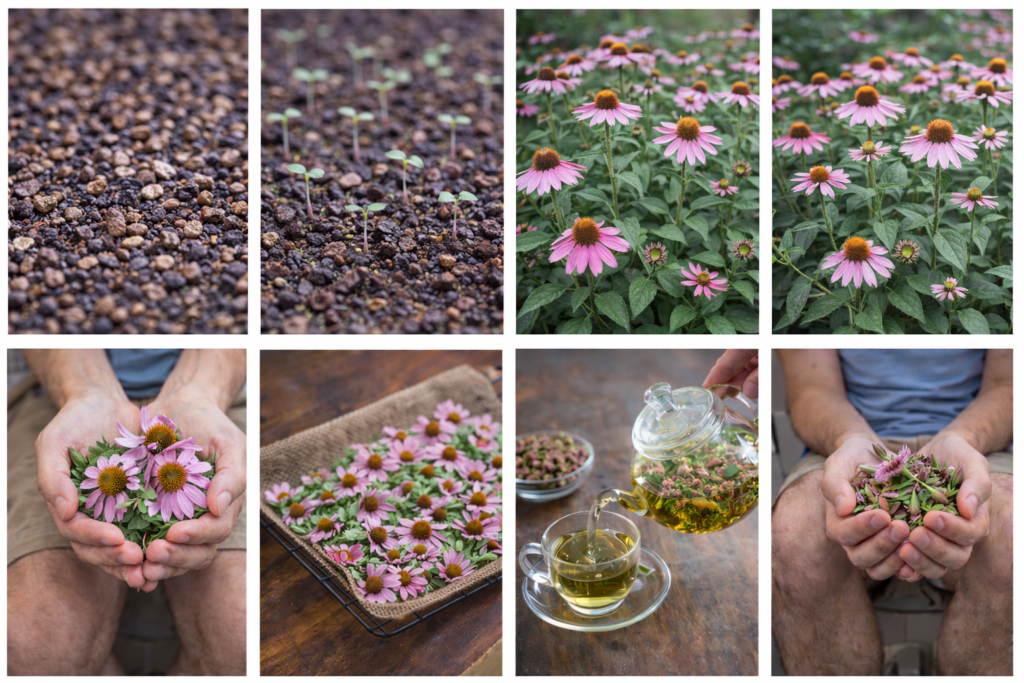
How to Grow Echinacea
General Information
| Botanical Name: | Echinacea purpurea |
| Common Names: | Echinacea, purple coneflower |
| Plant Family: | Asteraceae |
| Type: | Perennial; Medicinal; Aromatic; Pollinator Herb; Warm Season to Mild Cool Season Grower depending on climate |
| Our Favorite Varieties: | Purple coneflower |
Know Before You Grow
| Growing Zones: | 3 – 9 |
| Frost Hardy: | Yes |
| Heat Tolerant: | Yes |
| Stratification: | No |
| Rows, Beds, Containers: | Yes to all three |
Starting from Seed
| When: | Start indoors 8–10 weeks before last frost, or direct sow outdoors in fall or spring |
| Soil: | Seed-starting mix |
| Depth: | Surface sow or barely cover |
| Water: | Keep evenly moist, not soggy |
| Germination: | 10–20 days, sometimes longer |
| Up Pot: | Up pot when seedlings have several true leaves and need more root room |
| Light: | 14–16 hours under grow lights indoors; full sun outdoors |
| Soil Temperature: | 65°F–70°F |
| Heat Mat: | Helpful, but not required |
| Harden Off: | es, 7–10 days before transplanting outdoors |
Row, Bed, Container Prep
| Soil: | Well-drained soil; average to moderately rich soil is fine |
| pH: | 6.0–7.5 |
| Soil Depth or Pot Size: | At least 10–12 inches of workable soil; use a deep container, about 12 inches or larger, because echinacea develops a strong root system |
| Trellis: | no |
| Fertilizer/Feed: | Go light. Heavy feeding can make plants tall and floppy |
| Compost: | Mix in a modest amount before planting |
Transplanting/Up Potting
| When: | After frost danger passes |
| How: | Transplant gently and disturb roots as little as possible |
| Depth: | Same depth it was growing before |
| Spacing: | 12–18 inches apart |
| Mulch: | Light mulch is fine once established |
| Water: | Water in well after transplanting and keep evenly moist while establishing |
Direct Sowing
| When: | Sow outdoors after last frost, or sow in fall for natural winter chilling |
| Depth: | Surface sow or barely cover |
| Spacing: | Sow thinly, then thin to 12–18 inches apart |
| Water: | Keep the seed zone evenly moist until germination and establishment |
| Light: | Full sun to partial shade |
| # in Sq. Ft. Planting: | 1 per square foot |
Growing Care
| Fertilizer/Feed: | Feed lightly if needed. Too much fertilizer can make plants leggy |
| Days to Maturity: | Usually flowers the second year from seed, though some plants may bloom lightly the first year |
| Water: | Water regularly while establishing. Once established, echinacea is fairly drought tolerant |
| Pruning/Harvesting: | Deadhead to extend bloom, or leave seed heads for birds and seed saving |
| Mulching: | Light mulch is fine, but do not keep the crown constantly wet |
| Pollination: | Not needed for flower or root harvest. Flowers attract pollinators |
Companions & Antagonists
| Plant Family: | Antagonists: |
| Bee Balm | None |
| Yarrow | – |
| Black-Eyed Susans | – |
| Native Grasses | – |
Attracts & Repels
| Attracts: | Repels: |
| Bees, butterflies, birds, and other pollinators | None |
Pests & Disease
| Pests: | Disease: |
| Aphids | Aster Yellows |
| Japanese Beetles | Powdery Mildew |
| Leaf Hoppers | Leaf Spots |
| – | Root Rot |
Seed Saving
| When: | When seed heads are fully dry and brown |
| Method: | Cut dry seed heads, dry further if needed, then rub or shake out the seed |
Harvest Time
| When: | Flowers are usually harvested when fully open. Roots are usually harvested from mature plants in fall, typically after 2–3 years |
| How: | Snip flowers or dig roots carefully |
| What: | Flowers, leaves, and roots |
| Storing: | Dry thoroughly out of direct sunlight with good airflow, then store airtight away from light |
| Preservation Methods: | Drying for teas and tinctures, infused preparations, salves, and extracts |
Medicinal Uses:
| Traditionally Used for: | Traditionally used for common cold support and short-term immune support; some traditional uses also include minor skin applications depending on preparation |
| Forms: | Tea/infusion, tincture, capsule, extract, salve, poultice |
| Dosage or Application: | Traditional use depends heavily on whether the preparation is made from the fresh herb, root, or a mixed extract. Many traditional products are started at the first signs of a cold and used for short periods, often no more than about 10 days |
| NOTICE: | This information is based on historical/traditional fact. It is for educational purposes only. Lowe Bridges Farm will not be held liable for your use of this information. Your use of this information and the results thereof is your responsibility, and yours alone. |
As an Aromatic:
| Used for: | Mild herbal-floral scent and use in dried herbal blends |
| How: | Dried flowers and herb in sachets, dried blends, and herbal craft use |
Troubleshooting
| Poor Germination: | Seed often germinates better after cold stratification |
| Leggy Plants: | Too much fertilizer or not enough sun |
| Plants Flop Over: | Rich soil, too much fertilizer, or too much shade |
| Crown rot or decline: | Usually wet soil or poor drainage |
| No blooms first year: | Common from seed-grown plants |
| Too many volunteer seedlings: | (Not something I would complain about or try to correct…but there are folks who do…)Remove seed heads before they fully mature |