Forest Gardening
Forest gardening is one of those methods that sounds wild and mysterious, but the basic idea is actually pretty simple. A forest garden is designed to grow food and other useful plants in layers, much like a natural woodland.
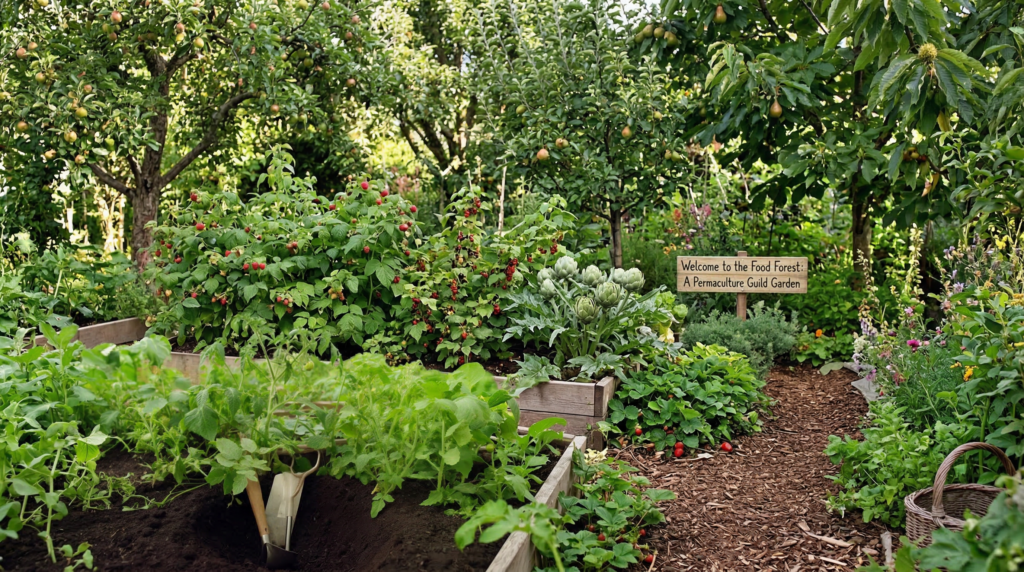
University of Minnesota Extension describes a food forest, also called a forest garden, as a system that uses a variety of food plants in a multi-story design meant to replicate the ecosystems and growing patterns found in nature.
University of Illinois Extension makes a similar point when it describes agroforestry-style plantings as using perennial crops at multiple levels of a simulated forest canopy.
That means forest gardening is not just “planting some trees and hoping for the best.” It is a deliberate way of arranging plants so they work together in layers. Instead of one flat row of crops, you may have taller trees, smaller fruit trees, shrubs, vines, herbs, groundcovers, and root crops all sharing the same space.
In other words, a forest garden tries to make better use of vertical space, plant relationships, and long-term growing patterns.
What Forest Gardening Is
A forest garden is usually built around perennial plants, especially trees and shrubs, with other useful plants layered underneath and around them.
People often describe those layers something like this:
- taller canopy trees
- smaller fruit or understory trees
- shrubs
- herbaceous plants
- groundcovers
- root crops
- vines
Not every forest garden has every layer, and not every site can support the same design. The point is not to force a textbook diagram onto your land. The point is to think in layers and relationships instead of thinking only in flat rows.
That layered design is part of what makes forest gardening different from a traditional vegetable garden. A row garden is often built around annual crops that are replanted regularly. A forest garden leans much more heavily on perennials and long-term structure.
Why Gardeners Like It
One reason people are drawn to forest gardening is that it can produce a lot from one space without looking or functioning like a conventional garden.
A well-designed forest garden can provide fruit, nuts, berries, herbs, roots, flowers for pollinators, mulch material, habitat, and shade all in the same area. University of Minnesota says food forests use perennial plants combined with annuals in a multi-story cropping design, and Illinois Extension notes that a small agroforestry-style space can include trees, bushes, vines, shade-tolerant crops, and ground-level plantings all together.
Gardeners also like forest gardening because it often emphasizes:
- long-term productivity
- biodiversity
- soil-building
- useful plant relationships
- lower disturbance
- a more natural look and feel
It appeals especially to people who like permaculture ideas, perennial crops, and gardens that feel more like living systems than annual planting projects.
The Good Side and the Hard Side
The good side is easy to appreciate.
A forest garden can make beautiful use of space. It can support pollinators and beneficial wildlife. It can build resilience through diversity. And once established, it may require less annual disturbance than a traditional garden built mostly around replanting annual crops.
But forest gardening is not instant.
This is not the method for somebody who wants to till up a square patch on Saturday and harvest big results by Tuesday. Trees and shrubs take time. Layered systems take planning. Shade patterns matter. Spacing matters. Plant choice matters. A bad combination can create too much competition, too much shade, or a big tangled mess that sounded charming in theory.
Forest gardening also asks you to think further ahead than some other methods do. You are not just planting for this season. You are designing for what the space will look like and how it will function years from now.
That can be wonderful if you like long-range thinking. It can be frustrating if you want quick, simple, immediate results.
Is Forest Gardening Right for You?
Forest gardening may be a good fit if:
- you enjoy long-term planning
- you like perennial food plants
- you want a layered, diverse growing space
- you are interested in permaculture or agroforestry ideas
- you have the patience to let a system develop over time
It may be less appealing if:
- you want a very traditional annual vegetable garden
- you do not have room for woody plants
- you prefer highly orderly, seasonal planting systems
- you want quick payoff with minimal planning
That said, forest gardening does not have to mean some giant, sprawling food forest project. A small backyard version can still use the same idea. One fruit tree, a few berry shrubs, herbs beneath them, a useful groundcover, and a vine nearby can begin to move in that direction.
You do not have to build the whole forest all at once.
Final Thoughts
Forest gardening is a layered way of growing food and useful plants that takes its cues from how natural woodlands function. It usually relies on trees, shrubs, and other perennial plants arranged to work together over time rather than standing alone in isolated rows.
For the right gardener, it can be productive, beautiful, resilient, and deeply satisfying. For the wrong gardener, it can feel slow and overly complex.
But if you like the idea of a garden that matures, deepens, and becomes more useful with time, forest gardening is well worth a look.
For more information on Food Forest Gardening: