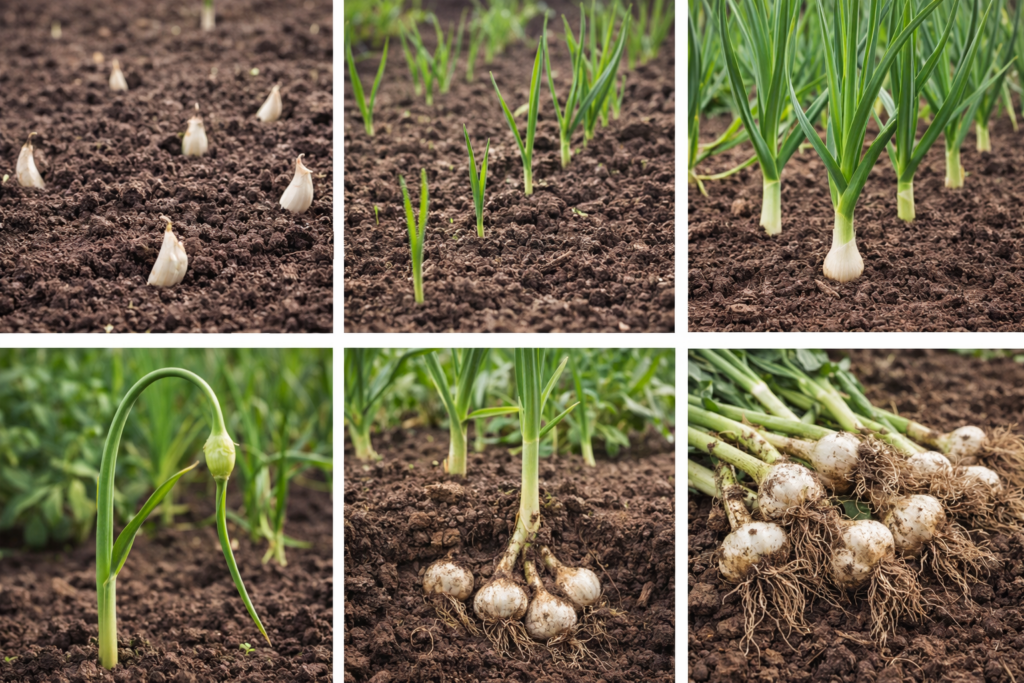
How to Grow Garlic
General Information
| Scientific Name: | Allium sativum |
| Common Names: | Garlic |
| Plant Family: | Amaryllidaceae |
| Vegetable Type: | Bulb |
| Popular Varieties: | Music, German Extra Hardy, Chesnok Red, Inchelium Red, California Early, California Late IMPORTANT TYPE INFORMATION: Garlic is either Hardneck or Softneck. Hardneck garlic grows a stiff centrral stalk called a scape. It usually has fewer, larger cloves and is often easier to peel. It is also more frost tolerant than softneck garlic. It does not, however, store as long as softneck. Hardneck garlic is best for colder zones, people who want bigger cloves and more flavor, as well as those who want to harvest scapes as well. If your priority is storage, go with softneck. Softneck garlic does not produce a flower stalk, but makes more cloves per bulb. It has flexible leaves, and looks much like onion when growing. It can be stored for 6 to 8 months under good storage conditions. This is the type most often found in grocery stores. Softneck garlic is better for people who live in milder climates. It can be easily braided and hung on a nail for storage. It does not grow well in colder zones. |
Know Before You Grow
| Growing Zones: | 3 to 10 |
| Crops per Year: | 1 |
| Plants Per Person: | 10 to 15 plants per person, more if you cook with a lot of garlic or include it for preservation. |
| Frost Hardy: | Yes. Garlic is a cool season crop and handles winter well, once it is established. |
| Heat Tolerant: | Moderately tolerant. It needs warmth to finish bulbing. |
| Stratification: | No |
| Scarification: | No |
| Resistances: | None |
Rotation Schedule
| Schedule: | 3 or 4 year schedule |
| Follow ->: | Beans, peas, lettuce, spinach, carrots, beets |
| <-Following: | Corn, brassicas, cucurbits, or other crops outside of the allium family. |
Starting from Seed
| When: | THIS IS NOT RECOMMENDED. Garlic is planted from the cloves, which are the pieces that come off of the bulb. One clove will grow one garlic bulb. |
Garden Bed Prep
| Soil: | Loose, well-draining fertile soil with plenty of organic matter. |
| pH: | 6.0 to 7.0 |
| Soil Depth: | At least 6 to 8 inches of loose, workable soil. |
| Trellis: | No |
| Fertilizer: | Mix in a balanced or slow release fertilizer before planting. The soil should not be overly rich. |
| Compost: | For new beds or rows: Work in 2 to 4 inches of compost. For Existing Beds or Rows: Mix in about 1 inch of compost. For Containers: Use a loose potting mix and add compost lightly. |
Transplanting
| When: | Not done. |
Direct Sowing
| When: | In most zones, garlic is planted in the fall, after the weather has cooled, but before the ground freezes. In very cold zones, plant early enough for roots to develop before winter – about 3 to 6 weeks before the ground freezes hard. In milder climates, garlis is often planted from fall into early winter. Spring planting is possible, but fall planting usually produces larger bulbs. |
| Depth: | If you are starting from a Plant cloves 1 to 2 inches deep. Plant with the pointed end up, and the root end (where it came off the base of the bulb) down. |
| Spacing: | 2 to 4 inches for smaller bulbs or tighter planting. 4 to 6 inches is better. |
| Water: | Water after planting. After that, keep soil evenly moist, but not soggy. |
| Light: | Full sun |
| # in Sq. Ft. Planting: | 4 per square foot for larger bulbs. 9 per square foot for medium bulbs. |
Growing Care
| Soil pH: | 6.0 to 7.0 |
| Fertilizer/Feed: | Garlic is a heavy feeder early in it’s growth cycle. Feed while the leaves are actively growing. Supplement with a little nitrogen when Spring rolls around. In late winter or early spring, side dress lightly with nitrogen only if the plants need it. |
| Days to Maturity: | 210 to 240 days from fall planting to late Spring or early summer. |
| Water: | Keep soil evenly moist during periods of active growing. Don’t keep it too wet or too dry. About 2 weeks before harvest, stop watering. |
| Pruning: | Not needed. |
| Mulching: | Mulch heavily after planting. Use straw or chopped leaves. This will help to keep moisture in, control soil temperature, prevent or diminish weeds. |
| Pollination: | Not needed for bulbs. |
Companions & Antagonists
| Plant Family: | Antagonists: |
| Beets | Peas |
| Carrots | Pole Beans |
| Lettuce | Bush Beans |
| Spinach | – |
| Strawberries | – |
Attracts & Repels
| Attracts: | Repels: |
| Pollinators if it is allowed to flower. | Garlic is an excellent companion plant because it confuses or discourages many garden pests. |
Pests & Disease
| Pests: | Disease: |
| Onion thrips | White rot |
| bulb mites | Basal rot |
| nematodes | Downy mildew |
| leafminers | rust |
| – | botrytis |
| – | other fungal rots |
Seed Saving
| When: | At harvest |
| Method: | Keep your largest, healthiest bulbs in storage for replanting in fall. Don’t break them into cloves until right before planting time. |
| Storage: | Keep seed garlic cool, dry and airy until planting. |
Harvest Time
| When: | Harvest when the lower leaves have browned but there are still several green leaves left. Waiting too long can cause wrappers to split. |
| How: | Loosen the soil around the bulb, and lift it out of the ground. Do not yank hard on the tops. |
| Curing: | Cure in a well-ventilated, shaded place out of direct sun for 4 to 6 weeks. Leave the stems and leaves attached until curing is finished. |
| Storing: | You can braid and hang garlic in a place out of direct sun, where airflow is good, and where the garlic will stay dry. Do not store in plastic. |
| Preservation Methods: | Fresh storage (braids), dehydration which allows for powdering, Freezing, infusions, some canning recipes. |
Troubleshooting
| Tiny Bulbs: | Usually caused by small planting cloves, crowding, poor fertility in soil, too much shade or drought stress. |
| Rotting cloves in the ground: | Poor drainage or unhealthy planting stock. |
| Lots of leaves but disappointing bulbs: | Too much nitrogen too late or bulbs did not have enough time in the ground. |
| Bulbs splitting open: | Harvested too late. You will need to quickly preserve them. |
| Yellowing too early: | Could be nutrient stress, disease, or natural maturity if the harvest date is near. |
| Healthy: | Strong upright leaves through winter and spring, swelling bulbs late, wrappers intact at harvest. |