How to Grow Luffa
General Information
| Scientific Name: | Luffa aegyptiaca |
| Plant Family: | Luffa, Loofah |
| Vegetable Type: | Fruit |
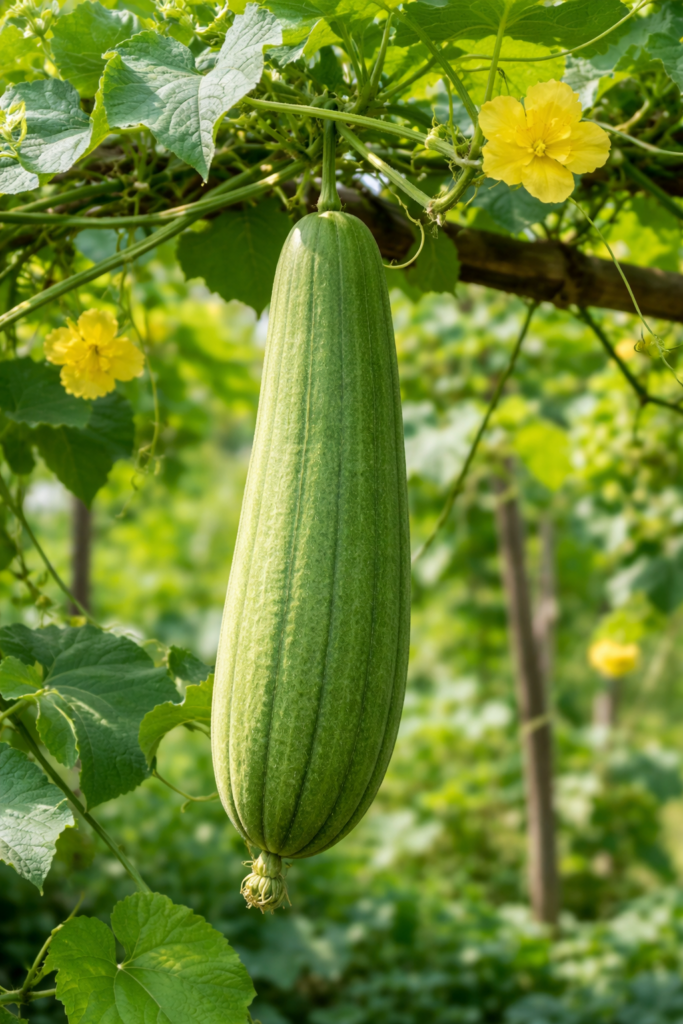
| Popular Varieties: | Sponge Gourd (Luffa aegyptiaca often called the “smooth” loofah or sponge gourd). This is what you want if you are growing luffa primarily to use as sponges. Luffa acutangula, known as the ridged or angled loofah is usually eaten when young, but like the sponge gourd, this variety also can be used as a sponge, but the smooth variety is usually preferred for that usage. |
Know Before You Grow
| Growing Zones: | 7 to 13 |
| Crops per Year: | 1 |
| Plants Per Person: | If growing for food, 3 to 5 plants per person. |
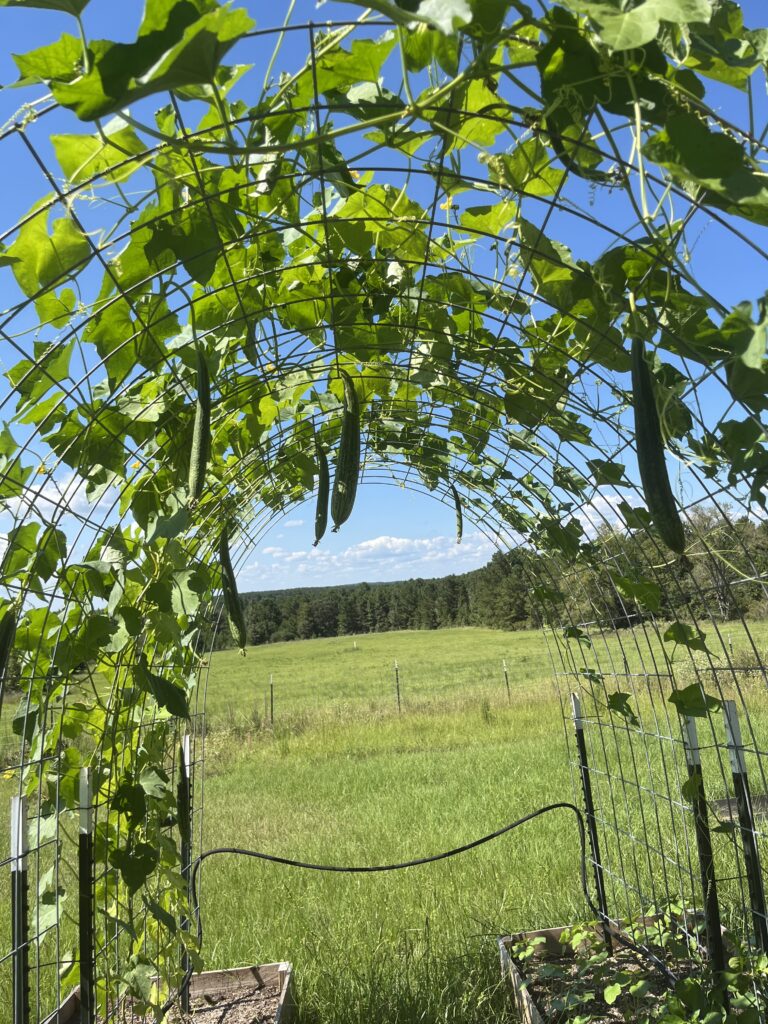
| Growing Methods: | Traditional rows or raised beds. Arches or trellises are required. |
| Frost Hardy: | Not at all |
| Heat Tolerant: | Yes |
| Stratification: | No |
| Scarification: | Yes, just nick the seed coat or soak in warm water overnight. |
| Resistances: | Fairly resilient, can resist powdery mildew with good air flow. |
Rotation Schedule
| Schedule: | 2 to 3 year schedule |
| Follow ->: | legumes, root crops |
| <-Following: | leafy greens, root crops, legumes |
Starting from Seed
| When: | Not recommended for zones 7 and up. For zones that have shorter seasons, start seeds indoors 4 to 6 weeks before your last frost |
| Soil: | Seed starting mix |
| Depth: | 1/2″ to 1″ deep |
| Water: | Consistent moisture |
| Germination: | 1 to 2 weeks depending on warmth and moisture |
| Up Pot: | Yes, after two weeks. |
| Harden Off: | Over the period of one week |
| Light: | Full Spectrum – 14 to 16 hours per day. |
| Humidity: | Not necessary in a warm environment. |
| Soil Temperature: | at least 70°F |
| Heat Mat: | Yes |
Garden Bed Prep
| Soil: | well draining rich soil – loamy with lots of organic matter. |
| pH: | 6.0 to 6.5 |
| Soil Depth: | A good deep bed. About 18 inches deep. |
| Trellis: | Strong trellis or arch required. Cattle Panel works well for both. |
| Fertilizer: | Slow release 10-10-10 or well rotted manure |
| Compost: | Add and mix in at least 2 inches of compost |
Transplanting
| When: | After any danger of frost has passed. When nights temps are staying about 50° F. |
| How: | Dig the whole slightly wider and deeper than the rootball. |
| Depth: | Slightly deeper than the rootball |
| Spacing: | 2 to 3 feet |
| Mulch: | 2 to 3 inches of straw or leaves |
| Water: | 1 inch per week |
Direct Sowing
| When: | When all danger of frost has passed |
| Depth: | 1/2″ to 1″ |
| Spacing: | 2 to 3 feet |
| Water: | Soil must stay consistently moist for germination. |
| Light: | 6 to 8 hours of full sun |
| Soil Temperature: | At least 70° F |
| # in Sq. Ft. Planting: | No recommended, unless you skip one foot between plants, and provide a strong trellis. |
Growing Care
| Soil pH: | 6.0 to 6.5 |
| Fertilizer/Feed: | Balanced fertilizer early, then more phosphorous during flowering. |
| Days to Maturity: | 150 to 200 from transplant or direct sowing seed. |
| Water: | 1 inch per week. |
| Pruning: | Prune lower leaves for air circulation, being careful not to prune too heavily. |
| Mulching: | Add about 2 inches of straw or leaves for mulch. |
| Pollination: | Bees or other insects or hand pollination |
Companions & Antagonists
| Companions: | Antagonists: |
| Corn | Potatoes |
| Beans | Pumpkins |
| Sunflowers | Squash |
| Nasturtiums | Zucchini |
Attracts & Repels
| Attracts: | Repels: |
| Bees | Nothing |
| Ladybugs | Nothing |
| Butterflies | Nothing |
| Predatory Wasps | Nothing |
Pests & Disease
| Pests: | Disease: |
| Squash Bugs | Powdery Mildew |
| Cucumber Beetles | Downy Mildew |
| Aphids | Bacterial Wilt |
| Spider Mites | Anthracnose |
Seed Saving
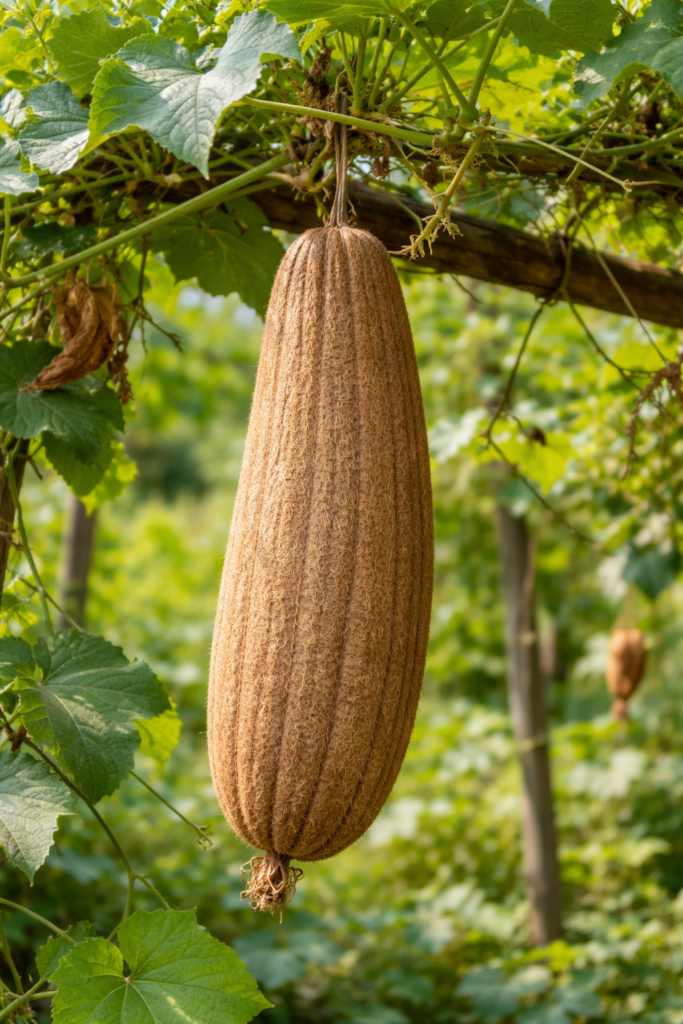
| When: | In the fall when the luffa is dried and brown |
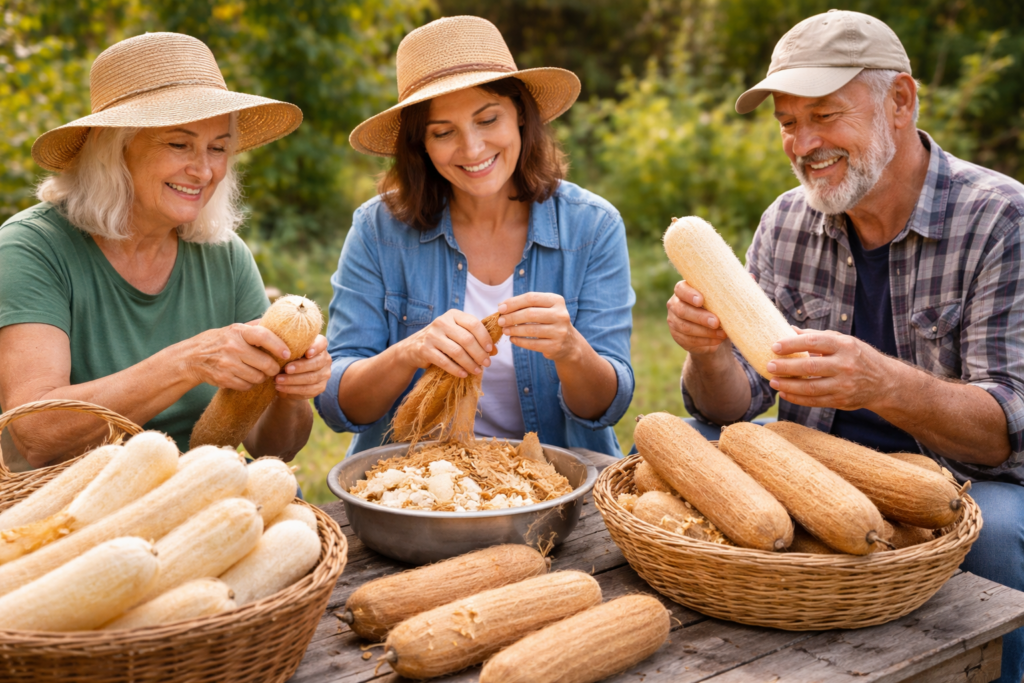
| Method: | Peel the luffa and shake out the already dried seeds. |
| Storage: | Store in a cool dark place in a container or envelope |
Harvest Time
| When: | Fall |
| How: | Use pruners to snip off the vine |
| What: | The fruits |
| Curing: | Unnecessary. They cure on the vine. |
| Storing: | You can store anywhere. |
| Preservation Methods: | These are usually peeled, have the seeds shaken out of the sponge, and then the sponge is cut into desired sizes. |
Troubleshooting
| Not flowering: | Too much nitrogen. Switch to a fertilizer higher in phosphorous. Make sure the plant is getting enough water. |
| Not setting fruit: | This is a pollination problem usually. It could also be due to inconsistent watering. |
| Wilt: | Check water. Over and under watering can cause wilt. Pests could be the culprit, as well as disease. |