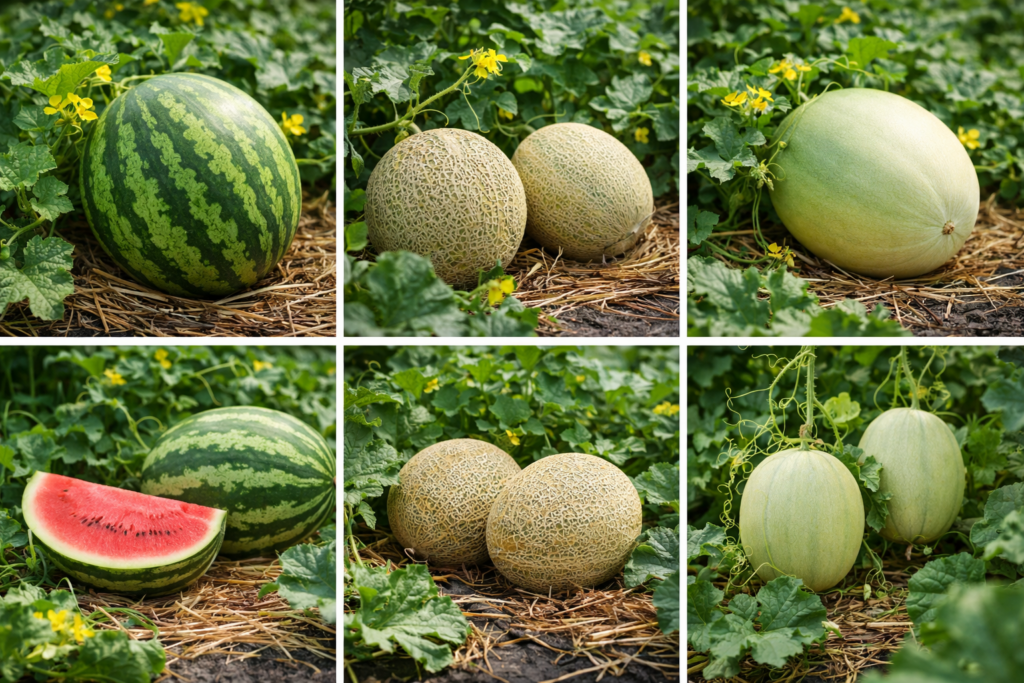
How to Grow Melons
Melons: General Information
| Scientific Name: | Different Melons have different scientific names. For example, Muskmelons: Cucumis melo Watermelons: Citrullus lanatus |
| Common Names: | Melons, muskmelons, cantaloupes, honeydews, watermelons |
| Plant Family: | Cucurbitaceae |
| Vegetable Type: | Warm-season fruiting vine crop |
| Popular Varieties: | Cantaloupe, honeydew, watermelon |
Know Before You Grow
| Growing Zones: | 3 – 11, but they do best in zones with longer growing seasons. |
| Crops per Year: | 1 crop in most zones. In the warmest zones, you may squeeze in 2 crops with successive planting. |
| Plants Per Person: | 2 – 3 plants per person for fresh eating. For preservation or long term storage, you could plant extra. |
| Frost Hardy: | No |
| Heat Tolerant: | Yes, as long as they have enough water, they will thrive in high heat. |
| Stratification: | No |
| Scarification: | No |
| Resistances: | Some varieties have resistances to wilts or mildews, but melons in general have no natural resistances. |
Rotation Schedule
Starting from Seed
| When: | Melons are best direct sown, but in shorter growing seasons you can start them indoors 3 to 4 weeks before transplanting outside, after the last frost. |
| Soil: | Seed starting mix |
| Depth: | 1 inch |
| Water: | Keep soil evenly moist, not soaked |
| Germination: | 4 to 10 days |
| Up Pot: | Only if absolutely necessary. It’s better to transplant if the weather allows. |
| Harden Off: | Yes – 5 to 7 days before transplanting |
| Light: | Grow lights about 14 to 16 hours per day. |
| Heat Mat: | Yes |
Garden Bed Prep
| Soil: | Rich, loose, well draining soil |
| pH: | 6.0 to 6.8 |
| Soil Depth: | 8 to 12 inches deep |
| Trellis: | For small melons, yes, for larger melons, no. However, you may consider trellising the vines, but keeping the melons on the ground for support. This will help to protect the vines from soil borne problems. |
| Fertilizer: | They like fertile soil, but use one that is lower in nitrogen (N) than P or K. |
| Compost: | Work in about 2 inches of compost before planting |
Transplanting
| When: | After all danger of frost has passed, nights are reliably warm, and the soil is warm. |
| How: | Stop watering a day before transplanting. Carefully remove the plant from it’s pot, keeping as much of the soil in the pot around the root ball as possible. |
| Depth: | Same depth as the pot they were growing in. |
| Spacing: | Varies by variety. Bush or compact melons can be planted more closely together, but vining types need at least 18 inches, and 36 is better. Rows should be 4 to 6 feet apart. |
| Mulch: | Once the soil has warmed, and the plant has gotten over the shock of transplant, add a good inch or two of mulch, but keep it from coming into direct contact with the base of the plant. |
| Water: | Water in well after transplant |
Direct Sowing
| When: | After all danger of frost has passed, and the soil is at least 70°F. |
| Depth: | 1 inch |
| Spacing: | 2 to 3 seeds per planting spot, which will be thinned to 1 later. If hilling, space hills 3 to 6 inches apart and keep rows 4 to 6 feet apart. |
| Water: | Water freshly planted seeds in well, and keep the soil consistently moist, but not soggy until plants emerge. |
| Light: | Full sun |
| Soil Temperature: | About 70°F |
| # in Sq. Ft. Planting: | 1 per square foot…and larger melons need at least 2, preferably 3 square feet. |
Growing Care
| Soil pH: | 6.0 to 6.8 |
| Fertilizer/Feed: | Feed moderately and be careful not to overdo nitrogen. |
| Days to Maturity: | 70 to 100 days for muskmelons 80 to 100+ for watermelons |
| Water: | Water deeply and consistency, especially during vine growth and fruit development. Deep watering is approximately 30 minutes of watering. Avoid constant shallow watering. |
| Pruning: | Not necessary, though when trellising, you can do light pruning for space, and of course, you will prune away anything that is dead, damaged or diseased. |
| Pollination: | Melons produce both male and female flowers and insect pollination is needed. If you do not have enough pollinators, you may need to hand pollinate. Poor pollination leads to poor fruit set, misshapen fruit, and fruits that start, then abort. |
Companions & Antagonists
| Plant Family: | Antagonists: |
| corn | potatoes |
| beans | other cucurbits |
| nasturtiums | anything that crowds the soil space (and therefore minimizes nutrients) |
| radish | anything that blocks the sun or airflow |
Attracts & Repels
| Attracts: | Repels: |
| bees | May help to repel insects when planted near nasturtiums and marigolds. |
| pollinators | NA |
| some pest insects as well. | NA |
Pests & Disease
| Pests: | Disease: |
| Squash Bugs | powdery mildew |
| Cucumber Beetles | downy mildew |
| Aphids | bacterial wilt |
| Vine Borers | fusarium wilt |
| spider mites | anthracnose |
Seed Saving
| When: | When fruit is fully ripe |
| Method: | Scoop out, wash away pulp, spread out to dry. |
| Storage: | Store in a container or envelope in a cool, dry place |
Harvest Time
| When: | Muskmelons/Cantaloupes: Often develop a sweet aroma and may “slip” from he vine when ripe. Honeydews: Usually do not slip as easily. Look for color change and maturity signs. Watermelons: Look for a dried tendril nearest the fruit, a creamy ground spot, and a duller rind rather than a shiny one. |
| How: | Cut the vine with pruners, about an inch from the fruit. |
| Curing: | NA |
| Storing: | Store in a cool, dark place, but be aware that melons of any type are not designed for long term storage. |
| Preservation Methods: | Freezing, canning, waterbathing (jams) |
Troubleshooting
| Flowers, No Fruit: | Usually a pollination problem, or sometimes the plant is still mostly making male flowers early on. |
| Tiny fruits yellow and die: | Often due to poor pollination. |
| fruit cracking or splitting: | Usually due to uneven watering. |
| Vines look great, but not much fruit: | Too much nitrogen, poor pollination or too much shade. |
| Powdery white coating on leaves: | Likely powdery mildew |
| Plants wilt suddenly: | Could be wilt disease, root trouble or cucumber beetle-related bacterial wilt. |
| Fruit Not Sweet: | Variety, harvest timing, too much near ripening, or not enough sun can all play a role. |