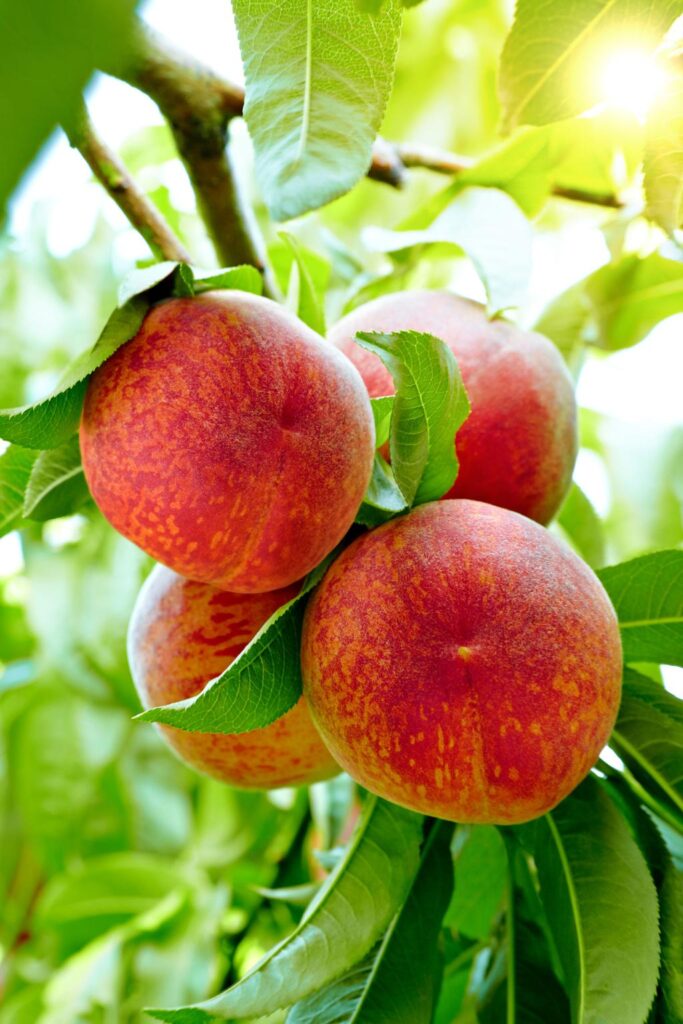
How to Grow Peach Trees
General Information
| Botanical Name: | Prunus persica |
| Common Names: | Peach, Peach Tree |
| Plant Family: | Rosaceae |
| Type: | Deciduous; Fruit |
| Our Favorite Varieties: | Elberta, Redhaven, Belle of Georgia, June Gold, Reliance |
Know Before You Grow
| Growing Zones: | 5–9 (varies by variety) |
| Frost Hardy: | Moderate (buds sensitive to late frost) |
| Heat Tolerant: | Yes |
| Chill Hours: | 400–1,000 (varies by variety; low-chill types available) |
| Pollination Needs: | Self-fertile (does not require another tree, but multiple trees can improve yield) |
| Rootstock: | Dwarf, semi-dwarf, or standard (affects size and vigor) |
| Full Size: | 8–25 feet depending on rootstock |
| Years to Produce: | 2–4 years |
| In-Ground or Container: | Best in ground; dwarf varieties can grow in large containers |
Starting from Seed
| When: | Fall (natural stratification) or stratify and plant in late winter |
| Stratification: | Yes, 60–90 days cold stratification required |
| Scarification: | No |
| Soil | Loose, well-draining seed-starting mix |
| Depth: | 1 inch |
| Water: | Keep evenly moist |
| Germination: | 2–8 weeks after stratification |
| Up Pot: | When seedlings are strong and established |
| Light: | Full sun once sprouted |
| Soil Temperature: | 65–75°F after stratification |
| Heat Mat: | Optional after stratification |
| Harden Off: | 7–10 days |
Planting Site Prep:
| Soil: | Well-draining loam or sandy loam |
| pH: | 6.0–6.5 |
| Drainage: | Critical; does not tolerate wet roots |
| Sun: | Full sun (6–8+ hours) |
| Spacing: | Dwarf: 8–10 feet; Semi-dwarf: 12–15 feet; Standard: 18–25 feet |
| Hole Size: | 2–3 times wider than root ball, same depth |
| Fertilizer/Feed: | Avoid heavy fertilizing at planting; feed lightly after establishment |
| Compost: | Mix 2–3 inches into backfill soil |
| Mulch: | 2–3 inches, kept away from trunk |
Planting:
| When: | Late winter to early spring (bare root) or fall in mild climates |
| How: | Plant at same depth as nursery line; spread roots outward |
| Depth: | Graft union 2–3 inches above soil line |
| Spacing: | Based on rootstock size |
| Water: | Water deeply after planting |
| Mulch: | Apply 2–3 inches, keep 3–4 inches away from trunk |
| Staking: | Usually not needed unless in a windy area |
Growing Care
| Fertilizer/Feed: | Light feeding in early spring with balanced fertilizer or compost |
| Water: | Deep water weekly during dry periods; consistent moisture during fruit development |
| Pruning: | Prune annually to an open center shape for airflow and sunlight |
| Thinning: | Thin fruit to 6–8 inches apart to improve size and prevent branch breakage |
| Mulching: | Maintain 2–3 inches of mulch to retain moisture and reduce weeds |
| Pollination: | Self-fertile, but bees improve fruit set |
| Winter Protection: | Protect buds in late frost areas if possible |
| Summer Protection: | Maintain moisture and mulch to prevent stress |
Companions & Antagonists
| Plant Family: | Antagonists: |
| Chives | Black Walnut |
| Garlic | – |
| Comfrey | – |
| Clover | – |
| Yarrow | – |
Attracts & Repels
| Attracts: | Repels: |
| Bees, pollinators | No strong repellent effect |
Pests & Disease
| Pests: | Disease: |
| Peach Tree Borer | Peach Leaf Curl |
| Aphids | Brown Rot |
| Scale | Bacterial Spot |
| Japanese Beetles | Powdery Mildew |
Propagation
| Seed: | Possible but not true to type |
| Cuttings: | Rarely used |
| Grafting: | Standard method |
| Layering: | Not commonly used |
Harvest Time
| When: | Late spring through summer depending on variety |
| How: | Pick when fruit is fully colored and slightly soft |
| What: | Fruit |
| Storing: | Refrigerate short term or store in a cool place |
| Preservation Methods: | Canning, freezing, drying, jams |
Uses:
| Culinary Uses: | Fresh eating, baking, canning, jams, desserts |
| Medicinal Uses: | Mild digestive support, hydration |
| Wildlife Uses: | Food source for birds and animals |
| Landscape Uses: | Ornamental blossoms and shade |
| Wood Uses: | Limited small woodworking or firewood |
Troubleshooting
| No fruit: | Late frost killed blossoms or improper pruning |
| Leaf curl: | Fungal disease; requires dormant spray |
| Rotting fruit: | Brown rot; improve airflow and remove infected fruit |
| Small fruit: | Not thinned properly |
| Tree decline: | Poor drainage or root damage |