
Hugelkultur Gardening
Hugelkultur is one of those gardening methods that sounds strange until you understand what it is doing. Then it starts to make a whole lot of sense.
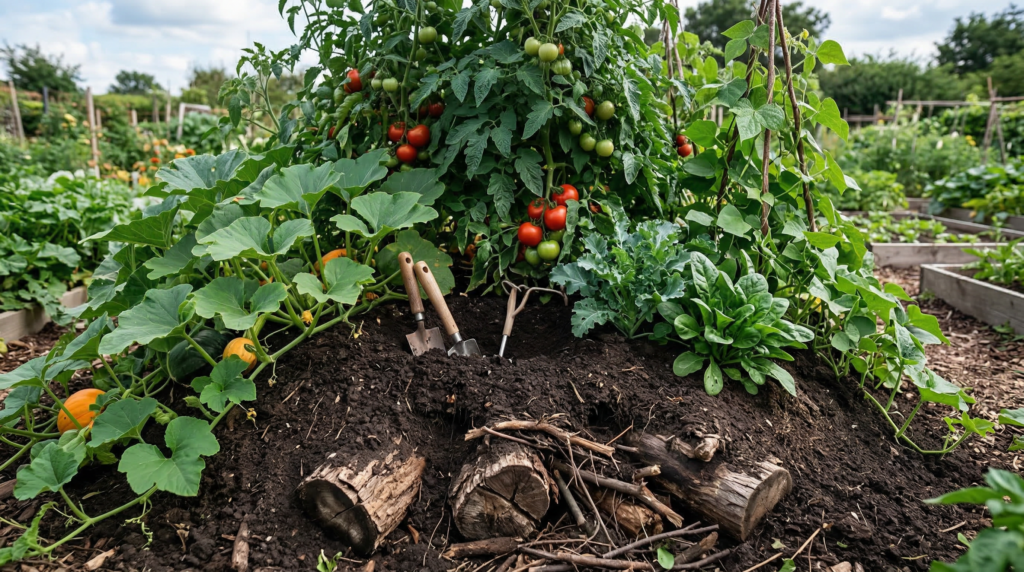
The word comes from German and refers to mound or hill culture. In practical gardening terms, hugelkultur is a raised bed or mound built with buried woody material, smaller plant debris, and soil layered over the top. Oklahoma State describes it as a sloped raised planting bed filled with wood, soil, and organic materials, while Washington State notes that it is a method of building garden beds using woody material, garden debris, and soil arranged in layers.
At first glance, it can look like a pile of logs and dirt that somebody got carried away with. But the point is not to make a weird hill in the yard just for the fun of it. The buried wood gradually breaks down over time, helping the bed hold moisture, build organic matter, and create a growing space that can improve as it ages. Clemson says the method mimics the soil-building process in forested areas, where woody material and plant debris naturally decompose and enrich the ground.
What Hugelkultur Is and How It Works
A hugelkultur bed usually starts with larger woody material like logs or thick branches at the bottom. Smaller branches, twigs, leaves, grass clippings, compostable material, and soil are layered above that. As the wood and other organic matter break down, the mound changes over time.
That decomposition is the whole point.
The buried wood can act somewhat like a sponge as it ages, helping the bed hold water. Oklahoma State says the organic material in a hugelkultur mound absorbs water and wicks it up toward plant roots, which is one reason the method is often described as more water-conserving than a standard bed. Kansas State also notes that the mounded design can capture runoff and that nutrients are released as decomposition occurs.
At the same time, the mound gradually turns into richer soil. What you start with is not what you end with. Over the seasons, the bed settles, the woody material softens, and the organic matter becomes part of a more fertile growing environment.
Why Gardeners Like It
One of the big appeals of hugelkultur is that it makes use of materials many people already have.
If you have fallen branches, old wood, twigs, leaves, and plant debris, hugelkultur gives you a way to put that material to work instead of hauling it off or burning it. Clemson specifically notes that it can be a useful way to use debris and resources from your property to create healthier growing spaces.
Gardeners are also drawn to hugelkultur because it can:
- build organic matter over time
- improve moisture retention
- create a raised growing space
- make use of yard waste and woody debris
- reduce the amount of fill soil needed in some raised beds
- fit well with permaculture and low-disturbance approaches
There is also something satisfying about turning what looks like rough debris into a productive bed.
The Good Side and the Real Side
A hugelkultur bed can be useful, but this is another one of those methods people sometimes talk about like it is garden sorcery. It is not.
Yes, it can help with moisture retention. Yes, it can build fertility over time. Yes, it can be a smart use of materials. But it also comes with tradeoffs.
Washington State Extension points out that not all claims around hugelkultur are equally well supported and encourages home gardeners to think practically about site conditions, materials, and how the mound will function in a real home garden.
A few things to keep in mind:
- the bed settles as materials decompose
- it can look rough or uneven at first
- fresh woody material may temporarily affect nitrogen near the surface if the bed is not built thoughtfully
- not every site is a good fit for a large mound
- very tall mounds may dry differently on top than lower parts do
- building one takes effort up front
In other words, hugelkultur is not a shortcut so much as a different strategy.
Where It Makes the Most Sense
Hugelkultur tends to make the most sense when you:
- have woody debris to use
- want a raised or mounded bed
- are interested in long-term soil building
- like permaculture-style methods
- want to recycle organic material on site
It can be useful in gardens, orchard areas, permaculture spaces, and some raised bed situations. Clemson notes that in raised bed settings, hugelkultur can reduce the amount of soil and compost needed to fill deep beds, which is a practical benefit for gardeners who are building beds from scratch.
It may be less appealing if you want a polished, formal-looking garden right away or if you do not have suitable wood and organic material to build with.
Is Hugelkultur Right for You?
Hugelkultur may be a good fit if you like the idea of building soil over time, using what you already have, and creating a bed that gradually improves as materials break down.
It may not be your favorite if you want instant neatness, quick uniform results, or a method that looks tidy from day one.
Like many of these alternative gardening methods, hugelkultur rewards patience. It is not really about perfection at the start. It is about what the bed becomes.
Final Thoughts
Hugelkultur is a mound-style gardening method built with woody debris, plant material, and soil layered together to create a raised bed that breaks down and improves over time. It can help conserve moisture, recycle yard waste, and build organic matter, especially for gardeners who like long-term, soil-building approaches.
It is not magic, and it is not the right look or fit for every garden. But for the right gardener, in the right place, it can be a smart and productive way to grow.
For More Information on Hugelkulture Gardening: