Understanding Plant Identity: Plant Families,Types,Varieties
Identity Crisis in the Garden
Folks, human beings are not the only living things that can experience “identity crisis.” Plants, for example, are often misidentified, but it’s not about being male, female, or both (although many plants are actually both male and female, and are known as “perfect flowers.” For plants, it’s about the heirarchy of identification.
You, as a human being, have many “identifiers.” For example, you have a first name, last name, and probably a middle name. You were born either male or female. You may be a blonde or a brunette. Your eyes may be green or blue. Have you ever considered that these identifiers or descriptors may just be varieties? What about your plant family, or your type?
When you start looking into what makes a plant a “specific” plant you could almost believe that plants are more complex than humans! Plants – and this means all living things that grow on God’s earth, seas, lakes, etc. – have a structure to their identification. Plants are typically identified in this order:
Plant Family – Your ancestors, from your parents on back further than you can trace your family line, all played a role in who you are. They didn’t necessarily ‘define’ you…but when it comes to your genetics or people who are related to you by blood, genetics is key. It’s the same for plants. You have blue eyes because that is a common trait in your family. A flower may be a certain color because it is a common trait in its family. Most family names for plants end in ‘-aceae.’
Plant Type – The snobby sounding answer is “a broadly stated functional or morphological classification…” A real, clear answer will be found on down the page.
Plant Variety – Often expressed as var. in print. This is essentially how a plant differs from other planys within the same family. For example, when we plant okra, we plant the Clemson Spineless…year after year. But next year, Kelley wants to venture out a bit and plant White Velvet, Geechee, and Okinawa okra…the Okinawa is pink. White is self explanatory, and geechee, another white variety is historically significant, and is thought to be a living link to the Gullah Geechee people and their ancestry.
…And this gets way more complicated and really nails down exactly what a plant is, in terms of identifiers. It goes like this…
Plant Family – As above. Nothing has changed in the world of plant identification in over 100 years to my knowledge.
Genus – In print, this must be Capitalized and italicized…those pesky herbalists are watching! This refers to a group of plants that share common characteristics.
Species – The species is never capitalized. This is the exact plant within the genus of the plant family. For example, twins were born to parents who weren’t too bright. Since the babies were identical, the parents named both little girls Bobbi, after their dad. It didn’t take long for them to figure out that they needed some way of telling their identical twins apart, so they named one Bobbi Sue, and the other Bobbi Jo. That’s what a species is in Lowe Bridges Farm world.
Cultivar – Now, let’s assume that those twins were the results of scientific intervention. They were ‘cultivated’ to look a certain way. This is done with cross breeding in the world of plants, and it is listed after the Genus, then the species and always in quotes. For example, a Cherokee Purple Tomato plant is actually Solanum lycopersicum‘Cherokee Purple’ PL 645281
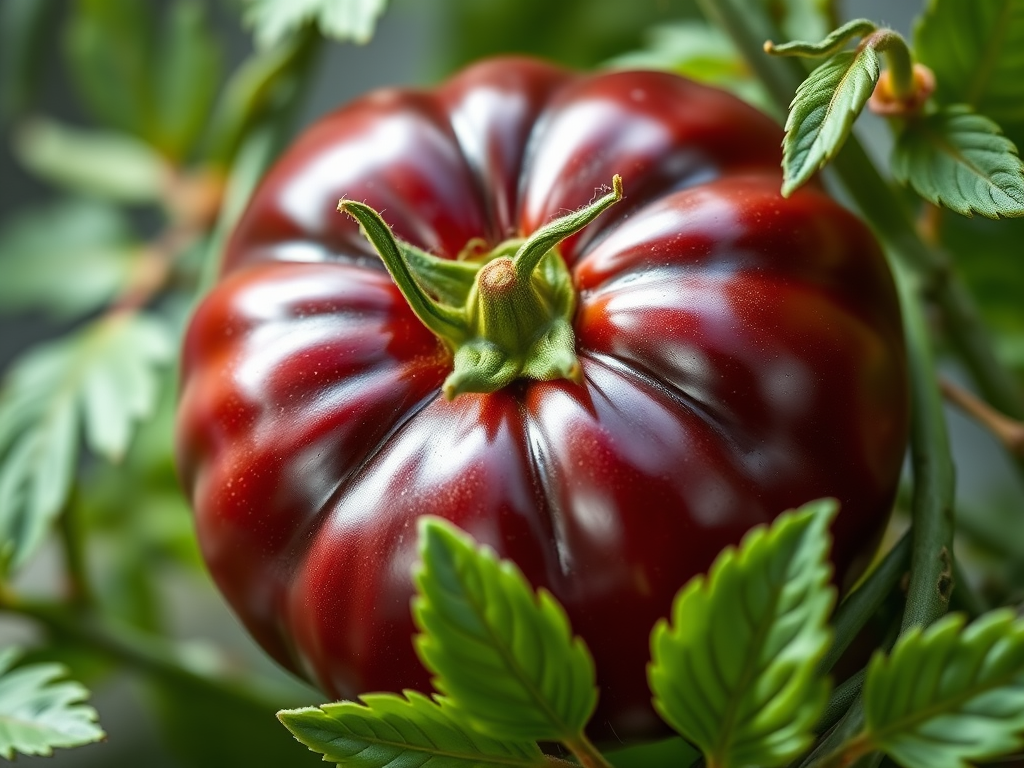
Variety – Now you may think our beautiful Heirloom tomato is of eh Cherokee Purple variety. You would be wrong. If you weren’t confused before, I’ll bet you are now. You see, a cultivar is not a variety. A cultivar is created by humans, while a variety is created by God, or Mother Nature, or whoever you would like to give credit to…But over here at our farm, we will serve the Lord. Since a variety cannot be created by humans, and this tomato was, it is not a variety at all. It is a cultivar.
Hybrid – Our example tomato above is an ‘Open-pollinated Heirloom.’
Accession Number – Think of this as the plants social security number.
Please be aware that you won’t really find much of that advanced mumbo jumbo hoodo scienetic stuff on this website. We are not experts. We are not master gardeners. We are not botanists. Kelley has numerous certifications for herby things….but not for plants as a whole. We just love growing things.
Instead, we will stick to easier to understand information, like:
Plant Family – Important to know when it comes to planting companions while avoiding antagonistic plans, and for crop rotation.

Scientific Name – Just for fun…but in herbalism, it’s rather important so that one plant is absolutely not confused for a different plant. In Herbalism circles, the use or misuse of a scientific name can cause outright flame wars…it can get ugly fast.
Plant Type – It’s important to know if your plants are annuals, perennials or biennials. But type could also refer to whether a bean is a bush bean or a pole bean, or if a tomato is a determinate or indeterminate. It could also be imparting information about whether the plant is an herb, flower, vegetable, tree, herb, spice, or bush. As you can see, type means many different things.
Varieties – You will find a list of varieties for each plant you find listed on our site. These lists are not exhaustive…they are just popular varieties, as well as varieties we have tried or want to try.

We try to keep things simple here on the farm, so it stands to reason that we like to keep things simple here on our website as well. If you want or need more information on plant families, types and varieties and how to identify and understand them, the following resources may be helpful.
Resources:
Disclaimer: Some of the links in this content may be ‘affiliate links.’ This means if you click on the link and purchase the item, we will receive an affiliate commission. We are also Amazon Associates, and we do earn from qualifying purchases. Regardless, please know that we only recommend products or services we use personally, or have throughly researched, and that we believe will add value to our readers.


