
Keyhole Gardening
Keyhole gardening is one of the more distinctive gardening methods out there, and once you see one, you usually remember it.
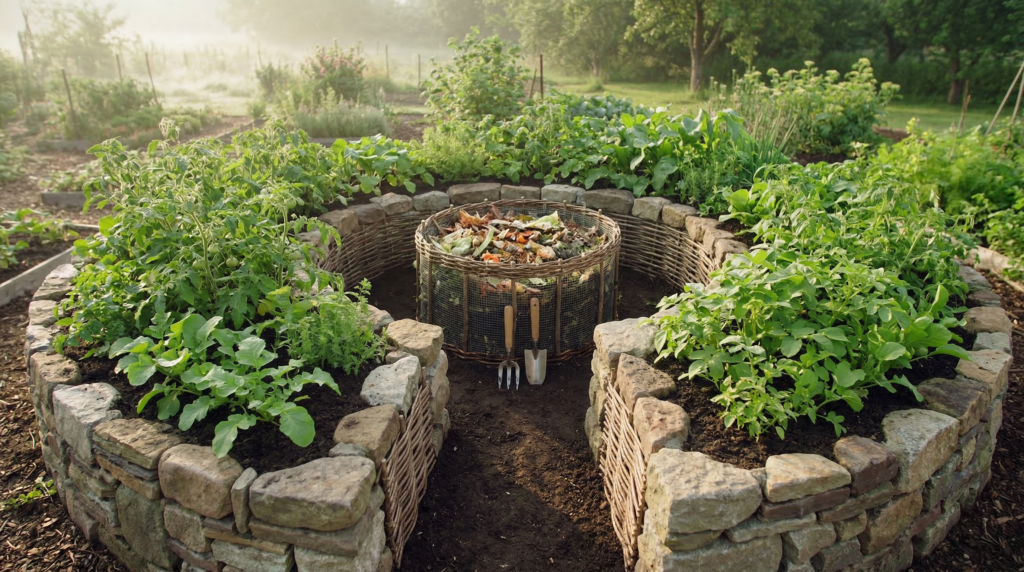
A keyhole garden is typically a circular raised bed with a notch cut into one side so you can walk in far enough to reach the center. From above, that cutout makes the bed look a little like an old-fashioned keyhole, which is where the name comes from. Most keyhole gardens also include a compost basket in the center. Water and compostable materials are added there, and the nutrients gradually move outward into the surrounding bed. Illinois Extension describes it as a form of raised bed with a central compost basket, and SDSU Extension notes its water efficiency, productivity, and accessibility benefits.
It is a clever design. It gives you a compact growing space, makes the whole bed easier to reach, and combines gardening with in-place composting. For some gardeners, especially those working with poor soil, limited space, or a need for easier access, keyhole gardening can be a very smart method.
What Makes a Keyhole Garden Different
The thing that sets keyhole gardening apart is not just the round shape. It is the combination of three ideas working together:
- a raised growing bed
- a central composting basket
- a notch or walkway that lets you reach the bed without stepping into it
That last part matters more than people sometimes realize. One of the biggest enemies of good soil is foot traffic. When you have to step into a bed to weed, plant, or harvest, the soil gets compacted. A keyhole garden is designed so most or all of the planting area can be reached from the access point and outer edge.
The central basket is what gives the method its special twist. Kitchen scraps, compostable material, and water can be added there, and over time the nutrients and moisture move through the bed. Illinois Extension explains that the compost basket continually replenishes the soil as material is added and decomposes.
Why Gardeners Like Keyhole Gardening
One reason people are drawn to keyhole gardens is efficiency.
They are often praised for making good use of space, holding moisture well, and helping gardeners produce a lot in a relatively small area. South Dakota State Extension says keyhole gardens can improve soil health, use water efficiently, and provide easier access for gardeners with limited mobility.
They can be especially useful if:
- your native soil is poor
- you want a raised growing area
- you are gardening in a dry climate
- you want easier reach and less bending
- you like the idea of compost feeding the bed in place
- you want a small but productive garden space
There is also something appealing about how self-contained they feel. A keyhole garden looks intentional. It has structure, purpose, and a built-in system for feeding the bed.
The Benefits and the Drawbacks
A well-built keyhole garden can have some real advantages. It can make watering more efficient, keep the growing space clearly defined, and make it easier to reach plants without walking on the soil. It also gives gardeners a way to combine raised-bed growing with ongoing compost input.
But it is not all upside.
A keyhole garden takes some effort to build. You need materials for the walls, material for the center basket, and enough fill to make the bed productive. It can also take a little while for the system to settle into itself. And while people sometimes talk about them like they are nearly magical, they still need watering, composting, planting, maintenance, and common sense.
The design can also be more useful for some crops than others. Herbs, greens, bush vegetables, flowers, and many common garden plants do very well in a keyhole setup. But if you are trying to grow very large, sprawling, or deeply rooting crops, the design may not always be the best fit.
Is Keyhole Gardening Right for You?
Keyhole gardening may be a good choice if you want a compact, productive raised bed with easier access and built-in composting. It can be especially attractive for gardeners who want to grow intensively in a small area or who want a bed that is easier to reach from a standing or seated position.
It may be less appealing if you do not want to build a structured bed, do not have the materials, or simply prefer a more straightforward garden design.
Like most gardening methods, it is not the right answer for every space. But when it suits the gardener and the site, it can be a very efficient and practical way to grow.
Final Thoughts
Keyhole gardening combines a raised bed, central composting, and easy access in one smart design. It can save space, improve reach, help with water efficiency, and create a productive bed in places where ordinary gardening may be harder.
If you like gardens that do more than one job at once, keyhole gardening is well worth a look.
For More Information about Keyhole Gardening: