
Make Your Own Soil
Not every gardener starts with beautiful, crumbly, dark, perfect garden soil. Some people have clay. Some have sand. Some have rocky mess. Some have ground that looks personally offended by the idea of growing vegetables.
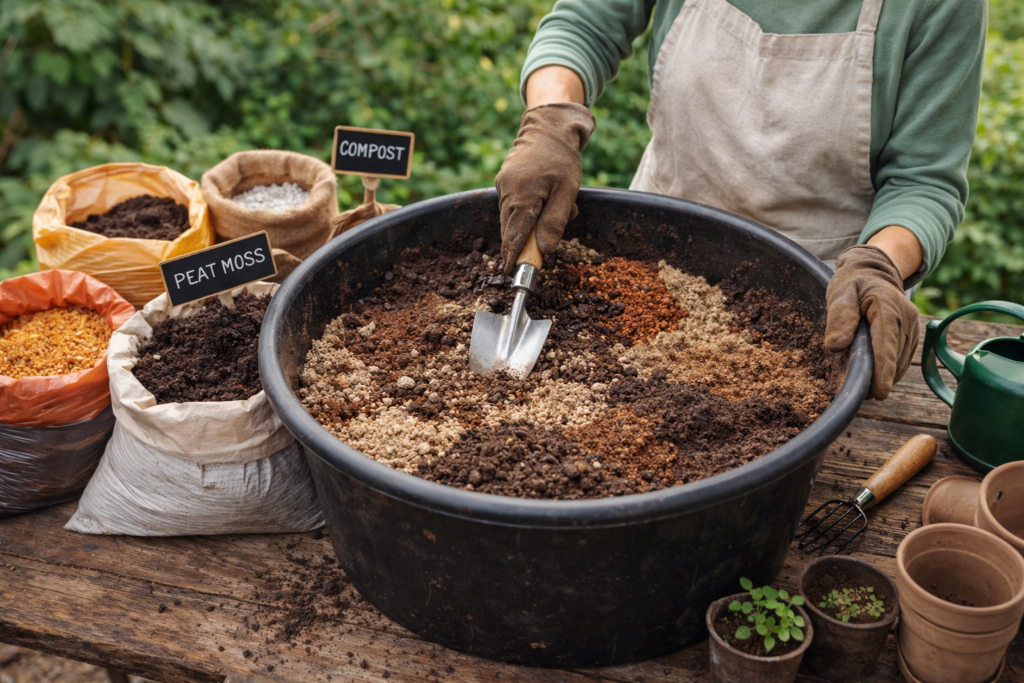
That is where homemade soil mixes come in.
Making your own soil or growing mix gives you more control over texture, drainage, moisture retention, and organic matter. It can be especially useful for raised beds, containers, seed starting, and specialty planting situations where the native ground is not giving you much to work with.
Now, just to be clear, this is not the same thing as making fertilizer.
Soil mix is what the plant grows in.
Fertilizer is what feeds the plant.
Compost helps improve the soil and adds organic matter.
They all work together, but they are not the same thing.
Why Make Your Own Soil?
Sometimes it is easier to build the kind of growing medium you need than to fight the ground you have.
A homemade mix can help you:
- improve drainage
- increase organic matter
- hold moisture better
- lighten heavy soil
- create a better seed-starting mix
- tailor the mix to the crops you are growing
This is especially helpful in raised beds, grow bags, containers, greenhouse planting, and seed trays.
Basic Soil Mix Ingredients
Most homemade soil mixes are built from a few common ingredients.
Topsoil gives body and mineral content.
Compost adds organic matter and some fertility.
Sand improves drainage when used correctly.
Coarse sand is better than very fine sand for drainage blends.
Perlite lightens the mix and improves airflow.
Peat moss holds moisture well, though it can be acidic.
Coco coir can often be used instead of peat moss.
Vermiculite helps hold moisture and is often useful in seed-starting mixes.
The goal is to combine those ingredients in a way that gives you the qualities you want.
Homemade Soil Mix Recipes
These are practical DIY soil mixes for common garden needs. Some mimic broad soil qualities, and some are built for a specific purpose.
Loamy Mix
This is a balanced mix that holds moisture, drains reasonably well, and works for a wide range of garden uses.
Recipe:
- 1/3 topsoil
- 1/3 sand
- 1/3 compost
Rich and Well-Draining Mix
This mix is a good choice when you want fertile soil that still drains well and does not stay soggy around the roots.
Recipe:
- 2/5 topsoil
- 2/5 compost
- 1/5 perlite
Loamy and Rich Mix
This blend leans a little more toward fertility and moisture-holding while still staying loose enough for healthy root growth.
Recipe:
- 1/2 topsoil
- 2/5 compost
- 1/10 perlite
Peat-Based Mix
This is a lighter, moisture-holding blend that works well when you want a softer, more absorbent growing medium.
Recipe:
- 2/5 peat moss
- 2/5 compost
- 1/5 perlite
Silty-Style Blend
This is not true natural silt soil from the ground, but a mix that mimics some of the smoother, moisture-holding qualities of silty soil.
Recipe:
- 2/5 sand
- 2/5 silt
- 1/5 clay
Loamy and Well-Draining Mix
This mix is useful when you want a balanced soil that sheds excess water a little more easily than a heavier blend.
Recipe:
- 2/5 topsoil
- 2/5 compost
- 1/5 coarse sand
General Seed-Starting Mix
A seed-starting mix should be light, fine-textured, and well-draining. Seeds do not need a rich, heavy mix to sprout.
Recipe:
- 1/2 peat moss or coco coir
- 1/4 perlite
- 1/4 vermiculite or fine finished compost
If you use compost in a seed-starting mix, make sure it is finished, fine-textured, and free of large chunks.
A Few Important Notes
Homemade soil mixes are helpful, but they are not magic.
A few things to keep in mind:
- use clean ingredients
- do not use diseased plant material
- avoid very fine sand when trying to improve drainage
- make sure compost is finished before using it
- remember that container mixes and bed mixes are not always the same thing
A mix that works beautifully in a raised bed may not be the best mix for a seed tray or a container tomato.
Soil Mix Is Not Fertilizer
This is worth saying again, because gardeners mix these ideas up all the time.
A good homemade soil mix gives roots a healthy place to grow. That does not mean it will feed plants forever.
Over time, especially in containers and raised beds, nutrients get used up. That means plants may still need compost, fertilizer, or other amendments later on.
So think of it this way:
- soil mix = the home
- fertilizer = the groceries
- compost = the long-term improvement plan
They all matter, but they are not interchangeable.
Final Thoughts
Making your own soil can be a smart way to create better growing conditions when your native ground is poor, heavy, sandy, or just not suited to what you want to grow.
The right mix can improve drainage, increase moisture retention, add organic matter, and give roots a better place to grow. And once you understand the job each ingredient does, homemade soil stops feeling complicated and starts feeling practical.
Because sometimes the easiest way to get better soil is to build it yourself.