
Manure Is Not Compost
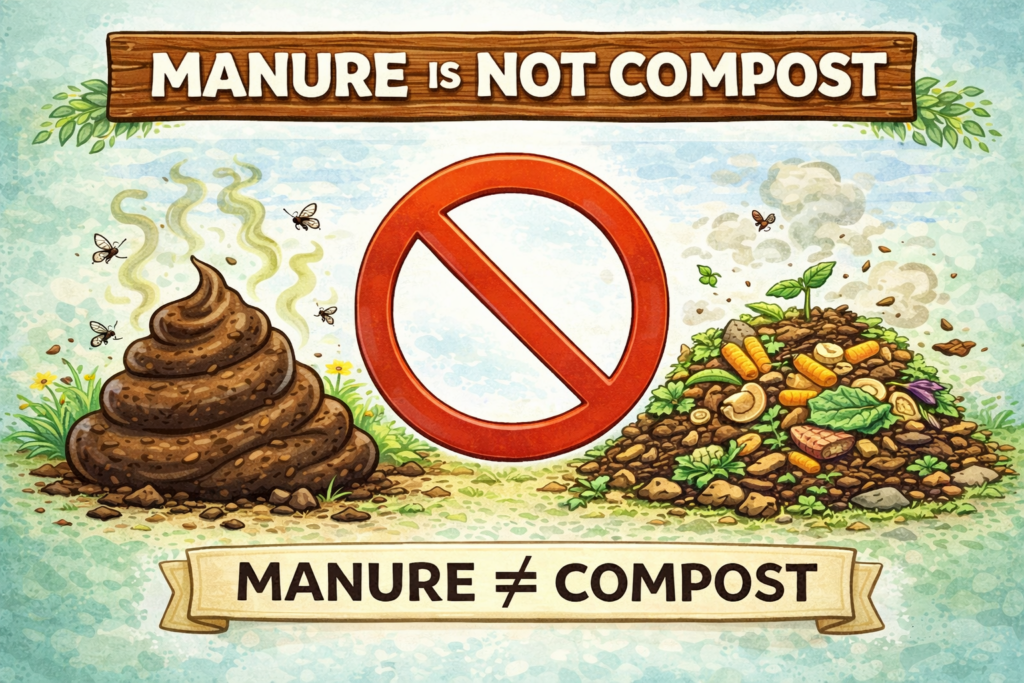
This is another one of those garden ideas people say so often that it starts sounding true just because everybody repeats it. Someone has livestock, or knows someone with livestock, and before long the conversation turns into, “Oh, just put manure on it. That’s compost.” No, it is not. Manure and compost may both be useful in the garden, and they may both help improve soil, but they are not the same thing and they do not behave the same way.
That distinction matters more than people think. If you treat manure like finished compost, you can easily wind up using it at the wrong time, in the wrong way, or in the wrong amount. That can cause problems for plants, for soil balance, and for food safety if you are growing things you plan to eat.
What Manure Actually Is
Manure is animal waste, often mixed with bedding such as straw, wood shavings, or other absorbent material. It may come from chickens, cows, horses, goats, sheep, rabbits, or other livestock.
Depending on the animal, the bedding, the feed, and how long the material has been sitting, manure can vary a great deal in texture, moisture, nutrient content, and strength.
Fresh manure is still in a raw state. It has not fully broken down, it may be high in nitrogen or salts, it may contain weed seeds, and it may carry pathogens. In other words, manure is a raw input, not a finished soil amendment just because it came from the barn instead of a bag.
What Compost Actually Is
Compost is decomposed organic matter that has broken down into a more stable, finished, earthy material. Good finished compost is usually dark, crumbly, and pleasant-smelling in a rich soil sort of way. It is not supposed to smell sharp, sour, rank, or like something you need to stand upwind from.
Compost has gone through a decomposition process that changes the original materials into something more stable and more predictable.
That process can involve kitchen scraps, leaves, plant debris, grass clippings, cardboard, and yes, sometimes manure too. But once again, that does not make manure the same thing as compost. It only means manure can be one ingredient in a composting process.
Why People Mix the Two Up
People confuse manure and compost because both can help improve soil and both may add nutrients. They also get mixed up because aged manure can look more soil-like than fresh manure, especially when bedding is mixed in and everything has had time to sit for a while.
To the casual eye, a pile of old manure can look “composted enough,” which is how a lot of bad garden decisions get made.
The truth is that manure can be composted, but it does not become compost merely by existing for a while. Time alone does not magically turn every pile of manure into finished compost.
Proper breakdown, stabilization, and maturity matter. If that process has not really happened, then what you have is still manure, not compost.
How Manure and Compost Behave Differently
Compost is usually gentler, more stable, and more predictable when added to the garden. It improves soil structure, supports soil life, and helps with moisture balance without acting like a hot burst of raw material.
Finished compost can often be mixed into beds, used as a top-dressing, or added around plants with much less risk than raw manure.
Manure is a rougher, less finished material. Fresh manure can burn plants, overfeed them, or create food-safety concerns if used carelessly around edible crops.
Even aged manure may still behave differently from finished compost, especially if it has not fully broken down or if it still contains a lot of recognizable bedding and waste material. Compost is more finished and stable. Manure is more raw and variable.
Manure Can Be Part of Compost
This is where people get tangled up. Manure can absolutely be a valuable ingredient in a compost pile. In fact, it is often very useful because it contributes nitrogen and helps fuel decomposition, especially when mixed with carbon-rich materials like straw, leaves, or bedding.
But when manure is part of compost, the pile still has to go through the composting process. The final product is compost because it has decomposed and stabilized, not because manure happened to be in the pile somewhere along the way.
If you bake a cake with eggs, flour, and butter, you do not call the finished cake “eggs.” Same idea here.
Why the Difference Matters in the Garden
If you use manure as though it were compost, you may apply it too close to planting time or too close to harvest. You may assume it is safe and gentle when it is still too strong or too raw.
You may also wind up adding something loaded with weed seeds or excess nutrients where a more balanced, stable amendment would have been the better choice.
If you use compost as compost, you are usually working with something that has already done its breaking down. That means it is better suited for soil improvement, root safety, and broad garden use.
A gardener who understands the difference can use both wisely. A gardener who lumps them together may create preventable problems.
What to Do with Manure Instead
If you have access to manure, that can be a good thing. It just needs to be handled with a little more respect than the phrase “just throw it on the garden” suggests.
In many cases, the smartest move is to compost it properly before using it. That allows the material to break down, stabilize, and become safer and more useful over time.
You can also use well-aged manure more carefully in situations where it makes sense, but it still helps to remember that aged is not always the same as fully composted.
The more food crops are involved, the more thoughtful you need to be. This is one of those areas where the details matter.
Final Thoughts
Manure is not compost. Manure is raw or partly broken-down animal waste, often mixed with bedding, while compost is a finished, stable product created through decomposition.
Manure can become part of compost, and it can be useful in the garden, but it is not the same thing and should not be treated like it is.
The clearer you are about that difference, the better your soil-building choices will be. In gardening, a lot of trouble starts when people call two different things by the same name.
This is one place where keeping the words straight really does matter.