
Manure is NOT Fertilizer
This is one of those gardening ideas that gets repeated so often people start treating it like unquestioned truth:
“Just add manure. That’s fertilizer.”
Not exactly.
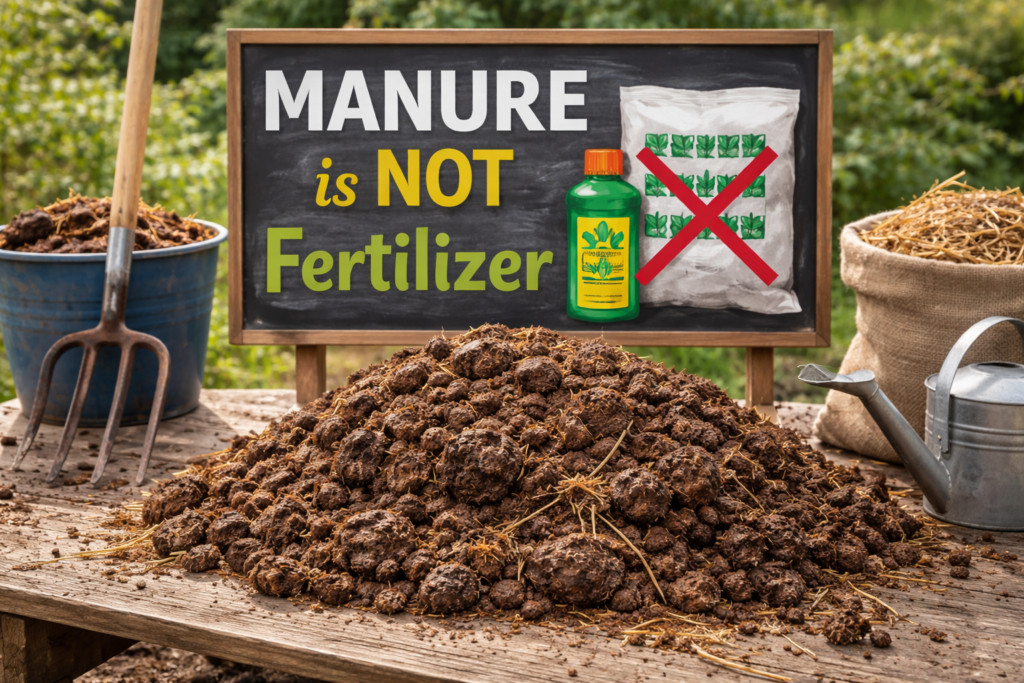
Manure can contribute nutrients, yes. But manure and fertilizer are not the same thing, and treating them like they are can lead to some muddy thinking and some not-so-great gardening decisions.
If you understand the difference, you will make better choices for your soil, your plants, and your harvest.
What Manure Actually Is
Manure is animal waste, often mixed with bedding materials like straw, shavings, or other organic matter.
Depending on the source, it may come from:
- chickens
- cows
- horses
- goats
- sheep
- rabbits
- other livestock
Manure contains organic matter and may also contain nutrients that plants use, which is why people often think of it as fertilizer. But manure is not a neat, measured nutrient product. It is a raw or partially decomposed organic material that can vary a whole lot depending on:
- the animal
- the bedding
- the feed
- the age of the manure
- whether it has been composted
- how it has been stored
That is a very different thing from a bag of fertilizer with a guaranteed analysis on the label.
Why Manure Gets Called Fertilizer
Because manure does contain nutrients.
That is the part that causes the confusion.
It can add nitrogen, phosphorus, potassium, and other nutrients to the soil. Over time, it can help support plant growth. So in casual conversation, people often lump it in with fertilizer.
But manure is doing more than one job.
It is not just feeding plants. It is also affecting the soil itself. It adds organic matter. It changes soil texture over time. It influences moisture retention and soil life. It behaves more like a soil-building amendment that also happens to carry nutrients than like a simple direct-feed product.
That is why it helps to keep the terms separate.
How Manure Is Different from Fertilizer
Fertilizer is used primarily to provide nutrients in a more direct and measurable way.
Manure is a raw or composted organic input that may contribute nutrients, but it is not a precise feeding tool in the same way.
A fertilizer usually gives you:
- a known nutrient analysis
- a more predictable effect
- clearer directions for application
- a more direct feeding purpose
Manure usually gives you:
- variable nutrient levels
- organic matter
- slower nutrient release
- more impact on soil condition
- less precision
So yes, manure can help feed plants.
But no, manure is not the same thing as fertilizer.
Fresh Manure Is Not the Same as Aged or Composted Manure
This part matters a lot.
Fresh manure can be too strong, too raw, or too risky to apply carelessly around garden plants, especially food crops.
It may:
- burn plants
- carry pathogens
- contain weed seeds
- smell like exactly what it is
- create more problems than it solves
Aged or composted manure is a different story. Once manure has been properly composted or well aged, it is generally more stable, safer to use, and easier on plants. It can still contribute nutrients, but it is much less likely to act like a hot, messy surprise in the garden.
That is one more reason manure should not be treated like a simple fertilizer substitute. Its condition matters.
Manure Builds Soil More Than It “Feeds Like Fertilizer”
This is the heart of it.
Manure is better understood as a soil amendment with nutrient value rather than a straightforward fertilizer.
It helps improve:
- soil structure
- organic matter
- microbial activity
- moisture-holding ability
- long-term soil condition
Those are valuable jobs. Important jobs. But they are not exactly the same as what people usually mean when they say “fertilizer.”
A fertilizer is more like a direct nutrient delivery.
Manure is more like a slower, messier, more complex contribution that affects both soil and plant nutrition over time.
Why the Difference Matters
Because if you treat manure like fertilizer, you may use it carelessly.
You may assume:
- more is always better
- fresh manure is fine anytime
- manure alone solves nutrient problems
- all manures are basically the same
- manure can replace thoughtful soil management
None of that is reliably true.
Chicken manure is not the same as horse manure. Rabbit manure is not the same as cow manure. Fresh is not the same as composted. Heavy application is not the same as wise application.
And sometimes the garden does need actual fertilizer, not just more organic bulk added to the soil.
When Manure Is Useful
Manure can be very useful when:
- it is properly aged or composted
- you want to build soil organic matter
- you want a slower, more natural nutrient contribution
- your soil needs long-term improvement
- you are feeding the soil as much as the plant
In that role, manure can be excellent.
It just helps to use it for what it really is, instead of pretending it is the same thing as a balanced fertilizer blend.
Final Thoughts
Manure is not the same thing as fertilizer.
It can contain nutrients, yes, but it is better thought of as an organic soil amendment that may also contribute plant food over time. It helps build soil, improve structure, and support long-term fertility, but it is not a neat, precise substitute for fertilizer.
That difference matters.
Because the more clearly you understand what manure is and what it is not, the better decisions you can make about how to use it in the garden.