Medicinal Herbal Profile of Goldenrod
Herb Overview
| Common Names: | Goldenrod, Canada Goldenrod, Tall Goldenrod, Woundwort |
| Botanical Name: | Solidago spp. (commonly Solidago canadensis, Solidago gigantea, and related species) |
| Plant Family: | Asteraceae |
| Origins: | Native to North America; commonly found in fields, roadsides, meadows, open woods, and disturbed areas |
| Parts Used: | Flowers, leaves, upper aerial parts |
| Primary Preparations: | Tea, tincture, infused oil, salve, compress, glycerite |
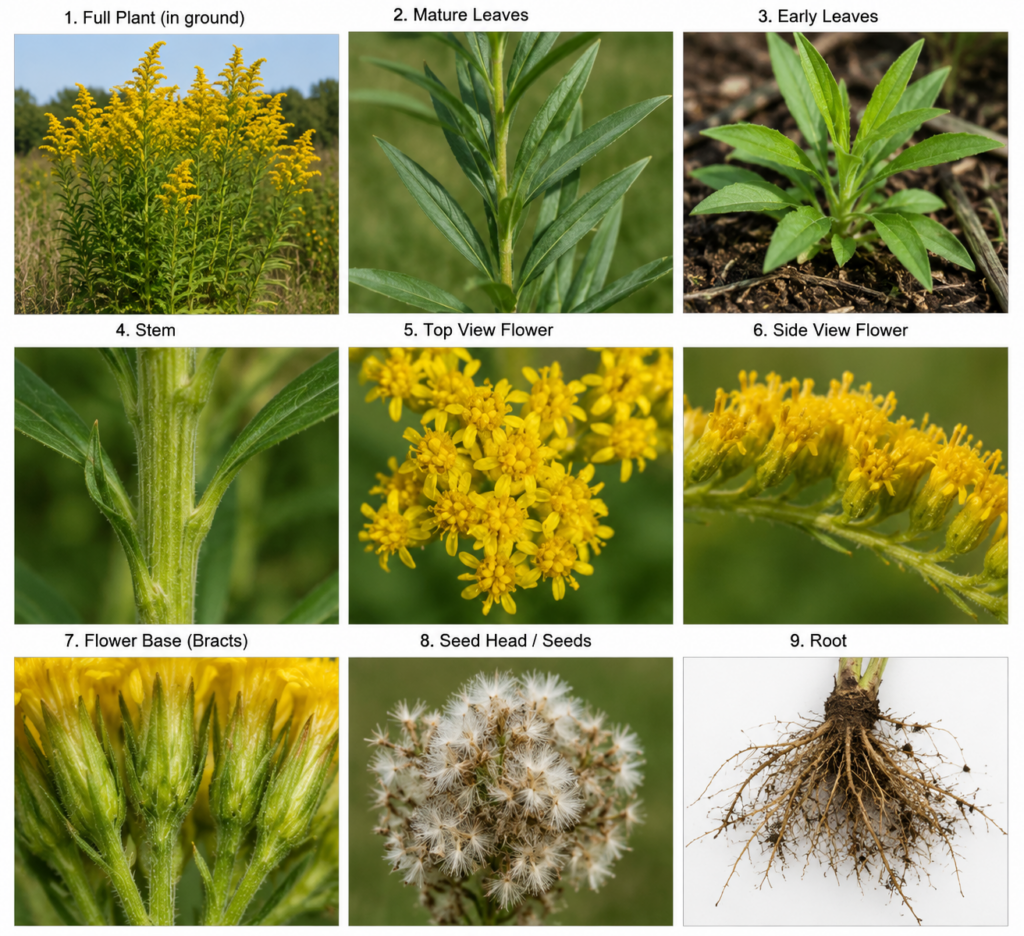
Plant Identification
Full Plant (in ground): 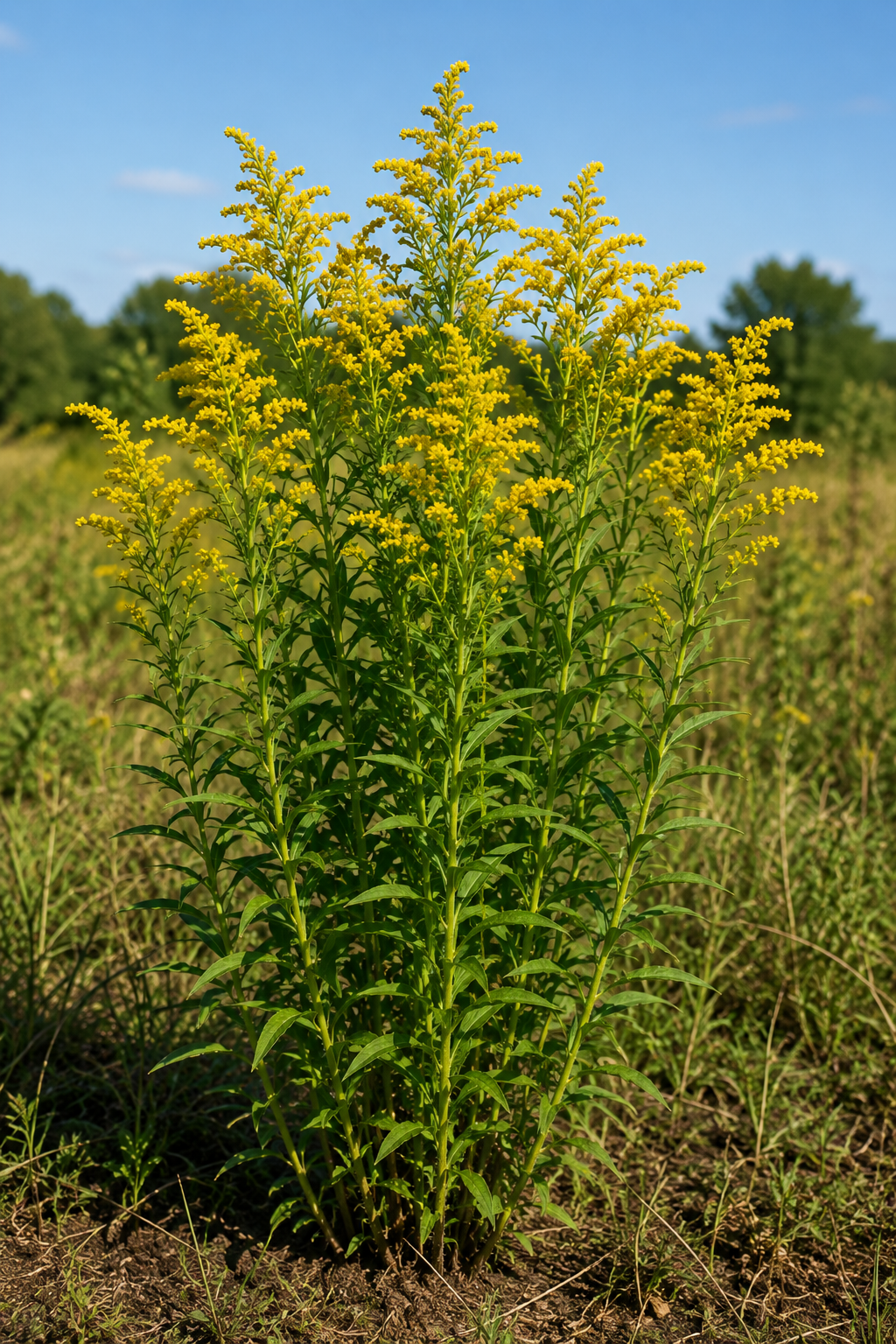
Leaves (mature): 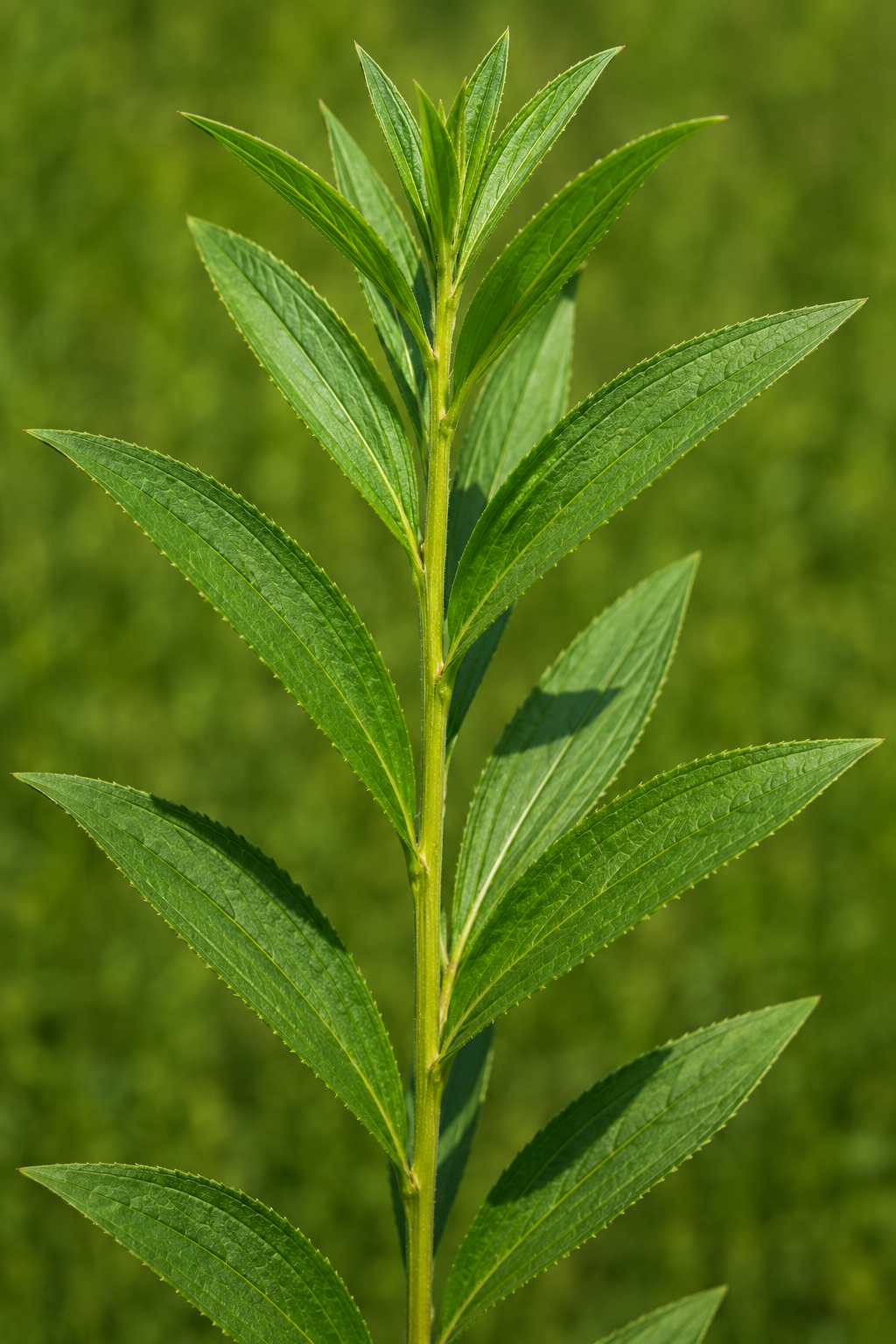
Leaves (early growth): 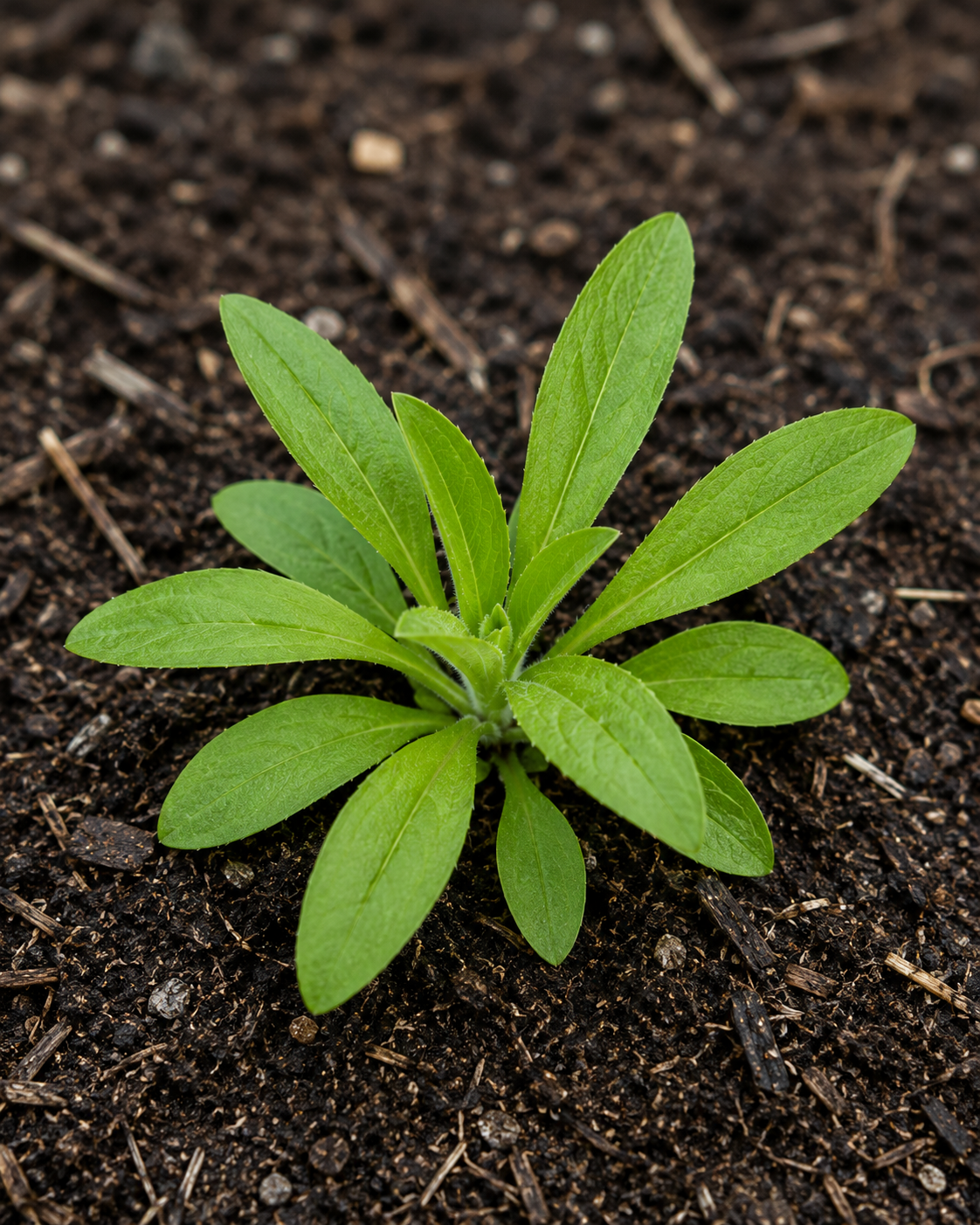
Stem: 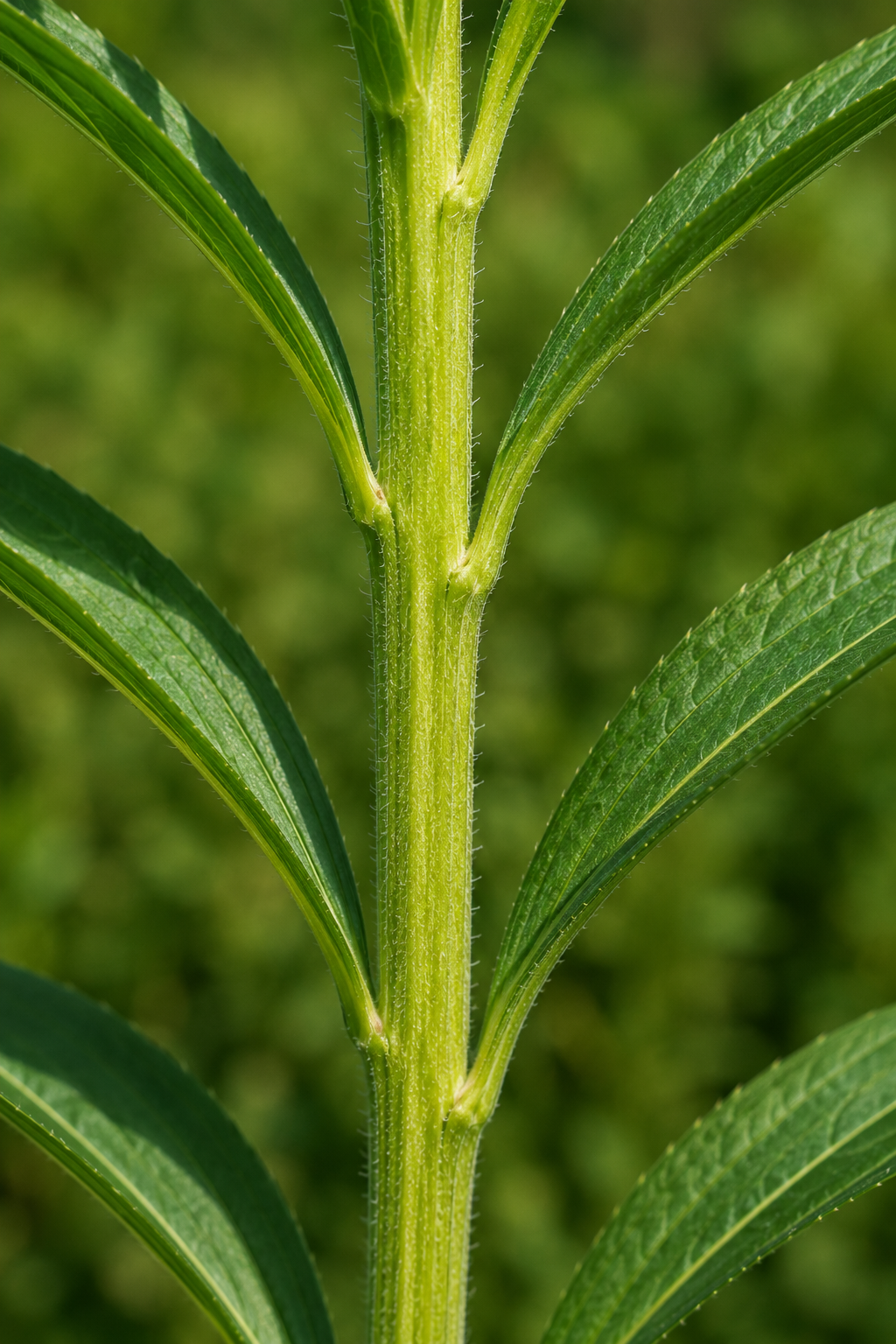
Flower (Top View): 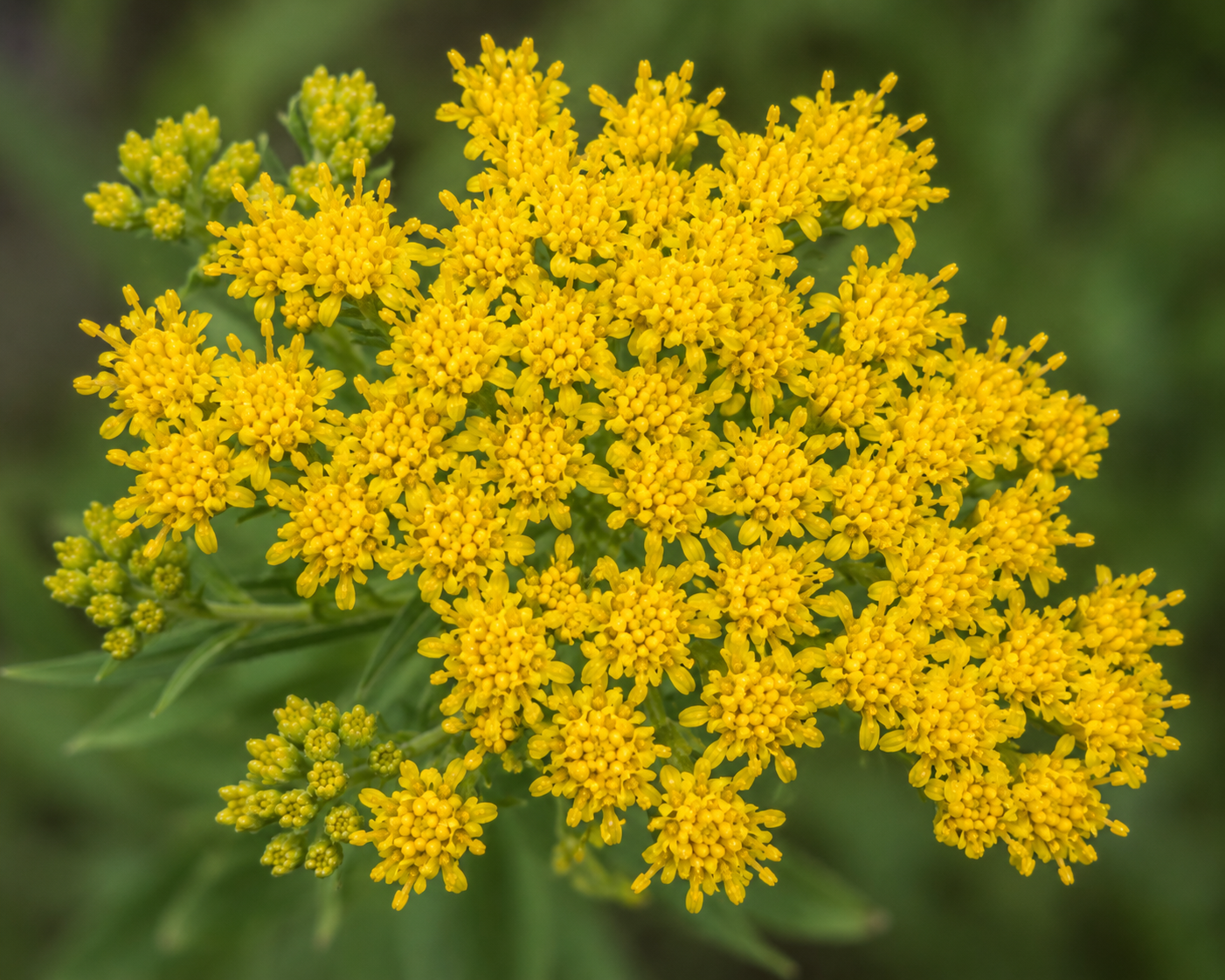
Flower (Side View): 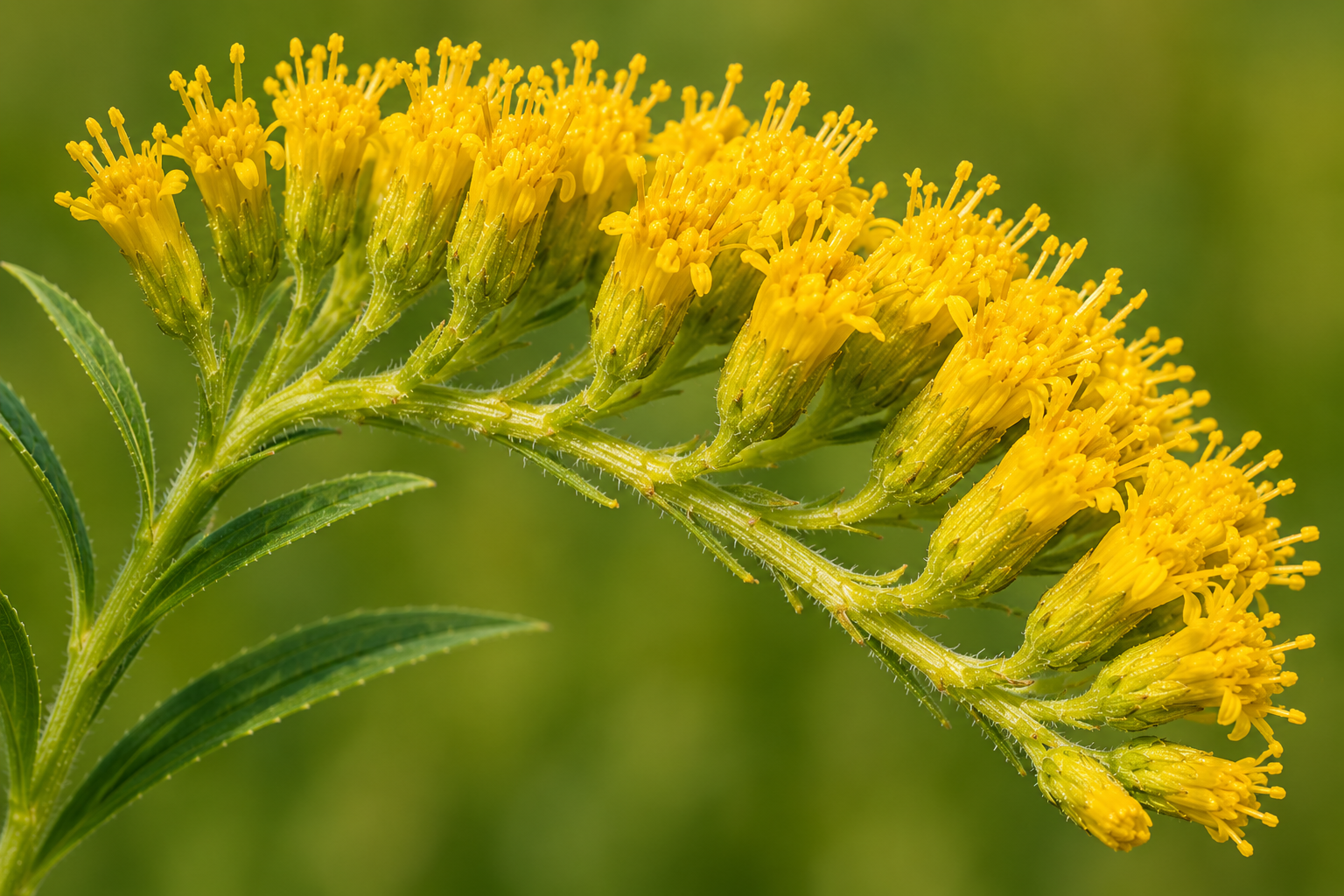
Flower Base (bracts):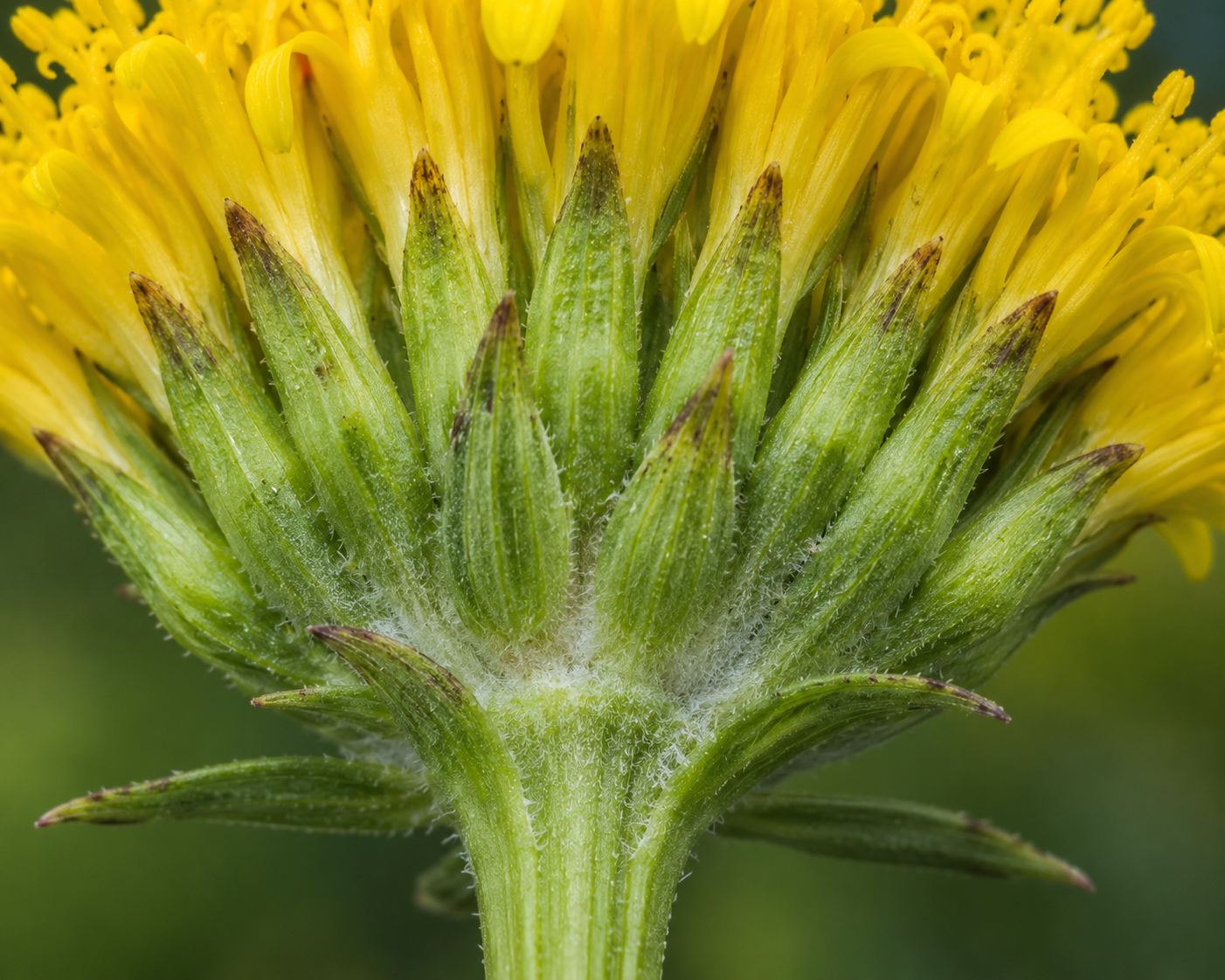
Seed Head / Seeds: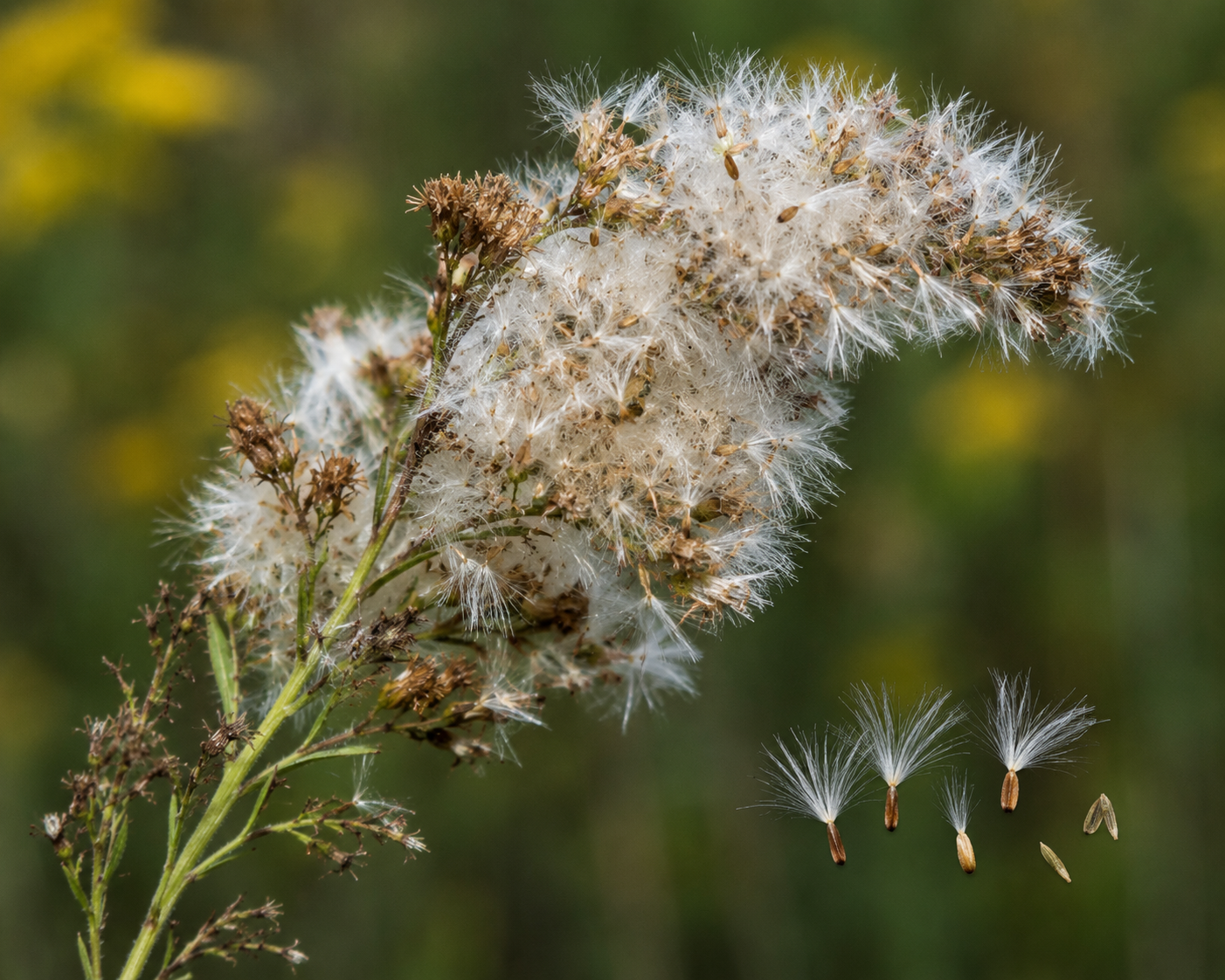
Root: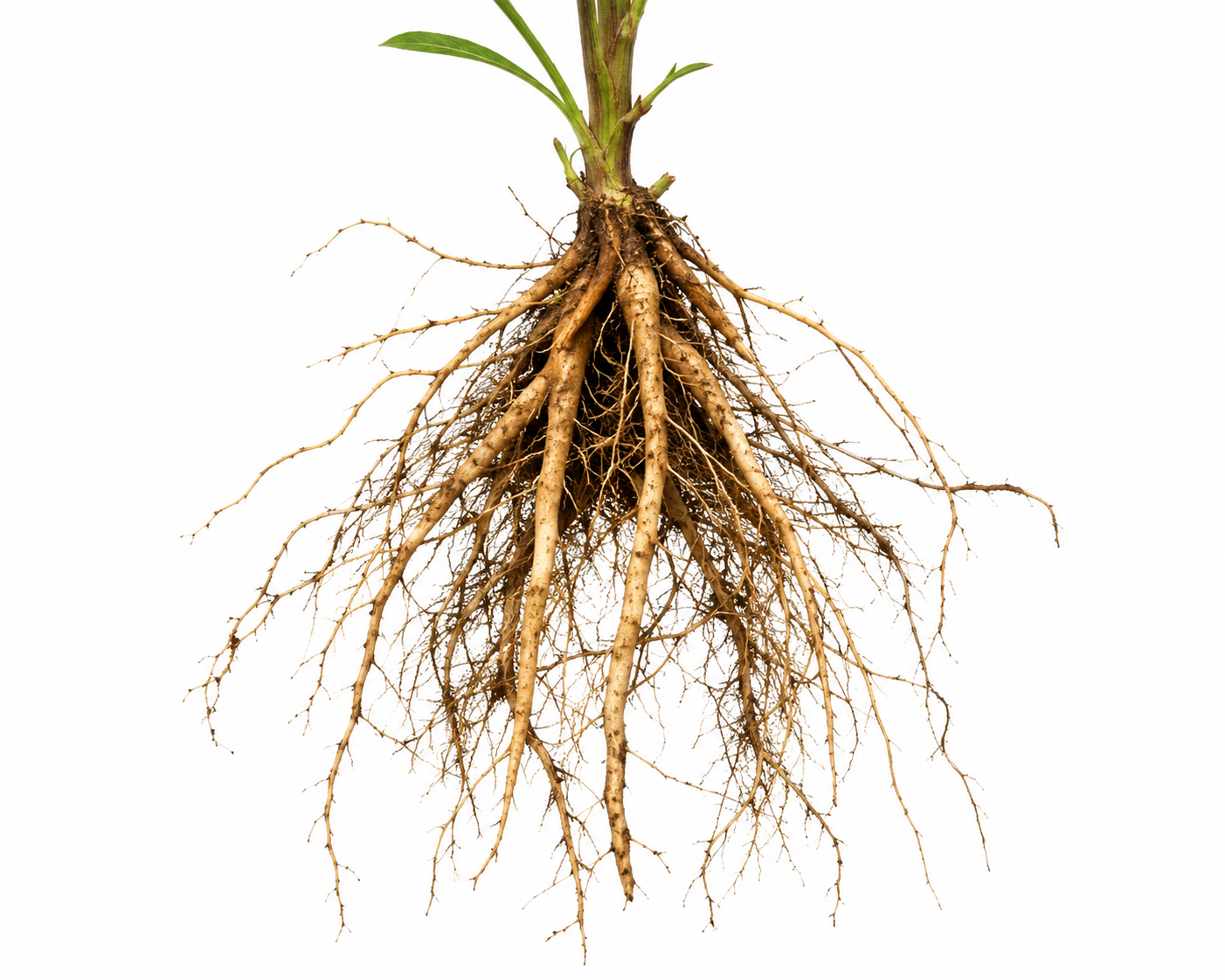
| Growth Form: | Upright spreading perennial wildflower. |
| Typical Size: | Usually 2–6 feet tall depending on species and conditions. |
| Aroma/Smell: | Mildly aromatic, green, slightly resinous scent when crushed. |
| Where it Commonly Grows: | Fields, roadsides, prairies, fence lines, meadows, ditches, woodland edges, and disturbed sunny areas. |
| Common Lookalikes: | Ragweed is often blamed for allergies but has green, inconspicuous flowers rather than bright yellow blooms. Some asters may grow nearby but have larger daisy-like flowers. |
| Foraging Safety Note: | Only harvest yarrow when you are fully confident in identification. Avoid roadsides, sprayed areas, contaminated soil, and any plant that may be confused with toxic lookalikes. Never forage any plant unless you are completely certain of identification. Use multiple features, not just one. |
What It’s Used For
| Traditionally Used For: | – Seasonal discomfort – Urinary tract support – Kidney support – Bladder support – Muscle soreness – Wound support – Skin support – Digestive support – Inflammation support |
How It Works:
| It Works By: | Goldenrod has traditionally been used as an aromatic and astringent herb with drying and toning qualities. It has a long history of use in traditional seasonal-support blends and urinary-support preparations. |
How to Use It
| Tea: | 1–2 teaspoons dried aerial parts per cup of hot water; steep covered 10–15 minutes. Traditionally used up to 3 times daily. |
| Decoction: | NA |
| Tincture: | Traditionally used in small amounts, often 20–40 drops up to 3 times daily. |
| Glycerite: | Used as an alcohol-free extract option; follow preparation strength. |
| Infused Oil: | Flowers and leaves infused into carrier oil for external use. |
| Salve/Balm: | Apply externally to minor skin irritations or sore areas as needed. |
| Poultice: | Fresh or moistened dried herb traditionally applied externally. |
| Compress/Fomentation: | Strong tea applied externally with a cloth. |
| Syrup: | Occasionally included in seasonal herbal blends. |
| Oxymel: | Sometimes combined with vinegar and honey in traditional preparations. |
| Powder: | Rarely used powdered. |
| Capsule: | Available in some commercial preparations. |
| Fresh Use: | Fresh flowering tops sometimes used immediately after harvest in tinctures or oils. |
Safety & Considerations
| Avoid If: | Avoid if allergic to plants in the Asteraceae family such as ragweed, daisies, or chrysanthemums. Use caution with kidney disorders, pregnancy, or chronic medical conditions unless supervised by a qualified professional. |
| Possible Side Effects: | Allergic reactions, stomach upset, or skin irritation in sensitive individuals. |
| Interactions with Pharmaceuticals, OTCs, and Other Herbs: | Use caution with diuretics and medications affecting fluid balance or blood pressure. |
| General Safety Note: | Use responsibly and discontinue use if irritation or unwanted reactions occur. This information is for educational and traditional-use purposes only and is not medical advice. |
Sourcing:
| Grow It: | How to Grow Goldenrod |
| Forage: | Common in fields, roadsides, meadows, fence rows, and disturbed sunny areas |
| Purchase: | Lowe Bridges Farm |
Additional Notes & Information:
Goldenrod is frequently mistaken for causing seasonal allergies, but ragweed is usually the true culprit. Goldenrod flowers are heavy and insect-pollinated, while ragweed produces lightweight airborne pollen.