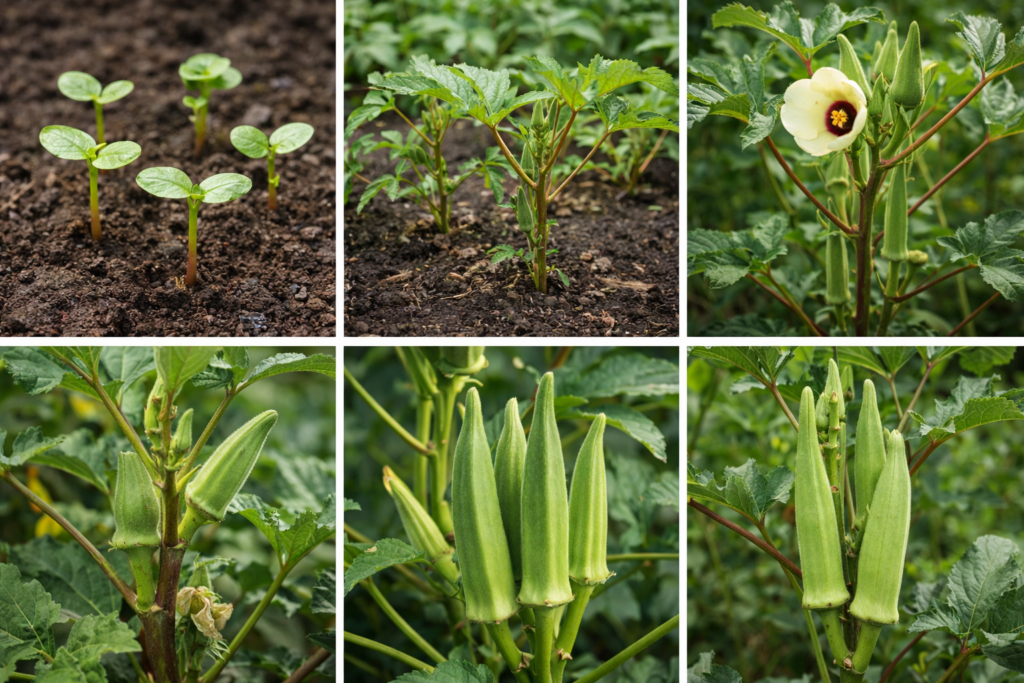
How to Grow Okra
General Information
| Scientific Name: | Abelmoschus esculentus |
| Common Names: | Okra |
| Plant Family: | Malvaceae |
| Vegetable Type: | Warm Season Fruiting Vegetable |
| Popular Varieties: | Clemson Spineless, Jing Orange, Burgundy, Emerald Jambalaya |
Know Before You Grow
| Growing Zones: | 7 – 11 |
| Crops per Year: | 2 – Early Summer, and in July, if you cut the stalks down to about 2 feet, you will get a second fall crop if you have enough time before your first frost date. |
| Plants Per Person: | 3 to 5 5 – 10 per person if you will be preserving |
| Frost Hardy: | No |
| Heat Tolerant: | Yes |
| Stratification: | No |
| Scarification: | No, but soaking seeds for several hours or overnight helps to speed germination |
| Resistances: | Okra is pretty tough once it is established. It handles high heat and drought better than most plants, but is not immune to any pests or diseases |
Rotation Schedule
| Schedule: | 3 year rotation schedule |
| Follow ->: | beans, peas, onions, garlic, leafy greens, root crops |
| <-Following: | brassicas, beans, peas, onions, carrots, lettuce |
Starting from Seed
| When: | Okra is almost always best when direct sown, but in shorter season zones, you can start seeds indoors about 3 to 4 weeks before transplanting outside. |
| Soil: | seed starting mix |
| Depth: | 1/2 to 1 inch |
| Water: | keep evenly moist, but not soggy |
| Germination: | 5 to 14 days, depending on warmth |
| Up Pot: | Only if absolutely necessary. It is better to transplant the seedling outside. |
| Harden Off: | 5 to 7 days before transplanting |
| Light: | Grow lights 14 to 16 hours per day |
| Soil Temperature: | 75°F to 95°F |
| Heat Mat: | Yes |
Garden Bed Prep
| Soil: | Loose, fertile, well draining soil |
| pH: | 6.0 to 6.8 |
| Soil Depth: | 8 to 12 inches of soil |
| Trellis: | Not needed |
| Fertilizer: | If your soil is average to poor, add a balanced fertilizer at the time of planting. Side dress once when plants are 6 to 8 inches tall. Beyond this, okra does fairly well on its own, as long as it has enough water. However, if your leaves turn pale or the plants start looking week, you should feed again after the first harvest. |
| Compost: | 1 to 2 inches of compost mixed in well. |
Transplanting
| When: | After all danger of frost has passed, nights are warm (over 70°F), the soil has warmed well. |
| How: | Disturb the roots as little as possible. Okra hates being disturbed, and it may pout for a couple of days after being transplanted. |
| Depth: | Plant at the same depth the plant was growing in the pot. |
| Spacing: | 12 to 18 inches apart, rows about 3 to 4 feet apart. |
| Mulch: | Yes, once the soil is warm add 2 to 3 inches of mulch. |
| Water: | keep moist, not soggy |
Direct Sowing
| When: | When all danger of frost has passed. |
| Depth: | 1/2 to 1 inch |
| Spacing: | 12 to 18 inches apart |
| Water: | Keep soil moist, not soggy |
| Light: | Full sun |
| Soil Temperature: | at least 70°F. Warmer is better. |
| # in Sq. Ft. Planting: | 1 plant per square foot |
Growing Care
| Soil pH: | 6.0 to 6.8 |
| Fertilizer/Feed: | Side dress when plants are 6 to 8 inches tall. Otherwise, just keep them watered. |
| Days to Maturity: | 50 to 65 |
| Water: | Water deeply enough that the soil is moist about three or four inches down. Do not randomly water. Only water when the top of the soil is dry. You want to keep the soil moist, without drowning the plant. |
| Pruning: | Usually not needed, but you should definitely prune away anything dead, damaged or diseased. |
| Mulching: | You may (or may not) need to add more mulch mid-season. Add it if you are seeing weeds…if there are no weeds, leave it be. |
| Pollination: | Okra is a “Perfect Flower” meaning that it is self-pollinating. However, pollinators, such as bees, do improve pod set. |
Companions & Antagonists
| Plant Family: | Antagonists: |
| Peppers | None |
| Eggplant | None |
| Cucumber | None |
| Basil | None |
Attracts & Repels
| Attracts: | Repels: |
| Honey bees | None |
| Ladybugs | None |
| Butterflies | None |
Pests & Disease
| Pests: | Disease: |
| aphids | powdery mildew |
| flea beetles | leaf spot |
| stink bugs | fusarium wilt |
| spider mites | root knot nematodes |
Seed Saving
| When: | When pods are fully mature and allowed to dry on the plant. Harvest before the dried okra splits too much. |
| Method: | Remove seeds, dry thoroughly if needed |
| Storage: | Store in a cool, dry place in a container or envelope |
Harvest Time
| When: | When pods are about 2 to 4 inches long. Do not wait beyond 4 inches, as the okra gets tough and woody. |
| How: | Cut the pods off the plant. Be sure to wear gloves…okra can be prickly. Harvest frequently. The more often you harvest, the more okra will grow. Okra, once started, grows FAST. A small okra in the morning may be too large the following morning. It’s best to check the okra twice each day. |
| Storing: | Okra will not keep for long. If you aren’t using it for fresh eating, you can freeze it (blanching is optional in MY opinion, but it is supposedly safer to blanch first and trim the ends off.) I usually freeze mine immediately. |
| Preservation Methods: | Freeze, can, pickle, ferment, dehydrate |
Troubleshooting
| Big plants, few or no pods: | Usually caused by too much nitrogen, not enough harvesting or sometimes due to too much shade. |
| Poor Germination: | Usually due to the soil being too cool, seed is too old or the bed stayed too wet. |
| Stunted Plants: | Cold soil, poor fertility, root knot nematodes or over-crowding |
| Dusty or mottled looking leaves: | Possible spider mites |
| Flowers but poor pod set: | Could be heat stress, plant stress, or pollination issues, but okra does it’s best production when the weather is truly hot. |
| Pods Tough or Woody: | They were left on the plant too long |