How to Grow Onions
General Information
| Scientific Name: | Allium cepa |
| Common Names: | Onion |
| Plant Family: | Amaryllidaceae |
| Vegetable Type: | Bulb |
| Popular Varieties: | Texas Early Grano, Yellow Granex, White Granex, Red Creole, Texas Legend, Candy |
Know Before You Grow
| Growing Zones: | 3 to 11. It is essential that you buy the correct type of onion set or seed for your growing season. In most of the South, short-day onions are usually the right choice. In northern zones, choose long-day onions. |
| Crops per Year: | 1 main bulb crop per year. Green onions may be grown more often. |
| Plants Per Person: | 10 to 15 plants per person for fresh eating. 20 to 30 plants per person for regular kitchen use and 30 to 50 plants per person if you want fresh plus storage or preservation. |
| Frost Hardy: | Yes. Onions are a cool season crop, but they cannot withstand hard freezes without protection. |
| Heat Tolerant: | An onions heat tolerance is moderate at best. Hot weather pushes them towards finishing, possibly too early which can affect bulb size and flavor. |
| Stratification: | no |
| Scarification: | no |
| Resistances: | Some varieties are bred for resistances to specific diseases. |
Rotation Schedule
| Schedule: | 3 or 4 year rotation schedule |
| Follow ->: | Root crops, leafy greens, or legumes |
| <-Following: | Brassicas, cucurbits, or other crops not in the allium family. |
Starting from Seed
| When: | Zones 3 – 7: Start indoors 10 to 12 weeks before transplanting out after the last frost date. Zones 8 – 11: Start indoors in fall to early winter, or buy sets for cool season planting. |
| Soil: | Seed starting mix |
| Depth: | 1/4″ |
| Water: | Keep soil moist, but not soggy |
| Germination: | 7 to 14 days |
| Up Pot: | No. But you can trim tops down to 3 or 4 inches to keep the seedlings manageable until transplant. |
| Harden Off: | When temps are 45°F to 50°F, harden off for a week or two before transplanting. |
| Light: | 12 to 14 hours per day. |
| Humidity: | 75% to 100% |
| Soil Temperature: | 65°F to 75°F |
| Heat Mat: | Helpful, but not necessary if the room is warm enough. |
Garden Bed Prep
| Soil: | Loose, well-draining, fertile soil rich with nutrients |
| pH: | 6.0 to 6.8 |
| Soil Depth: | At least 6 to 8 inches deep |
| Trellis: | No |
| Fertilizer: | Mix a balanced fertilizer such as 5-5-5 or 10-10-10 into the bed before planting, according to label directions. Onions need nitrogen early for top growth, but not too late into the season or bulbs will not develop well. |
| Compost: | If the bed is new, work 2 to 4 inches into the top 6 inches of soil. If the bed is an already existing bed, mix in 1 inch of compost into the top few inches. For containers, mix about 1 part compost to 4 parts quality potting mix. |
Transplanting
| When: | During the cool season. In the South, this means in the late fall to early winter. In the North, however, this means in the early Spring, after the last frost. If you grow a short day onion, plant in the fall. If you grow a long-day onion, plant in the Spring. |
| How: | Harden off for 7 to 10 days. Plant shallowly, just deep enough to cover the roots and anchor the plant. Do not bury the onion plants deeply. |
| Depth: | The bulb should develop near the soil surface. Keep the plant at about the same depth as it was growing before, with roots covered. |
| Spacing: | Bulb Onions: 4 to 6 inches Green Onions: 2 to 3 inches Rows: 12 to 18 inches apart. |
| Mulch: | Once plants are established, apply a light mulch to hold moisture and reduce weeds. Do not pack mulch up against the bulb neck. |
| Water: | Water deeply after transplanting so moisture reaches the root zone. Keep the soil evenly moist while the plants establish. |
Direct Sowing
| When: | Use onion sets, not seeds. In the Northern zones, plant these out when the soil is workable in Spring, about 2 or 3 weeks before your last frost date. In Southern zones, plant your sets in the late fall, and overwinter them into Spring. |
| Depth: | Root end down, tip up. Cover with just enough soil so the top is at or barely below the soil surface. The root should not be more than 1 inch deep. |
| Spacing: | For large bulbs, 4 to 6 inches For green onions, 2 to 3 inches apart. Rows should be 12 to 18 inches apart. |
| Water: | Well in well after planting. |
| Light: | Full Sun |
| Soil Temperature: | 45° – 50° F or warmer. |
| # in Sq. Ft. Planting: | Large Bulbs: 4 per sq. ft. Medium Bulbs: 9 per sq. ft. Green Onion: 16 per sq. ft. |
Growing Care
| Soil pH: | 6.0 to 6.8 |
| Fertilizer/Feed: | Fertilize onion sets about a week after planting, and then every 2 to 3 weeks while top growth is underway. By the end of December, stop fertilizing until Spring rolls back around. If you are Spring planting, continue to fertilize every 2 to 3 weeks with a 5-5-5 or 10-10-10 fertilizer, reduce nitrogen when the onions start to bulb. |
| Days to Maturity: | 90 to 110 days after planting. |
| Water: | Check weekly, stick your finger into the soil two inches down. If it is dry, water until it is moist 2 inches down. |
| Pruning: | Not necessary, but you should remove anything dead, damaged or diseased. |
| Mulching: | Once plants are established, add a light mulch if growing in the Spring. If overwintering , be sure to cover the plants with straw or leaves to protect the plants throughout their dormant period. |
| Pollination: | Not needed unless you are growing onion for seed (in their second year). |
Companions & Antagonists
| Plant Family: | Antagonists: |
| Carrots | Peas |
| Beets | Pole Beans |
| Lettuce | Bush Beans |
| Spinach | – |
Attracts & Repels
| Attracts: | Repels: |
| Pollinators when allowed to flower for seed. | Some pests can be confused by the strong smell of onions. |
Pests & Disease
| Pests: | Disease: |
| Onion Thrips | Downy Mildew |
| Onion Maggots | Purple Blotch |
| Cutworms | Neck Rot |
| – | Basal rot |
Seed Saving
| When: | Onions are actually biennial plants, so you can’t gather seed from them until the second year. Store your bulb and replant it the following year. Allow it to flower. Allow the flower heads to dry on the plant. |
| Method: | Cut the seed head off, dry further if needed, then remove and clean the seed. |
| Storage: | Store in a seed envelope or airtight container. |
Harvest Time
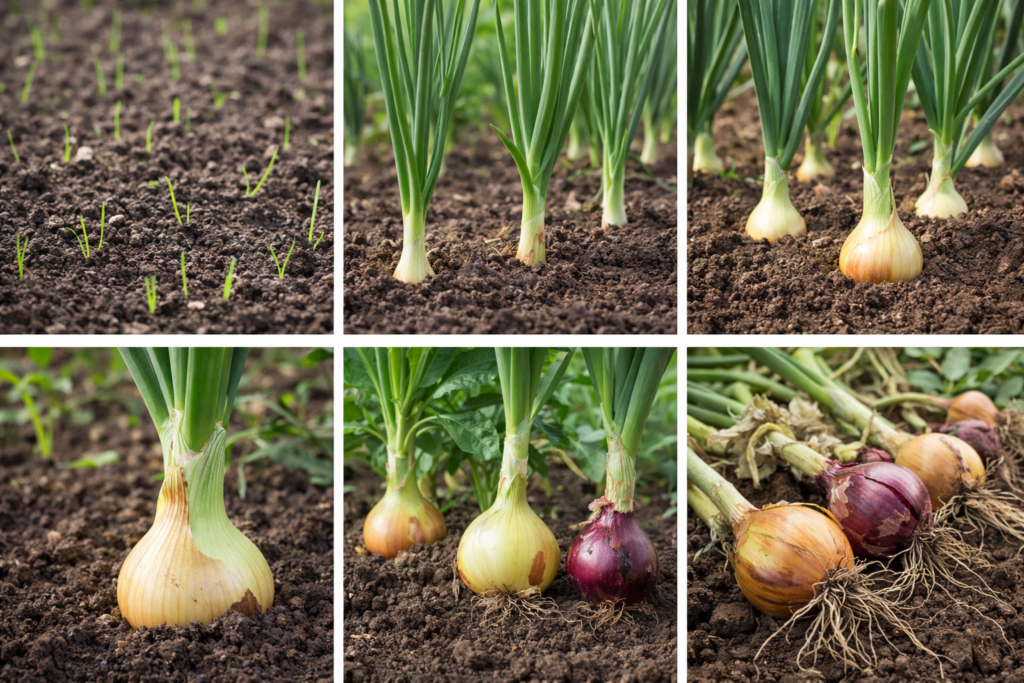
| When: | When bulbs have sized up and tops begin to yellow and fall over. |
| How: | Loosen the soil and pull gently. Do not yank hard if the soil is tight. |
| What: | Harvest the entire onion |
| Curing: | Cure bulb onions in a warm, dry, airy place for 2 to 3 weeks. |
| Storing: | Store cured onions in a cool, dry, dark place with good airflow. |
| Preservation Methods: | Dehydration, freezing, canning |
Troubleshooting
| Yellowing Leaves: | Could be nitrogen deficiency, water stress, or natural maturity if harvest time is close. Feed lightly early in the season, but do not overdo it. |
| Wilting: | Usually too little or too much water. Soil should stay evenly moist, never swampy. |
| Small Bulbs: | Often caused by the wrong day-length type, crowding, too much weed competition or planting too late. |
| Bolting: | Usually caused by cold stress or certain sets being triggered to flower. |
| Rotting Bulbs: | Usually caused by poor drainage, disease, or bulbs not being cured properly before storage. |
| Healthy: | Healthy onions should have upright green tops while growing and firm bulbs as they mature. |
| Huge tops, bulbs small: | Usually too much nitrogen, wrong onion type for your area or not enough room. |
| Bulbs Splitting: | Uneven watering or overfeeding. |
| Soft in storage: | Usually poor curing, excess moisture or rot issues. |