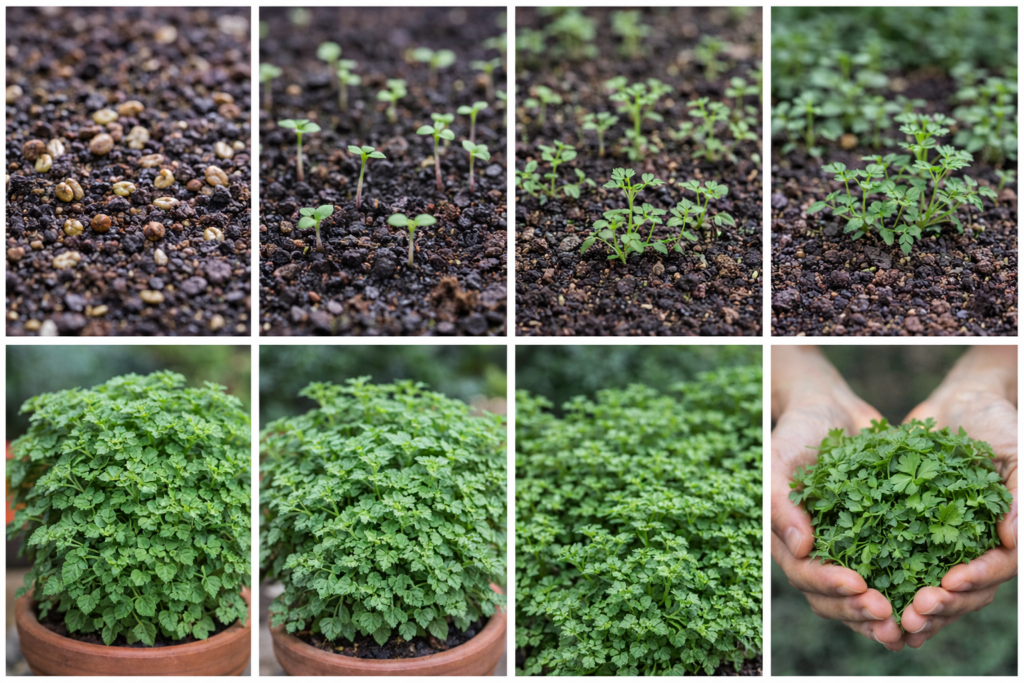
How to Grow Parsley
General Information
| Botanical Name: | Petroselinum crispum |
| Common Names: | Parsley, Italian parsley, flat-leaf parsley, curly parsley |
| Plant Family: | Apiaceae |
| Type: | Biennial; Culinary; Medicinal; Aromatic; Cool Season |
| Our Favorite Varieties: | Italian Flat Leaf (Einfache Schnitt 2), Triple Moss Curled |
Know Before You Grow
| Growing Zones: | 2 to 11 |
| Frost Hardy: | Yes |
| Heat Tolerant: | Moderate |
| Stratification: | No |
| Rows, Beds, Containers: | Yes to all three |
Starting from Seed
| When: | Start indoors 6–8 weeks before last frost, or direct sow in spring. In mild climates, it can also be sown in cooler fall or winter weather. |
| Soil: | Seed-starting mix |
| Depth: | 1/8″ to 1/4″ |
| Water: | Keep evenly moist, not soggy |
| Germination: | 14–30 days |
| Up Pot: | Up pot when seedlings are large enough to handle and need more root room |
| Light: | 14–16 hours under grow lights indoors; full sun to part shade outdoors |
| Soil Temperature: | 65°F–70°F |
| Heat Mat: | Helpful, but not required |
| Harden Off: | Yes, 7–10 days before transplanting |
Row, Bed, Container Prep
| Soil: | Moderately rich, moist, well-drained soil |
| pH: | 6.0–7.0 |
| Soil Depth or Pot Size: | 8–10 inches of workable soil; one plant does well in an 8–10 inch pot |
| Trellis: | no |
| Fertilizer/Feed: | Parsley likes fertile soil. Side-dress with compost or a balanced fertilizer once or twice during the growing season if needed. |
| Compost: | Mix in compost before planting |
Transplanting/Up Potting
| When: | When seedlings are sturdy and outdoor conditions are suitable |
| How: | Transplant gently and keep the root ball intact as much as possible |
| Depth: | Same depth it was growing before |
| Spacing: | 8–12 inches apart |
| Mulch: | Optional light mulch to help hold moisture |
| Water: | Water in well after transplanting and keep evenly moist while it establishes |
Direct Sowing
| When: | In spring as soon as the soil can be worked, or during cool-season windows in milder climates |
| Depth: | 1/8″ to 1/4″ |
| Spacing: | Sow thicker, then thin to 8–10 inches apart |
| Water: | Keep the seed zone evenly moist until germination and establishment |
| Light: | Full sun to part shade |
| # in Sq. Ft. Planting: | 1 for full-size plants; 4 for smaller plants harvested often |
Growing Care
| Fertilizer/Feed: | Side-dress with compost or a balanced fertilizer once or twice during the growing season if needed |
| Days to Maturity: | 70–90 days from seed |
| Water: | Keep evenly moist |
| Pruning/Harvesting: | Snip the outer stalks first for continuous growth |
| Mulching: | Light mulch can help keep roots cool and conserve moisture |
| Pollination: | Not needed for leaf production |
Companions & Antagonists
| Plant Family: | Antagonists: |
| Tomatoes | None. Do not crowd Parsley with large or shading plants. |
| Asparagus | – |
| Chives | – |
Attracts & Repels
| Attracts: | Repels: |
| Swallowtail butterflies and beneficial insects when flowering | Often included in mixed herb plantings, but no major specific repellent effect is strongly established |
Pests & Disease
| Pests: | Disease: |
| Aphids | Leaf spots |
| Caterpillars | Crown Rot |
| Spider Mites | Root Rot |
| – | Damping Off |
Seed Saving
| When: | In the second year, after the plant flowers and seed heads mature |
| Method: | Let seed heads dry on the plant, then cut, dry further if needed, and rub out the seed |
Harvest Time
| When: | Once plants are established and have enough outer stalks to spare |
| How: | Cut or snip outer stalks at the base rather than shearing the whole top |
| What: | Leaves and tender stalks |
| Storing: | Best used fresh. For short-term storage, trim ends and place stems in water, or refrigerate |
| Preservation Methods: | Drying, freezing, herb butter, pesto-style blends |
Medicinal Uses:
| Traditionally Used for: | Traditionally used for urinary tract complaints, kidney stones, digestive complaints, gas, fluid retention, and cough |
| Forms: | Tea/infusion, fresh herb, dried herb, juice, tincture, poultice |
| Dosage or Application: | Traditional use varies widely by form. Parsley has been used as teas, juices, extracts, and fresh herb, but household dosage varies enough that it is better handled case by case by preparation. |
| NOTICE: | This information is based on historical/traditional fact. It is for educational purposes only. Lowe Bridges Farm will not be held liable for your use of this information. Your use of this information and the results thereof is your responsibility, and yours alone. |
Culinary Uses:
| Flavor Profile: | Fresh, green, slightly peppery, slightly bitter |
| Best Used In: | Sauces, soups, salads, meats, vegetables, potatoes, eggs, stuffing, garnishes |
| Forms: | Fresh leaf, chopped, whole leaf, dried, minced |
As an Aromatic:
| Used for: | Parsleys fresh, green, clean scent is used more for freshness and bright herbal character than for heavy aromatic strength. |
| How: | Fresh in herb bundles, bouquets, fresh arrangements, kitchen herb use, or lightly dried blends |
Troubleshooting
| Rotting at base: | Usually soggy soil or poor drainage. |
| Weak growth: | Too much shade, crowding, or poor fertility. |
| Bolting | Heat or second-year growth. Parsley is a biennial. |
| Yellowing Leaves | Often uneven moisture, and outer leaves aging out. |