Permaculture Gardening
Permaculture is one of those gardening terms that gets used a lot, and sometimes used so broadly that people are not entirely sure what it means anymore.
At its heart, permaculture is a design approach. It is about creating a growing space that works more like a natural system and less like a constant battle against nature. Utah State Extension* describes permaculture as a design process that mimics the diversity, function, and resilience of natural ecosystems, while Oregon State* describes it as a whole-systems landscape planning method that can be used from home gardens all the way up to farms.
That means permaculture is not just one trick, one bed style, or one planting method. It is a way of thinking about the whole space and how the parts work together. Instead of asking only, “Where do I put the tomatoes?” permaculture asks bigger questions, like:
- where does the water move
- where does the sun fall
- what grows well here already
- how can one part of the space help another
- how can I make this more productive with less waste and less constant input
In other words, permaculture is less about forcing a garden into shape and more about designing a space that cooperates with the conditions you already have.
What Permaculture Looks Like in Real Life
This is where people sometimes get tripped up.
Permaculture is not one single look.
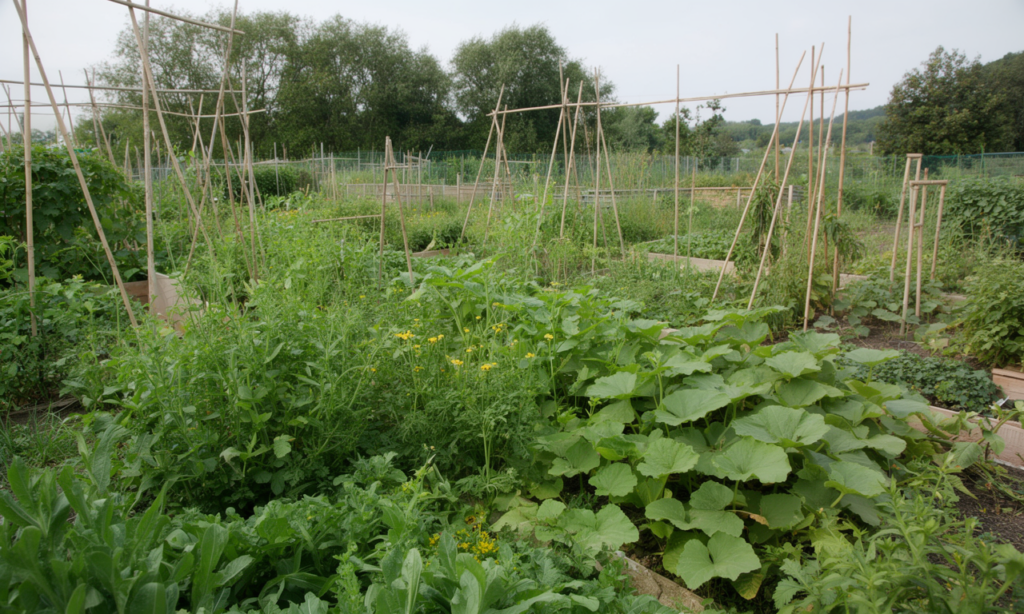
It might include fruit trees, herbs, perennial vegetables, annual crops, pollinator plants, compost areas, rainwater catchment, mulch, paths, chickens, food forests, living fences, swales, stacked plant layers, or any number of other elements. What makes it permaculture is not the presence of one specific feature. What makes it permaculture is the design logic behind the system.
A permaculture garden is usually built around relationships.
One plant may provide shade for another. One area may catch and slow rainwater. A tree may provide food, mulch material, habitat, and summer shade all at once. A path may guide water as well as people. A compost area may turn waste into fertility. The idea is to make the parts work together instead of functioning like isolated little islands. Utah State’s permaculture overview emphasizes those kinds of interconnections and ecosystem-style design, and Oregon State’s home gardener materials highlight similar ideas like making connections, stacking functions, building soil, and storing water.
That is one reason permaculture appeals so strongly to people who are tired of wasteful, input-heavy gardening.
Why Gardeners Are Drawn to Permaculture
One reason is that it encourages people to slow down and pay attention before they start building or planting.
A lot of gardening mistakes happen because somebody gets excited, sticks things in the ground, and only later notices the drainage problem, the shade problem, the wind problem, or the “why did I put a giant sprawling plant there” problem. Permaculture starts with observation and design.
It also appeals to gardeners who want:
- healthier soil
- better water use
- more long-term resilience
- less waste
- more biodiversity
- more edible and useful plants in the same space
- systems that improve over time instead of wearing out
There is also something deeply satisfying about a garden that feels like it belongs where it is. A well-designed permaculture space does not usually look like it is fighting the land every step of the way. It tends to look more settled, more layered, and more integrated.
That does not mean it has to be wild-looking or messy. It just means the design is working with the site instead of trying to bully it.
The Good Side and the Hard Side
The good side is easy to see.
Permaculture can help build soil, support pollinators and beneficial wildlife, reduce waste, make better use of water, and create a garden that produces food and other benefits at the same time. It often encourages diversity, which can make a system more resilient than a one-crop patch that depends on constant intervention. Utah State and Oregon State both frame permaculture as a resilient, sustainable, whole-systems approach rather than a single gardening technique.
But the hard side deserves saying too.
Permaculture is not an instant-results method.
It takes observation. It takes thought. It takes patience. Sometimes it takes years for the best parts of the design to really come into their own. Trees need time. Soil takes time. Layered systems take time. And because permaculture gets talked about in broad, idealistic ways, people sometimes expect a magical self-running paradise right out of the gate.
That is not how real life works.
Permaculture can reduce waste and unnecessary labor, but it still requires planning, installation, plant care, maintenance, and adjustment. A bad design does not become wise just because somebody called it permaculture.
Is Permaculture Right for You?
Permaculture may be a good fit if:
- you like thinking about the whole property, not just one bed
- you want a long-term garden plan
- you are interested in soil, water, biodiversity, and useful plant relationships
- you like layered, multi-purpose design
- you are willing to observe before acting
It may be less appealing if:
- you want quick, simple, highly standardized beds
- you do not enjoy planning and design
- you want something immediate and short-term
- you prefer very traditional row-by-row gardening
That said, you do not have to become a full-blown permaculture devotee to use permaculture ideas.
A lot of gardeners borrow the most practical parts:
- mulching heavily
- planting for pollinators
- catching rainwater
- grouping plants wisely
- using perennial food plants
- stacking functions in the landscape
- building soil instead of wearing it out
That is one of the nicest things about it. You can use the principles without having to turn your whole place into a philosophy project.
Final Thoughts
Permaculture is not a single gardening method so much as a way of designing a growing space to work more like a natural system. It focuses on relationships, resilience, useful connections, and long-term productivity rather than constant disturbance and waste.
For the right gardener, permaculture can be a smart and satisfying way to think about the whole landscape. For others, it may simply offer a few excellent ideas to borrow and use in a more traditional garden.
Either way, the best part of permaculture is this: it asks you to notice what the land is already telling you, then build from there.
For More Information on Permaculture: