Pollination 101
If you grow a garden for very long, sooner or later you start noticing a pattern. Some plants make fruit after flowering, and some do not. Some flowers seem to turn into vegetables like magic, while others bloom, fade, and fall off without producing a thing. That is usually where people start hearing about pollination.
Pollination is one of those basic garden subjects that sounds simple until you realize how much depends on it. If pollination is not happening properly, a lot of crops are not going to perform the way you expect. You may get fewer fruits, misshapen fruits, blossoms that drop, or plants that look healthy but just do not produce much. So yes, the birds and the bees may get the jokes, but pollination is serious business in the garden.
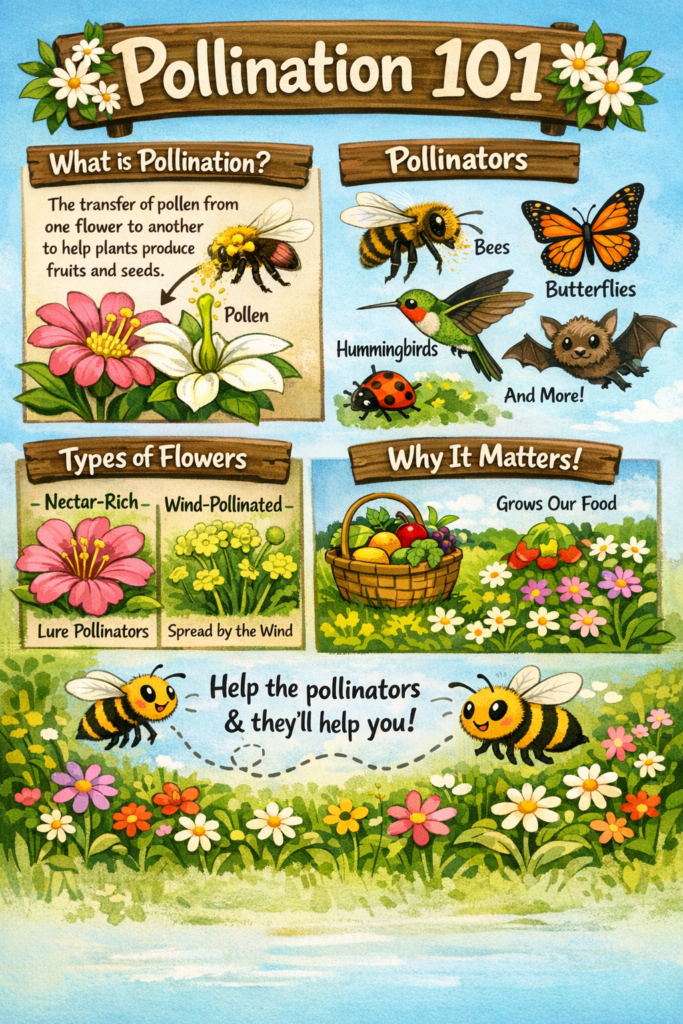
At its core, pollination is how pollen gets moved from the male part of a flower to the female part of a flower so seeds and fruit can form. That is the plain-English version. Once that transfer happens successfully, the plant can move forward with producing seed, fruit, or both, depending on the crop.
What Pollination Actually Is
Inside a flower, the male part produces pollen. The female part receives it. When pollen is transferred to the right place, fertilization can happen and the plant can begin developing fruit and seed.
That process can happen in different ways depending on the plant. Some plants have flowers that contain both male and female parts. Some produce separate male and female flowers on the same plant. Some depend heavily on insects or wind, while others can pollinate themselves under the right conditions.
So when gardeners talk about pollination, they are really talking about whether that pollen is getting where it needs to go.
If it is not, the plant may bloom beautifully and still not produce what you were hoping for.
Why Pollination Matters in the Garden
Pollination matters because a lot of the foods gardeners care about depend on it. If you want tomatoes, cucumbers, squash, melons, peppers, beans, apples, berries, or many other crops, pollination is part of the story somewhere along the line.
Without good pollination, you may see:
- blossoms that drop without forming fruit
- fruits that start but do not develop properly
- low yields
- misshapen produce
- poor seed development
That is why pollination problems can be so frustrating. The plant may look healthy. It may flower well. It may seem like it ought to be producing. But if pollination is weak, the harvest may still disappoint you.
Self-Pollinating Plants
Some plants are capable of pollinating themselves. That means one flower can often provide what is needed without depending heavily on pollen from another plant. This is referred to as a Perfect Flower in some circles.
Tomatoes, peppers, and many beans are commonly described as self-pollinating. That does not mean pollinators are useless on those crops. Bees, wind, and movement can still help improve pollination by shaking or moving pollen around. It just means those plants do not always depend on a second plant or a separate male and female flower arrangement the way some others do.
This is one reason you may still get tomatoes or peppers even if pollinator activity is not especially impressive. But it is also why gardeners sometimes gently shake tomato plants or trellises in protected spaces like greenhouses. A little movement can help the pollen do its job.
Cross-Pollinating Plants
Other plants need pollen to move from one flower to another, often with the help of insects or wind. In some cases, that may mean between separate flowers on the same plant. In other cases, it may mean between flowers on different plants of the same kind.
Squash is a good example people notice quickly because it often has separate male and female flowers. The male flower produces pollen. The female flower, which usually has a tiny baby squash shape behind it, has to receive that pollen or the fruit will not develop correctly.
Corn is another good example, though it works differently. Corn is wind-pollinated, and the pollen from the tassels has to reach the silks in order for kernels to develop. If pollination is poor, ears may come out patchy and underfilled.
Who Does the Pollinating?
Pollination can happen through:
- bees
- butterflies
- moths
- flies
- beetles
- hummingbirds in some cases
- wind
- hand pollination by the gardener
Bees are the stars of the show in a lot of gardens, especially when it comes to crops like cucumbers, squash, melons, and many fruiting plants. Their movement from flower to flower does a tremendous amount of the work.
Wind handles some crops, especially grasses and grains like corn. And in a few situations, gardeners step in and pollinate by hand when nature is not getting the job done.
That usually happens in greenhouses, indoor growing setups, or gardens where pollinator activity is low and a gardener is determined not to lose the crop.
Why Flowers Sometimes Do Not Turn Into Fruit
This is where a lot of gardeners start panicking.
A plant blooms, the flowers look good, and then the blossoms fall off. Or tiny fruits start and then shrivel. Or squash forms and then rots from the end while still tiny. Sometimes this is a pollination issue, and sometimes it is not.
Possible reasons include:
- poor pollinator activity
- weather problems
- excessive heat
- excessive rain
- poor timing between male and female flowers
- lack of plant vigor
- nutrient imbalance
- natural blossom drop in some crops
Pollination is important, but it is not the only reason flowers fail. That is worth remembering before blaming every dropped blossom on the bees.
How Weather Affects Pollination
Weather plays a bigger role than people sometimes realize.
Very high heat can reduce pollen viability or interfere with flower set. Heavy rain can keep pollinators from working and can physically damage blossoms or wash pollen away. Strong wind can sometimes help wind-pollinated crops but make life harder for delicate flowers and pollinators. Cool weather can also slow pollinator activity and affect how flowers behave.
So even if you have the right plants and healthy pollinators around, rough weather can still interrupt the process.
This is one reason garden production can vary from year to year even when the gardener feels like everything was done the same way.
How to Encourage Better Pollination
If you want better pollination in the garden, the first thing to do is make the garden more welcoming to pollinators.
That usually means:
- growing flowers that attract pollinators
- avoiding unnecessary pesticide use
- planting a variety of blooming plants
- keeping pollinator-friendly plants available through the season
- growing crops in conditions where they can flower well
It also helps to avoid spraying even “safe” products when pollinators are actively working the flowers. A garden that looks inviting to people is not always the same as a garden that is inviting to bees, so it helps to think beyond neatness and consider actual habitat and food sources too.
Healthy plants also pollinate better than stressed plants. If the crop is struggling from drought, disease, poor soil, or nutrient issues, pollination may not lead to the kind of fruit set you want.
When Hand Pollination Makes Sense
Sometimes a gardener has to step in.
Hand pollination can be useful when:
- growing indoors or in a greenhouse
- pollinator activity is low
- the crop has separate male and female flowers
- weather has interfered with normal pollination
- you want to make sure fruit sets on a valuable crop
In simple terms, hand pollination usually means moving pollen from the male flower to the female flower using a brush, cotton swab, or the flower itself, depending on the crop.
This is especially common with squash, pumpkins, cucumbers, and some greenhouse-grown crops. It is not always necessary, but it can be a very useful backup plan.
Pollination Is Not the Same as Fertilization
These words get used loosely sometimes, but they are not exactly the same.
Pollination is the transfer of pollen to the female part of the flower. Fertilization is what happens after that, when the reproductive process actually moves forward inside the plant and seeds begin forming.
For the average gardener, the difference may not matter much in day-to-day conversation, but it helps to know that pollination is the delivery step. It is not the entire process from bloom to harvest.
Some Crops Need More Pollinator Help Than Others
This is one of the most useful things a gardener can know.
Plants like tomatoes and peppers can often manage pretty well with self-pollination, though movement and pollinator activity can still help. Crops like squash, melons, cucumbers, and many fruit trees usually depend more heavily on outside pollination help.
That means your concern level should match the crop.
If your tomato flowers are blooming, you may just need a little movement and decent conditions. If your squash is blooming heavily and dropping tiny fruits, you may need to look much more closely at pollination.
Final Thoughts
Pollination is the movement of pollen to the right part of a flower so plants can go on to form seeds and fruit. It is one of the most important hidden steps in a productive garden, even though many gardeners do not think much about it until something goes wrong.
Once you understand the basics, a lot of garden mysteries start making more sense. You start noticing flower types, pollinator activity, weather patterns, fruit set, and blossom behavior in a whole new way. And when you understand pollination, you are better able to help the garden do what it was trying to do in the first place.
Because sometimes the difference between a flower and a harvest is simply whether the pollen made it where it needed to go.