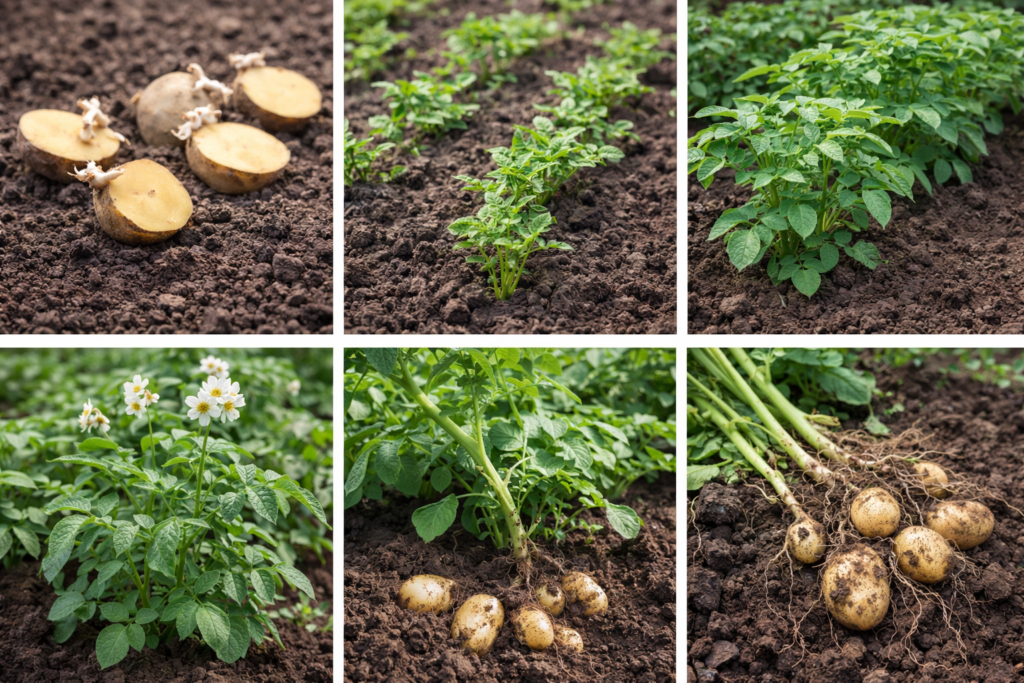
How to Grow Potatoes
General Information
| Scientific Name: | Solanum tuberosum |
| Common Names: | Potato, Spud |
| Plant Family: | Solanaceae |
| Vegetable Type: | Tuber |
| Popular Varieties: | Yukon Gold, Kennebec, Red Pontiac, Yukon Gem, Dark Red Norland, Russet types for baking. |
Know Before You Grow
| Growing Zones: | Usually grown as an annual in zones 3 to 10, but timing matters more than the zone number. In most southern zones, potatoes are commonly planted in the late winter, and harvested in the early spring. |
| Crops per Year: | Usually 1 but in some zones, 2 crops are possible. Potatoes could be overwintered, and harvested in winter, with another crop planted right after the last frost and harvested before the heat of summer sets in. |
| Plants Per Person: | 5 to 10 plants per person for fresh eating. Double that if storing or preserving. |
| Frost Hardy: | Tops can be damaged by frost if they have emerged. |
| Heat Tolerant: | Not overly heat tolerant. Potatoes are usually considered to be a cool season crop. |
| Stratification: | No |
| Scarification: | No |
| Resistances: | None |
Rotation Schedule
| Schedule: | 3 or 4 year rotation schedule |
| Follow ->: | Beans, peas, leafy greens, root crops that are not in the nightshade family. |
| <-Following: | Corn, legumes, brassicas, or other non-solanum crops |
Starting from Seed
| When: | Not done by home growers. Seed potatoes, preferably “certified” are usually used. You can also save and cut your own seed potatoes. Either way, they are direct sown. |
Garden Bed Prep
| Soil: | Loose, well-draining, fertile soil |
| pH: | 5.3 to 6.0 |
| Soil Depth: | Loose digging depth, but potatoes are usually “hilled up” as they grow. When the plants are about 6 inches tall, pull soil up around the stem, leaving just a couple inches of the top of the plant showing. Do this again every time you see 6 inches of growth above the soil. You can do this two or three times during the growing season. This makes for more potatoes. |
| Trellis: | no |
| Fertilizer: | Go easy on the nitrogen! It’s best to fertilize at planting, and again when the plants emerge. If you are unsure, buy a fertilizer specifically for potatoes, and follow the directions on the label. |
| Compost: | NEW in-ground or raised bed: 2 to 4 inches of compost mixed in. In EXISTING soil, add 1 inch and mix in lightly. In CONTAINERS, including GROW BAGS: Use a loose rich potting mix with compost and good drainage. |
Transplanting
| When: | Not done. |
Direct Sowing
| When: | Either in late fall or late winter. |
| Depth: | Seed potato should be about 1 1/2 to 2 ounces per piece, or about the size of a golf ball, and it should have at least one, and preferably two good “eyes” for sprouting. The smaller the seed potato or piece of seed potato you plant, the weaker your plants will be. Additionally, you can “chit’ the seed potatoes, which means providing them with bright, indirect light and warmth (around 70°F) about 6 weeks before planting. Plant at least 2 inches deep, up to five inches deep, depending on soil and method. |
| Spacing: | 10 to 12 inches apart in rows, with rows 24 to 36 inches apart. |
| Water: | Water in well when first planted. Don’t let the soil get so dry it’s hard…but don’t keep it overly wet either…or your potatoes will rot. |
| Light: | Full sun |
| Soil Temperature: | 45°F or warmer. |
| # in Sq. Ft. Planting: | 1 seed potato per sq. ft. |
Growing Care
| Soil pH: | 5.3 to 6.0 |
| Fertilizer/Feed: | At Planting, at emergence OR first hilling, and at the FINAL hilling. Feed lightly using a potato fertilizer for best results. |
| Days to Maturity: | 70 to 120 |
| Water: | Consistent moisture is needed, but you must be careful not to overwater…or underwater. Keep the soil moist. If you give your potatoes a little water each day, continue doing that throughout the growing season until about two weeks before harvest. If you drench your potato patch twice a week, you have to continue to do that as well for the same amount of time. CONSISTENCY without DROWNING the plants is KEY. |
| Pruning: | no |
| Mulching: | Yes add a good inch or so each time you hill up. Mulch can be used in place of soil for hilling up as well. |
| Pollination: | Not needed for tubers. |
Companions & Antagonists
| Plant Family: | Antagonists: |
| Beans | Tomatoes |
| Peas | Peppers |
| Brassicas | Eggplant |
Attracts & Repels
| Attracts: | Repels: |
| Some pollinators if allowed to flower. | Nothing. |
Pests & Disease
| Pests: | Disease: |
| Colorado potato beetles | Early blight |
| flea beetles | late blight |
| aphids | scab |
| wireworms | seed piece rot |
Seed Saving
| When: | Most home gardeners do not save potato seed in the true sense of “seed saving.” Instead, they may save “seed potato” which esentially means leaving a potato in cool storage until 3 or 4 weeks before planting, at which time the seed potatoes have eyes, and are provided with light to allow for growth to begin before planting. |
Harvest Time
| When: | For New Potatoes: Harvest earlier, when plants are flowering and small tubers have formed. For full-sized potatoes: Wait until the vine dies back and the skins are relatively firm. |
| How: | Loosen soil gently with a fork or shovel and lift carefully so you do not stab the tubers. If you grew in a container or grow bag, simply empty it on a tarp. |
| What: | Harvest the potatoes, but please do not keep the tops of the potatoes. Many people don’t even add those to their compost. |
| Curing: | Mature potatoes need to dry and toughen for two or three weeks before storing. |
| Storing: | Store in a cool, dark place with airflow. Do not wash before storage. |
| Preservation Methods: | Fresh storage, dehydration, peeling blanching and freezing, pressure canning. |
Troubleshooting
| Blackened tops after a cold snap: | Frost damage. Seed pieces may still be fine underground. It’s a “wait and see” situation. |
| Lots of top growth but poor tubers: | Too much nitrogen |
| Green potatoes: | Tubers were exposed to light and need better hilling or cover. Do not eat green potatoes. |
| Cracked or odd shaped potatoes: | Often inconsistent moisture. |
| Rotting seed pieces: | Soil too wet, poor healing after cutting or disease pressure. |
| Small harvest: | crowding, heat, low fertility, poor seed pieces or inconsistent moisture. |
| Healthy: | Strong leafy tops, steady growth, well-covered hills. |