
Soil Testing
If you want to garden smarter instead of just guessing harder, soil testing is one of the best places to start.
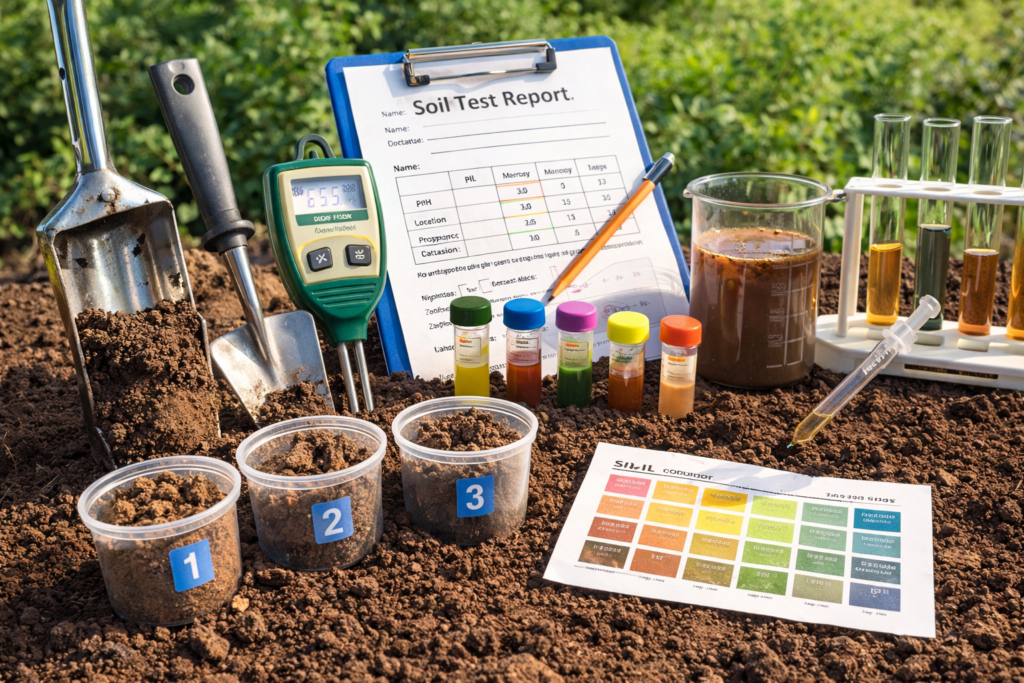
A whole lot of garden problems get blamed on the wrong thing. People assume the plants need fertilizer, or more water, or less water, or some fancy product from the garden center. Sometimes the real problem is the soil itself. If the pH is off, nutrients may not be available to the plant even if they are present in the ground. If nutrient levels are low, the plants may struggle no matter how much you encourage them. If the soil is overloaded with something, adding more can make matters worse instead of better.
That is why soil testing matters.
A soil test gives you information instead of guesses. It helps you understand what is going on in the ground so you can make better decisions about fertilizing, amending, and improving the soil.
What Soil Testing Is
Soil testing is the process of checking the condition of your soil to learn more about its chemistry and fertility.
A basic soil test often looks at:
- soil pH
- major nutrient levels
- sometimes organic matter
- sometimes salts or other characteristics, depending on the test
The exact details vary by lab and by test type, but for most home gardeners, the most useful information usually includes pH and the major nutrient levels.
That alone can tell you a lot.
Why Soil Testing Matters
Without a soil test, you are mostly guessing.
You may think your soil is low in nutrients when the real problem is pH. You may think a plant needs fertilizer when the soil already has plenty. You may add something the garden does not need at all. That wastes money, wastes effort, and can even create new problems.
A soil test helps you:
- understand what your soil needs
- avoid over-fertilizing
- avoid adding the wrong amendment
- improve plant growth more accurately
- save money by making better choices
- build a better long-term soil plan
In other words, soil testing helps take some of the mystery out of gardening.
What pH Means
Soil pH is a measurement of how acidic or alkaline the soil is.
That may sound technical, but the idea is pretty simple. pH affects how available nutrients are to plants. A soil can contain nutrients and still not let the plant use them well if the pH is too high or too low.
That is one reason pH matters so much.
The pH scale runs from:
- below 7 = acidic
- 7 = neutral
- above 7 = alkaline
Many common garden plants do best in soil that is slightly acidic to near neutral, though not all plants want the exact same thing.
If your soil pH is far outside the preferred range for what you are growing, plants may struggle even when fertilizer is present. The nutrients are there, but the plant cannot access them properly.
That is why people can sometimes keep fertilizing and still not solve the problem.
What NPK Means
If you have ever looked at a bag of fertilizer and seen three numbers, those numbers refer to NPK.
NPK stands for:
- N = Nitrogen
- P = Phosphorus
- K = Potassium
These are the three major nutrients plants need in the largest amounts.
Nitrogen
Nitrogen supports leafy green growth. It helps plants produce foliage and vigorous top growth.
If a plant is low in nitrogen, it may look pale, weak, or slow-growing. Too much nitrogen, though, can push lots of leafy growth at the expense of flowers or fruit.
Phosphorus
Phosphorus is important for root development, flowering, fruiting, and overall energy transfer inside the plant.
It is especially important in early growth and for strong root systems, though plants need it throughout their lives.
Potassium
Potassium supports overall plant health, vigor, stress tolerance, and many important plant functions.
It helps plants handle heat, cold, drought, and disease pressure better, and it plays a role in flower and fruit quality too.
So when a soil test mentions nutrient levels, those three are often part of the discussion.
What a Soil Test Can Tell You
A good soil test can help answer questions like:
- Is my soil acidic, neutral, or alkaline?
- Does it need lime or sulfur?
- Is phosphorus already high?
- Am I low on potassium?
- Do I really need fertilizer?
- What kind of amendment makes sense here?
That is much more useful than guessing based on a sad tomato and a prayer.
For home gardeners, the pH result and nutrient recommendations are usually the most practical part of the test. That is the information that helps you decide what to add, what not to add, and whether your soil is working with you or against you.
How to Read a Soil Test Report
A soil test report can look more intimidating than it really is. Once you know what you are looking at, it starts making a lot more sense.
Most home garden soil reports include:
- the pH
- the levels of major nutrients like phosphorus and potassium
- sometimes nitrogen
- sometimes organic matter
- sometimes recommendations for lime, sulfur, or fertilizer
The exact format depends on the lab, but the general idea is the same.
Start with the pH
The pH tells you whether the soil is acidic, neutral, or alkaline.
This matters because pH affects how available nutrients are to plants. Even if nutrients are present, plants may not be able to use them well if the pH is too high or too low.
In general:
- below 7 = acidic
- 7 = neutral
- above 7 = alkaline
A report may also tell you whether your pH is:
- very low
- low
- satisfactory
- high
- very high
If the pH is out of range, the report may recommend adding:
- lime to raise pH
- sulfur to lower pH
Look at the nutrient levels
Most reports will show nutrient levels as:
- low
- medium
- optimum
- high
Or they may use numbers with a chart or recommendation system.
The most common nutrients listed are:
- N = Nitrogen
- P = Phosphorus
- K = Potassium
If a nutrient level is low, the report may recommend adding more of it.
If a nutrient level is already high, that usually means you do not need to add more, even if you were planning to.
That is one of the biggest benefits of soil testing. It helps you avoid adding things your soil already has enough of.
Read the recommendations carefully
Many soil reports do more than list numbers. They also tell you what action to take.
For example, the report may recommend:
- a certain amount of lime per 100 square feet
- a certain kind of fertilizer
- how much fertilizer to apply
- whether no phosphorus is needed
- whether organic matter should be increased
This is the part that matters most in practical gardening.
The test numbers are useful, but the recommendation section is where the report translates those numbers into action.
Pay attention to the units
This part is easy to overlook.
Some reports give recommendations:
- per 100 square feet
- per 1,000 square feet
- per acre
You want to make very sure you understand which one you are reading before you start applying anything.
Otherwise, it is very easy to put out way too much or way too little.
Do not focus on nitrogen alone
Some home gardeners look only at nitrogen because it is the first number they recognize.
But a soil report is bigger than that.
A garden can struggle because:
- the pH is off
- phosphorus is low
- potassium is low
- organic matter is low
- nutrients are present but not available
So read the whole report, not just one number.
Use the report as a guide, not a panic button
A soil test report is there to help you make better choices, not to make you feel like you need a chemistry degree.
You do not have to “fix everything” in one day.
Use it to:
- understand your soil better
- make smarter amendment choices
- avoid wasting money
- improve the soil steadily over time
How to Take a Soil Sample
A soil test is only as useful as the sample you send in.
If you scoop one handful from one random spot, you may not be getting a very good picture of the whole area. A better approach is to take several small samples from different spots in the same garden area and combine them.
In general:
- sample from the area you want to test
- take several small samples, not just one
- avoid unusual spots unless you want to test them separately
- mix the samples together for that section
- let the sample dry if the instructions say to
- follow the lab directions carefully
If one part of the yard is very different from another, test them separately. A vegetable garden, flower bed, and blueberry patch may need their own tests rather than one blended guess.
When to Test Soil
You can test soil whenever you need answers, but many gardeners test before planting season or when planning improvements.
Soil testing is especially useful:
- before starting a new garden
- before making major soil amendments
- when plants are struggling and the reason is unclear
- when you have never tested that area before
- every few years to track changes over time
If you are serious about building soil wisely, testing every so often makes good sense.
What Soil Testing Does Not Do
A soil test is helpful, but it is not a crystal ball.
It does not tell you everything about drainage, compaction, soil texture, disease, light levels, or weather conditions. Those still matter too. A perfect soil test does not fix poor sunlight or overwatering.
So think of soil testing as one very important piece of the puzzle, not the entire puzzle.
Final Thoughts
Soil testing helps you understand what is happening below the surface so you can stop guessing and start making better decisions.
It can tell you about pH, nutrient levels, and whether your soil likely needs help before you waste time, money, and effort adding the wrong thing. And once you understand pH and NPK and know how to read the report itself, soil test results stop looking so mysterious and start becoming useful.
Because good gardening gets a whole lot easier when you know what the soil is actually telling you.