Straw Bale Gardening
Straw bale gardening is one of those methods that makes people stop and say, “Wait…you can do that?”
Yes. You can.
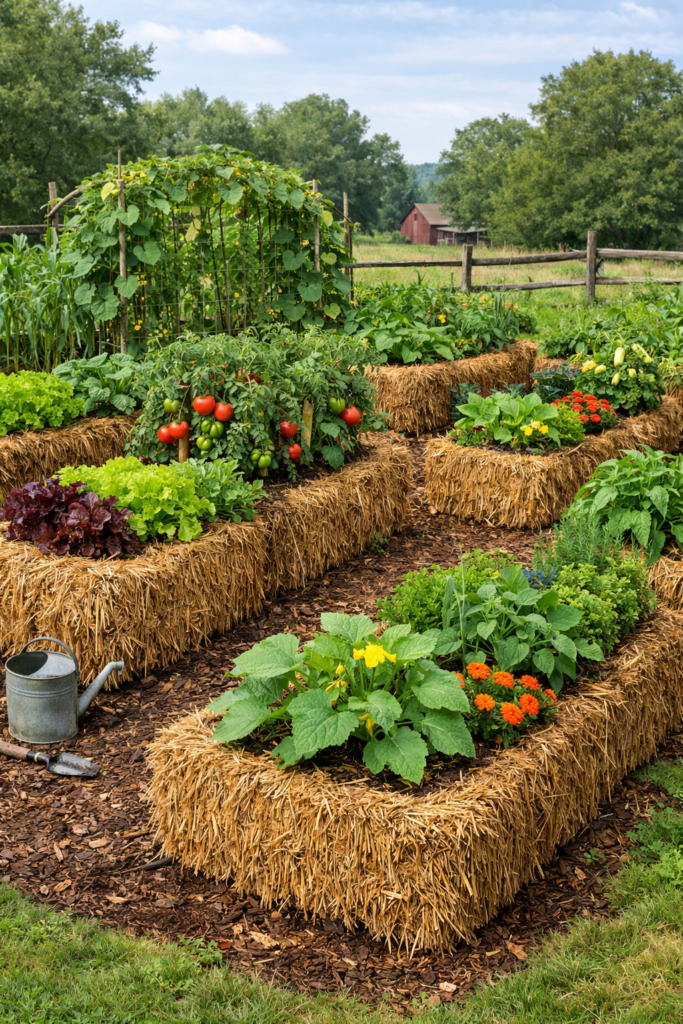
In straw bale gardening, the bale itself becomes the growing space.
After the bale is properly conditioned, plants can be grown right into it instead of in the ground or in a traditional raised bed. Clemson Extension explains that straw bale gardening uses conditioned bales as both the container and the growing medium, while New Mexico State notes that the bales gradually decompose and create a plantable environment.
That makes this method especially interesting for gardeners who have poor soil, limited space, hard ground, or a strong dislike of digging. It is not the cheapest method in every situation, and it is not totally fuss-free, but it can be a very practical option when the conditions are right.
What Straw Bale Gardening Is
Straw bale gardening is a method of growing plants directly in prepared straw bales.
The bale starts out as tightly packed straw, but over time, with water and fertilizer or another nitrogen source, the inside begins to break down. That decomposition is what makes the bale plantable. The inside starts to soften, warm, and act more like a growing medium than a dry block of straw.
That is why you cannot just drag out a random bale, plop a tomato on top, and expect greatness.
The bale has to be conditioned first.
Once that process gets underway, the straw bale can support vegetables, herbs, flowers, and other crops. The roots grow into the decomposing interior, and the bale serves as both support and growing medium.
Why Gardeners Like It
One big reason is access.
Straw bales raise the planting area up off the ground, which can make gardening easier on the back and knees. Clemson points out that this method can be especially useful where native soil is poor or where raised growing surfaces are desirable.
It can also help in places where:
- the ground is rocky or compacted
- soil drainage is poor
- no permanent bed is possible
- the gardener wants a temporary setup
- the gardener wants to avoid digging
Another thing people like is that it creates a contained growing area without lumber, blocks, or permanent construction. If you want a garden but do not want to build framed beds or fight the native ground, straw bales can offer a middle-ground option.
The Good Side and the Real Side
A good straw bale garden can be productive and surprisingly convenient. It creates a raised growing surface, helps avoid some soil-borne issues, and can be set up almost anywhere with sun and water.
But this is not a magic trick.
The bales need conditioning. They need regular watering. They eventually break down. And if you use the wrong kind of bale, you can set yourself up for trouble before you ever plant a thing.
That last part matters.
You want straw, not hay. Straw is made of the dried stalks left behind after grain harvest and usually has fewer seeds. Hay is cut for animal feed and often contains lots of grass or weed seeds. If you garden in hay bales, you may wind up growing a fine crop of regret.
Conditioning matters too. University and extension guidance consistently emphasizes that the bales need to begin decomposing before planting so the roots have a workable environment and enough available nutrients.
What Grows Well in Straw Bales
A lot of common garden crops can do well in properly prepared straw bales.
Good choices often include:
- tomatoes
- peppers
- cucumbers
- squash
- herbs
- lettuce
- beans
- flowers
Smaller plants and transplants are often the easiest place to start. Seeds can be grown in straw bales too, but they usually need a layer of compost or planting mix on top so they have a better place to germinate.
Large, thirsty, sprawling plants may need more support and more attentive watering. The bale is not the same as deep, rich garden soil, so you do have to keep an eye on conditions.
The Drawbacks
Straw bale gardening has some real tradeoffs.
The bales dry out faster than many in-ground beds, especially in hot weather. They may need frequent watering, and if the weather is blazing hot, they may need it more often than you would like. The bales also shrink and settle as they decompose, which is normal, but it does mean the growing space changes over time.
This method also depends on having a decent source for clean straw bales. If the bales have been treated with herbicides or contain too many seeds, you may run into problems. Alabama Extension notes that persistent herbicide residue is something gardeners should be aware of when sourcing bales and similar organic materials.
And at the end of the season, the bales are not permanent. For some gardeners that is a downside. For others, it is not a downside at all because the partly decomposed straw can be used as mulch or compost material later on.
Is Straw Bale Gardening Right for You?
Straw bale gardening may be a good fit if:
- your native soil is poor
- you want a temporary garden method
- you want less bending and kneeling
- you do not want to build raised beds
- you can water consistently
- you have access to clean straw bales
It may be less appealing if:
- you want a permanent setup
- water is hard to keep up with
- clean straw is hard to find
- you want a method with less seasonal setup
Like many alternative gardening methods, it solves certain problems very well while creating a few of its own. That does not make it bad. It just means it helps to know what you are signing up for.
Final Thoughts
Straw bale gardening uses conditioned straw bales as a temporary raised growing space for vegetables, herbs, and flowers. It can be a smart option for poor soil, limited access, or gardeners who want a no-dig setup without building permanent beds.
It does take preparation, watering, and a little planning, but for the right gardener, it can be a very useful method. And if nothing else, it is one more good reminder that gardens do not have to be built only one way.
For more information on Straw Bale Gardening: