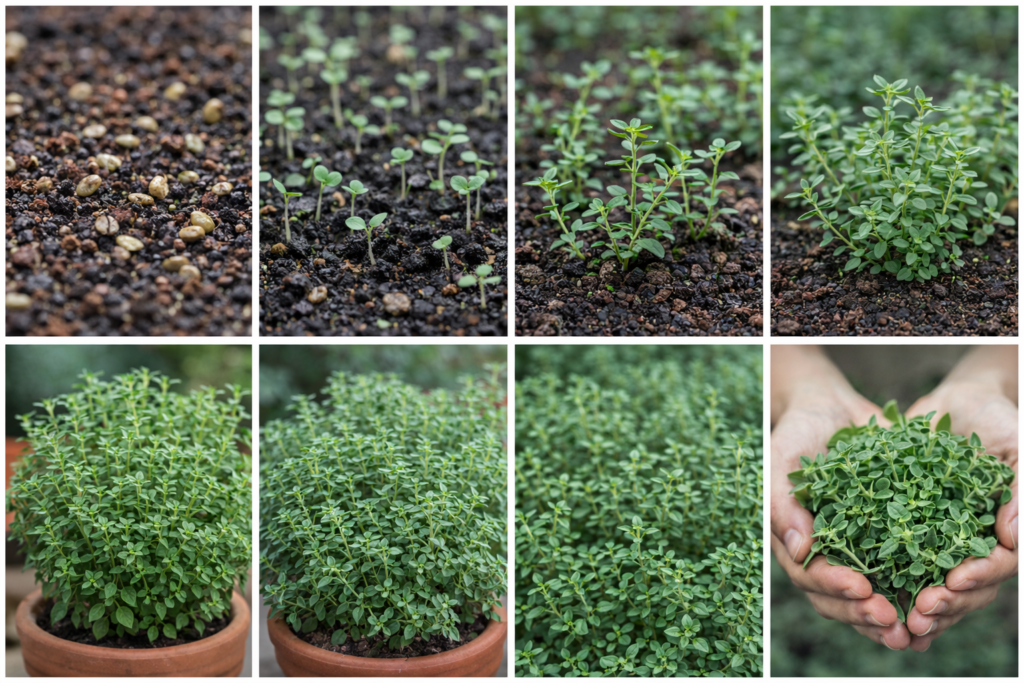
How to Grow Thyme
General Information
| Botanical Name: | Thymus vulgaris |
| Common Names: | Thyme, common thyme, garden thyme |
| Plant Family: | Lamiaceae |
| Type: | Perennial; Culinary; Medicinal; Aromatic; Warm Season to Mild Cool Season Grower depending on climate |
| Our Favorite Varieties: | Lemon Thyme, English Thyme, French Thyme |
Know Before You Grow
| Growing Zones: | 5–9 for common thyme; some thyme types vary a little by species and cultivar |
| Frost Hardy: | Yes, once established |
| Heat Tolerant: | Yes, if drainage is excellent; thyme dislikes wet, heavy soil more than heat itself |
| Stratification: | No |
| Rows, Beds, Containers: | Yes to all three. |
Starting from Seed
| When: | Start indoors about 6–8 weeks before the last frost, or sow outdoors after frost danger has passed and soil is warming. |
| Soil: | Seed-starting mix |
| Depth: | Surface sow or barely cover |
| Water: | Keep evenly moist, not soggy |
| Germination: | 14–28 days |
| Up Pot: | Up pot when seedlings are large enough to handle and have several true leaves |
| Light: | 14–16 hours under grow lights indoors; full sun outdoors |
| Soil Temperature: | 65°F–75°F |
| Heat Mat: | Helpful, but not required |
| Harden Off: | Yes, 7–10 days before transplanting |
Row, Bed, Container Prep
| Soil: | Very well-drained, light soil; thyme does poorly in wet, heavy soil |
| pH: | About 6.0–8.0; neutral to slightly alkaline is fine |
| Soil Depth or Pot Size: | 6–8 inches of workable soil is enough; one plant does well in an 8–10 inch pot, larger if you want it to spread |
| Trellis: | No |
| Fertilizer/Feed: | Go light. Too much fertilizer reduces flavor and makes growth floppy. |
| Compost: | Mix in a modest amount only. Do not make the soil too rich. |
Transplanting/Up Potting
| When: | After frost danger has passed, or during mild weather in warmer climates |
| How: | Transplant gently and avoid burying the crown |
| Depth: | Same depth it was growing before |
| Spacing: | 12–18 inches apart |
| Mulch: | Water in well, then let the soil begin to dry slightly between waterings |
| Water: | Light mulch only, and keep it away from the crown |
Direct Sowing
| When: | After frost danger has passed and the soil is warming |
| Depth: | Surface sow or barely cover |
| Spacing: | Sow thinly, then thin to 12–18 inches apart |
| Water: | Keep seed zone evenly moist until germination, then reduce frequency |
| Light: | Full sun |
| # in Sq. Ft. Planting: | 1 plant per square foot |
Growing Care
| Fertilizer/Feed: | Feed lightly if needed. Thyme generally does best in leaner conditions. |
| Days to Maturity: | About 85–95 days from seed; faster from transplants |
| Water: | Water regularly while establishing. Once established, let the soil dry somewhat between waterings. |
| Pruning/Harvesting: | Harvest just before flowering for strongest flavor. Cut 5–6 inches of top growth and avoid cutting deep into old woody stems; leave some green growth behind. |
| Mulching: | Use only a light mulch and keep it away from the crown |
| Pollination: | Not needed for leaf production. Flowers attract bees and other pollinators. |
Companions & Antagonists
| Plant Family: | Antagonists: |
| Cabbage family crops | None, just avoid crowding it with plants that need constantly damp soil. |
| Strawberries | – |
| Tomato | – |
| Eggplant | – |
| Mediterranean Herbs | – |
Attracts & Repels
| Attracts: | Repels: |
| Bees and other pollinators when flowering | Confuses many insect pests with it’s strong frangrance. Thyme foliage is also less attractive to deer. |
Pests & Disease
| Pests: | Disease: |
| Aphids | Root rot and fungal problems in poorly drained soil are the big ones. |
| Spider Mites | – |
Seed Saving
| When: | After flowers dry and seed heads mature on the plant |
| Method: | Let flower heads dry fully, cut them, dry more if needed, then shake or rub out the seed and store it dry |
Harvest Time
| When: | Harvest anytime after the plant is established, but best flavor is just before flowering |
| How: | Snip tender top growth, not the thick woody base |
| What: | Leaves and tender stem tips |
| Storing: | Fresh short-term in the refrigerator, or dry thoroughly and store airtight away from light |
| Preservation Methods: | Drying, freezing, herb blends, infused vinegars, safely made infused oils |
Medicinal Uses:
| Traditionally Used for: | Productive coughs associated with colds; historically also used as an expectorant-type herb for the respiratory system |
| Forms: | Tea/infusion, tincture, syrup, liquid extract, dry extract, steam inhalation, essential oil in properly diluted preparations |
| Dosage or Application: | Traditionally used as an herbal tea and in oral liquid or solid preparations. The EMA monograph supports traditional use of thyme herb preparations for chesty coughs associated with colds, though exact dosing depends on the preparation form. |
| NOTICE: | This information is based on historical/traditional fact. It is for educational purposes only. Lowe Bridges Farm will not be held liable for your use of this information. Your use of this information and the results thereof is your responsibility, and yours alone. |
Culinary Uses:
| Flavor Profile: | Savory, earthy, slightly minty, slightly clove-like |
| Best Used In: | Soups, stews, sauces, meats, vegetables, stuffing, beans, roasted dishes |
| Forms: | Fresh, dried leaf, whole sprigs, stripped leaves, powdered |
As an Aromatic:
| Used for: | Its warm, sharp, herbaceous aroma is used for respiratory-supportive blends, cleansing blends, and stimulating or clarifying aromatic use. The reason is its strongly fragrant volatile oils. |
| How: | Fresh or dried in sachets and bundles, or as a properly diluted aromatic preparation; essential oil use requires strong dilution |
Troubleshooting
| Leggy or Floppy: | Not enough sun or too much fertilizer |
| Yellowing at Base: | Soil staying too wet |
| Weak Flavor: | Too much fertility or too much shade |
| Plant dies out in winter: | Poor drainage is often the real problem, not just cold |
| Sparse Growth: | Needs more sun, lighter soil, or trimming to encourage branching |