
What is Fertilizer?
Fertilizer is any material added to the soil or to plants to supply nutrients they need for growth.
That is the simplest definition.
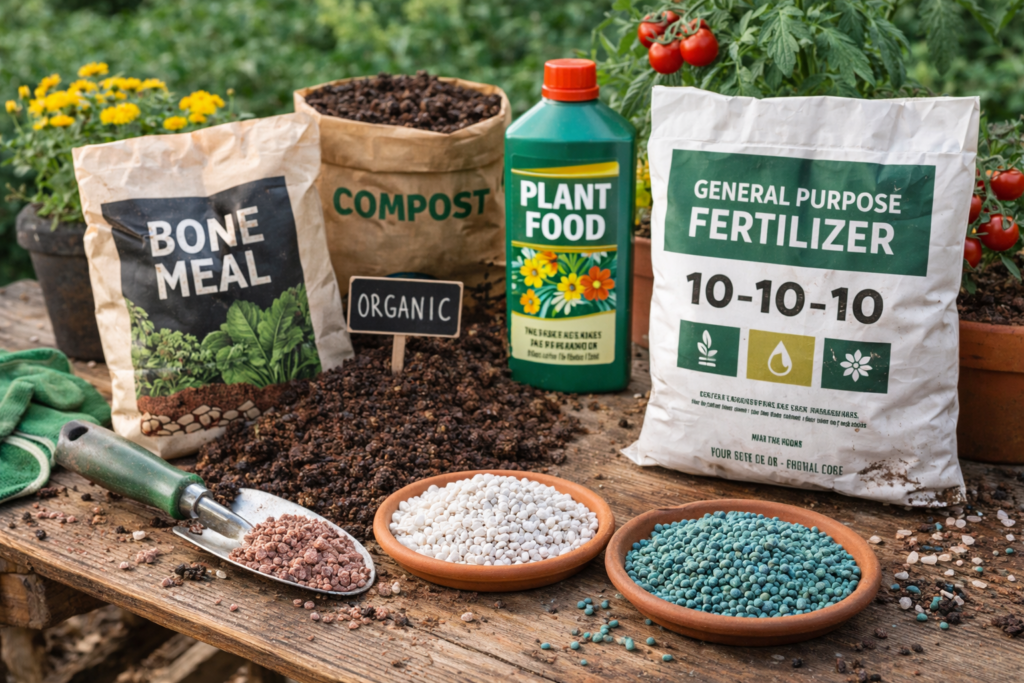
Plants need more than sunshine and water. They also need nutrients, and when those nutrients are not available in the soil in the right amounts, plant growth can suffer. Fertilizer is used to help supply those nutrients so plants can grow, flower, fruit, and stay healthier overall.
Now, this is where a lot of gardeners get mixed up.
Fertilizer is not the same thing as soil.
It is not the same thing as compost.
And it is not the same thing as manure, at least not in the way many people use the word.
Fertilizer is about feeding the plant.
What Fertilizer Does
Fertilizer provides nutrients that plants need in order to grow properly.
Some nutrients are needed in larger amounts, and some in smaller amounts, but all of them play a role in plant health. When those nutrients are lacking, plants may grow poorly, look pale, produce less, or struggle to flower and fruit the way they should.
A fertilizer helps fill in the nutritional gaps.
That does not mean fertilizer fixes every plant problem. A struggling plant may actually have a watering issue, a soil problem, a pH problem, disease, pests, compaction, poor drainage, or lack of sunlight. Fertilizer is useful, but it is not magic fairy dust.
It only solves the problem it actually solves.
The Main Nutrients in Fertilizer
When most people talk about fertilizer, they are usually talking first about the three major nutrients listed on the bag:
- N = Nitrogen
- P = Phosphorus
- K = Potassium
These are the big three.
Nitrogen
Nitrogen helps support leafy green growth. It is especially important for vigorous stems and leaves.
If a plant is low in nitrogen, it may look pale, weak, or stunted. But too much nitrogen can create the opposite problem: lots of green leaves and not much flowering or fruiting.
Phosphorus
Phosphorus supports root development, flowering, fruiting, and energy movement inside the plant.
It is especially important in young plants and during reproductive growth.
Potassium
Potassium helps with overall vigor, stress tolerance, disease resistance, and general plant function.
It supports stronger plants and can help with flower and fruit quality as well.
These three nutrients are why fertilizer labels show those three numbers, such as 10-10-10 or 5-10-5.
What Those Numbers Mean
The three numbers on a fertilizer package show the percentage by weight of:
- nitrogen
- phosphorus
- potassium
So if a bag says 10-10-10, that means it contains:
- 10% nitrogen
- 10% phosphorus
- 10% potassium
The rest is made up of filler, carriers, or other materials in the blend.
Those numbers do not tell you everything, but they do tell you what the fertilizer is emphasizing.
A high first number means more nitrogen.
A high middle number means more phosphorus.
A high last number means more potassium.
Fertilizer Is Not Soil
This is one of the biggest misunderstandings in gardening.
Soil is the growing medium. It gives roots a place to live, holds water, supports soil life, and stores nutrients.
Fertilizer is not a replacement for good soil.
If your soil is poor, compacted, lifeless, or badly drained, fertilizer alone is not going to turn it into beautiful garden ground. It may feed the plant temporarily, but it does not fix the deeper condition of the soil itself.
That is why soil building still matters.
Fertilizer Is Not Compost
Compost and fertilizer are related, but they are not the same.
Compost improves the soil. It adds organic matter, improves structure, helps with moisture retention, feeds soil life, and may contribute some nutrients along the way.
Fertilizer is more direct. It is added primarily to supply nutrients.
Compost helps build a better home for roots.
Fertilizer helps feed the plant.
A good garden often uses both, but they are doing different jobs.
Organic and Synthetic Fertilizer
Fertilizers generally fall into two broad categories:
- organic
- synthetic
Organic fertilizers come from natural sources such as plant materials, animal byproducts, or mined minerals.
Synthetic fertilizers are manufactured to provide nutrients in forms that plants can use, often more quickly and precisely.
Both can be useful. Both have strengths and weaknesses.
Organic fertilizers often work more gradually and may help support overall soil health, depending on the product.
Synthetic fertilizers are often faster-acting and more concentrated, but they are easier to overdo if you are not paying attention.
This is one of those gardening topics where people can get very emotional, but in practical terms, the main thing is understanding what you are using and why.
When Fertilizer Helps
Fertilizer is most useful when:
- the soil truly lacks nutrients
- plants are showing nutrient deficiency
- a soil test shows what is needed
- crops are heavy feeders and need support
- nutrients are being used up in containers or raised beds
It can also be useful during periods of active growth, especially for crops that demand a lot from the soil.
But the best way to know what is needed is not to guess. It is to test the soil if possible and pay attention to how your plants are actually performing.
When Fertilizer Can Hurt More Than Help
Too much fertilizer can cause problems.
It can:
- burn roots
- push weak, overly lush growth
- reduce flowering or fruiting in some cases
- create nutrient imbalances
- waste money
- contribute to runoff and pollution
That is why more is not always better.
Good gardeners do not just feed blindly. They try to feed wisely.
Final Thoughts
Fertilizer is a material added to soil or plants to provide nutrients needed for healthy growth.
Its job is to feed the plant, not replace the soil, not act as compost, and not solve every garden problem under the sun. Used correctly, fertilizer can help support better growth, stronger plants, and better harvests. Used carelessly, it can waste money and create new problems.
The key is knowing what fertilizer does, what it does not do, and when your plants actually need it.
Because in the garden, feeding the plant is important — but understanding the difference between feeding the plant and fixing the soil is just as important.