What Is Your Growing Zone?
One of the first things gardeners get told is, “Know your growing zone.” That is good advice, but it often gets repeated in a way that makes it sound more mysterious than it really is.
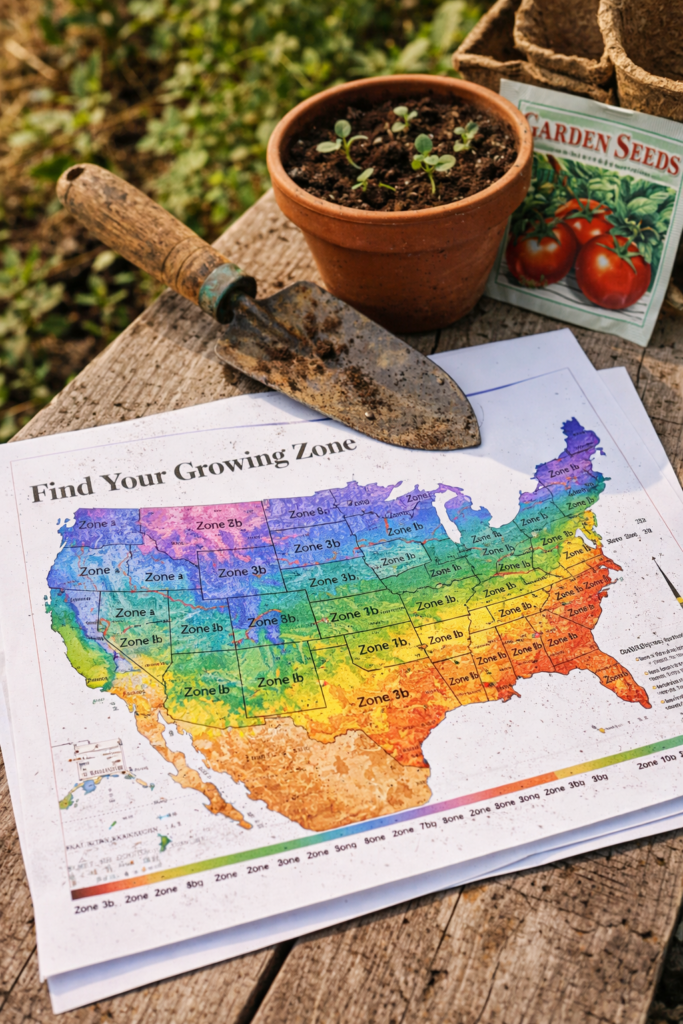
A growing zone is simply a way of estimating how cold your area gets in winter. In the United States, gardeners usually mean the USDA Plant Hardiness Zone when they say “growing zone.” The zone is based on average annual minimum winter temperatures, and it helps gardeners understand which perennial plants are likely to survive year after year in a given area.
That is useful information, but it is also where a lot of confusion starts.
A growing zone matters, yes. It is helpful, yes. But it is not the whole gardening story, and it definitely does not tell you everything you need to know about what will grow well in your yard.
What a Growing Zone Actually Tells You
A growing zone tells you how cold your winters typically get.
That means it is mainly a tool for understanding winter survival, especially for:
- perennial plants
- shrubs
- trees
- bulbs
- herbs that return year after year
If a plant is rated hardy to your zone, that usually means it can survive the winter temperatures you normally get there. If it is not hardy to your zone, it may die when the cold hits unless it is protected or grown as an annual.
That is the main purpose of the zone system. It helps answer the question:
Will this plant likely survive winter here?
That is important, but notice what it does not tell you.
What a Growing Zone Does Not Tell You
Your growing zone does not tell you:
- how hot your summers get
- how long your growing season is
- when your last frost happens
- when your first frost happens
- how much rain you get
- how much wind you get
- what your soil is like
- whether your yard is shady, wet, dry, or exposed
This is why two places in the same growing zone can still garden very differently.
A zone tells you one thing: winter cold. That is valuable, but it is only one piece of the puzzle. A gardener who knows the zone but ignores heat, humidity, soil, and frost dates is still missing a lot.
Why Growing Zones Matter
Growing zones matter most when you are choosing plants that are meant to live for more than one season.
That includes things like:
- fruit trees
- berry bushes
- perennial herbs
- flowering shrubs
- ornamental trees
- certain bulbs and perennials
If you buy a rosemary plant that is only hardy to a warmer zone than yours, it may grow beautifully for a season and then die in winter. If you plant a fruit tree that cannot handle your winter temperatures, you may lose years of effort. That is exactly the kind of problem a growing zone is meant to help prevent.
For annual vegetables, the zone still matters a little, but not in the same direct way. Tomatoes, peppers, squash, beans, and many other common garden crops are usually grown for one season anyway. For them, frost dates and heat tolerance often matter more than hardiness zone.
The Difference Between Zone and Frost Dates
This is a place where a lot of gardeners mix things up.
Your growing zone tells you about average winter lows.
Your frost dates tell you about the likely beginning and end of your active growing season.
Those are not the same thing.
A gardener might know they are in Zone 8b, for example, but still need to know:
- the average last spring frost
- the average first fall frost
- how long the frost-free season is
That is the information that helps you decide when to start seeds, when to transplant, and whether a long-season crop has enough time to mature.
So if you are growing vegetables, do not stop at the zone. Learn your frost dates too.
Why Gardeners Should Know Their Zone Anyway
Even though it is not the whole story, your zone is still useful.
It helps you:
- choose perennial plants more wisely
- understand winter survival odds
- avoid wasting money on plants that are unlikely to last
- make better long-term planting decisions
- compare plant labels more intelligently
It also gives you a starting point when reading gardening advice. If you know your zone, you can better judge whether a recommendation applies to your area or not.
The trick is not to treat the zone like it is the only thing that matters. It is a helpful tool, not a complete growing guide.
Microclimates Matter Too
Even within one yard, conditions can vary.
A sheltered spot beside a house may stay warmer than an exposed open field. A low area may hold cold air longer. A south-facing wall may create a warmer pocket. A shaded damp corner may behave differently from a sunny, windy bed twenty feet away.
These small local differences are called microclimates, and they matter more than people sometimes realize.
That is why a plant that “shouldn’t make it” sometimes survives just fine in one protected spot, while another one in the same yard struggles. The zone gives you the broad picture, but the microclimate helps explain the exceptions.
Use the Zone as a Guide, Not a Commandment
Gardeners sometimes make one of two mistakes with zones.
One group ignores them completely and plants things with pure optimism and no backup plan. The other group acts like the zone map was handed down on stone tablets and nothing outside of it is worth trying.
The wiser path is somewhere in the middle.
Use the zone as a guide. Respect it. Pay attention to it. But also look at your own property, your frost dates, your heat, your humidity, your soil, and your actual experience. Sometimes a plant outside your zone can still be grown as an annual or protected through winter. Sometimes a “hardy” plant still fails because the soil stayed wet or the site was too exposed.
Good gardeners use the zone, but they also use observation and common sense.
Annuals, Perennials, and Zone Thinking
This is another place where the zone matters differently depending on the kind of plant.
For annuals, the question is usually:
Can I grow this during my season before frost or heat shuts it down?
For perennials, the question is often:
Can this survive winter here and come back next year?
That is why hardiness zone is especially important with things like shrubs, trees, perennial herbs, and landscape plants. It is less central, though still not irrelevant, when dealing with seasonal vegetables.
Final Thoughts
Your growing zone is a tool that tells you how cold your winters typically get and helps you choose plants that can survive those conditions. It is especially useful for perennials, trees, shrubs, and anything you hope will live for more than one season.
But your growing zone is not the whole gardening picture. It does not tell you your frost dates, your summer heat, your rainfall, your soil, or your microclimates. Those things matter too.
So yes, know your growing zone. Just do not stop there. In the garden, it is one important piece of information, not the entire answer sheet.