
What You Need to Know About Homestead Water
Water is one of the most important resources on a homestead because every part of daily life depends on it. People need water. Animals need water. Gardens need water. Fruit trees, compost piles, food preservation, cooking, cleaning, bathing, and basic sanitation all require water. When the water stops, the whole homestead slows down fast.
A homestead can function for a while without electricity, internet, fancy equipment, or perfect buildings. Water is different. Without reliable water, chores become harder, animals become vulnerable, gardens suffer, and daily care becomes stressful. That is why water should be one of the first things considered when planning or improving a homestead.
Many people look at land and think first about the house, garden, barn, fencing, or animals. Those things matter, but water belongs at the top of the list. A pretty property with poor water access can become expensive and frustrating. A simple property with dependable water is much easier to build on.
Water Is Not Just Drinking Water
When people think about water, they often think about drinking water first. That is important, but drinking water is only one part of the picture.
On a homestead, water is used for cooking, washing dishes, bathing, laundry, cleaning tools, flushing toilets, watering animals, irrigating gardens, washing produce, starting seeds, mixing soil, cooling animals in extreme heat, and sometimes preserving food. If you raise animals, grow food, or do any kind of outdoor work, your water needs are higher than a typical household.
Even a small homestead can use a surprising amount of water. A few raised beds, container herbs, chickens, dogs, fruit trees, and household needs can add up quickly. In hot climates, water use rises even more because plants dry out faster, animals drink more, and people need more water while working outside.
That does not mean you should panic. It means you should plan honestly.
Know Your Main Water Source
The first question is simple: Where does your everyday water come from?
Common homestead water sources include city water, rural water systems, private wells, springs, ponds, creeks, rainwater collection, and stored water. Some homesteads depend on one source. Others use a combination.
City or rural water is convenient because water comes through a meter and into the house with little daily work. The downside is dependency. If there is a main break, billing issue, contamination notice, freeze damage, or leak on your side of the meter, you are still tied to that system.
A private well can provide more independence, but it also requires equipment. A well usually depends on a pump, pressure tank, electricity, pipes, and maintenance. If the pump fails or the power goes out, the well may not help unless you have a backup plan.
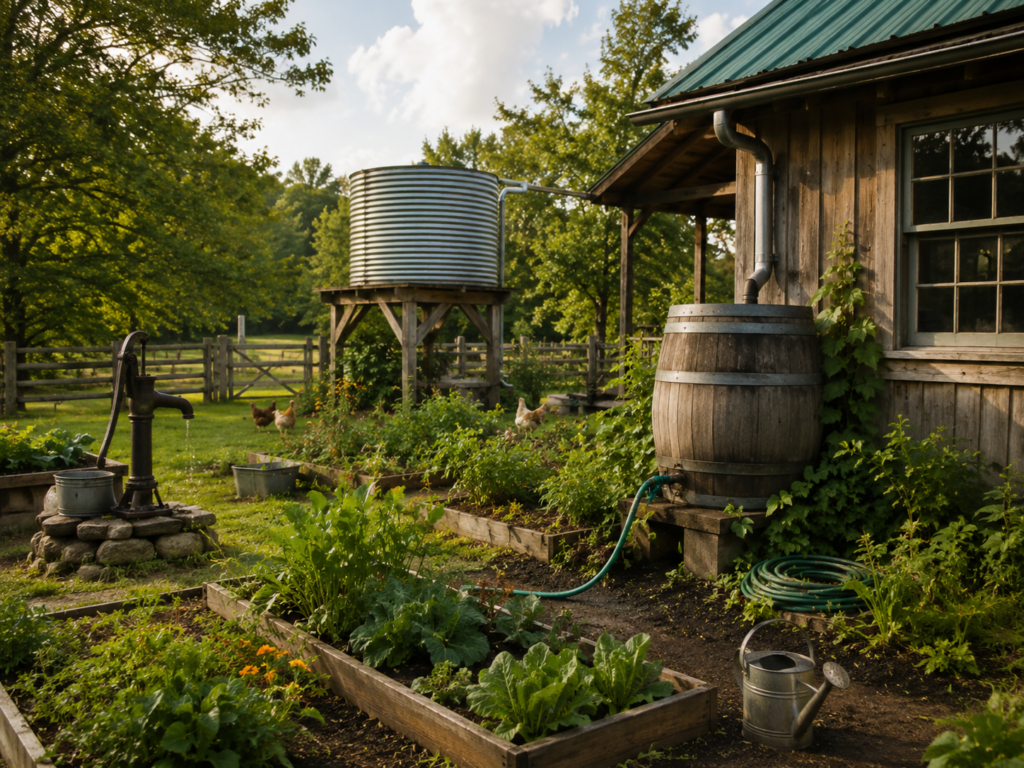
Rainwater collection can be useful for gardens, animals, or emergency storage, depending on how it is collected and filtered. It is not magic, though. Rainwater systems require gutters, tanks, barrels, screens, overflow planning, and cleaning. If you plan to use rainwater for drinking, it needs proper filtration and sanitation.
Ponds, creeks, and springs can be valuable, especially for livestock or irrigation, but they are not automatically safe for drinking. Surface water can carry bacteria, parasites, chemical runoff, algae, animal waste, and debris. It may be useful, but it needs to be treated with respect.
Plan for Everyday Water and Emergency Water
Homestead water planning has two sides: everyday use and emergency use.
Everyday water is what you use when everything is working normally. That includes the water you use in the house, garden, barn, animal areas, and work spaces.
Emergency water is what you rely on when something goes wrong. That could be a power outage, broken pipe, drought, freeze, pump failure, contamination notice, water company shutoff, or a leak that forces the system off for repairs.
A good homestead water plan does not have to be complicated. It should answer a few basic questions:
How much water do we use in a normal day?
How much water do the animals need?
How much water does the garden need during hot weather?
What happens if the power goes out?
What happens if a pipe breaks?
What happens if the main water source is unavailable for one day? Three days? A week?
Where is the shutoff valve?
Who knows how to turn the water off if needed?
Where is backup water stored?
Those questions matter because emergencies rarely happen at convenient times.
Store Some Water Before You Need It
Every homestead should have some stored water. It does not have to be a huge, expensive system at first. Start with enough to get through a short disruption.
Drinking water should be stored in clean, food-safe containers. Keep it where it will not be exposed to extreme heat, chemicals, pests, or sunlight if possible. Label containers if needed and rotate them so they do not sit forgotten for years.
Non-drinking water is also useful. Buckets, barrels, totes, rain barrels, or tubs can hold water for flushing toilets, washing hands, watering animals, or keeping plants alive during a short outage. This water does not have to be drinking quality, but it should still be handled safely and kept from becoming a mosquito nursery.
A simple goal is to store water in layers:
- drinking water for people,
- water for pets and livestock,
- water for basic hygiene and toilet flushing,
- and water for plants if possible.
The more responsibility you have, the more backup water matters. If you care for elderly family members, children, animals, or medical needs, water storage is not optional. It is part of keeping the household functioning.
Water for Animals
Animals need reliable water every day. They cannot wait until repairs are convenient. Chickens, rabbits, goats, pigs, cows, dogs, cats, and other animals all need clean water, and their needs change with the weather.
In hot weather, animals drink more. Waterers may need to be filled more often, cleaned more often, and placed in the shade. Warm, dirty water can discourage drinking and create health problems. Some animals will spill or soil their water, so the setup matters.
In cold weather, water can freeze. A frozen water bucket is the same as no water at all. Cold-climate homesteads need a plan for thawing, heated waterers, rotating buckets, or carrying warm water as needed.
Animal water systems should be easy to reach and easy to clean. If water is difficult to haul, you will dread the chore. If it is hard to clean, algae, dirt, bedding, and manure can build up. Good water access makes animal care easier and safer.
Water for the Garden
Gardens need consistent water, especially during germination, transplanting, flowering, and fruiting. A vegetable garden that receives irregular water may struggle with poor germination, blossom drop, splitting fruit, bitter greens, or stressed plants.
The best garden watering system depends on the size of the garden, climate, soil, and budget. Some homesteads use hoses. Some use drip irrigation. Some use soaker hoses, rain barrels, watering cans, or a mix of methods.
Drip irrigation and soaker hoses can save water because they deliver moisture near the soil instead of spraying it into the air. Mulch also helps by keeping soil cooler and slowing evaporation. Healthy soil with compost and organic matter holds water better than hard, poor soil.
Container gardens need special attention. Pots and grow bags dry out faster than in-ground beds, especially in heat and wind. Herbs, flowers, and vegetables in containers may need daily watering during hot weather.
Watering deeply is usually better than sprinkling lightly. Shallow watering encourages shallow roots. Deep watering encourages plants to reach down and become more resilient.
Water Quality Matters
Having water is not the same as having safe water. Water quality affects people, animals, plants, and equipment.
Drinking water should be safe for human use. If you use a well, it should be tested periodically. If you use city or rural water, pay attention to boil notices, contamination warnings, and unusual changes in taste, smell, or color.
Garden water can usually be less perfect than drinking water, but poor water can still cause problems. Water high in salts, chemicals, or certain minerals may affect soil and plant health over time. Surface water from ponds or creeks may be fine for some uses but unsafe for others.
Water for animals should be clean enough that they will drink it and not become sick from it. Stagnant water, algae-filled buckets, manure-contaminated water, and muddy puddles are not good animal water systems.
If water smells strange, looks cloudy, turns reddish, has floating debris, or suddenly changes, do not ignore it. Water changes are clues.
Know Where the Shutoffs Are
Every homestead should know where the water shutoffs are. At minimum, you should know how to shut off water to the house and where the main line enters the property.
This matters because a broken pipe can waste a lot of water and cause damage quickly. If water is spraying, flooding, or running where it should not, knowing the shutoff location saves time and panic.
It also helps to label valves when possible. During an emergency, nobody wants to guess which valve does what. If more than one adult lives on the property, everyone who is physically able should know the basics.
Do not wait until there is a leak to learn the system. Walk the property. Find the meter, well house, pressure tank, outside spigots, hose bibs, irrigation valves, and any visible lines. The more you know before trouble starts, the calmer you can be when something goes wrong.
Protect Water Lines and Equipment
Water systems need protection. Pipes can freeze, crack, leak, clog, or get damaged by equipment, roots, animals, digging, or age.
Exposed pipes should be protected from freezing and physical damage. Well houses should be insulated or heated as needed in cold climates. Outdoor faucets may need covers during freezes. Hoses should be disconnected before freezing weather.
In hot climates, sun exposure can damage hoses, plastic fittings, barrels, and some irrigation parts. Shade and proper storage can extend their life.
Any buried water line should be treated with caution. Before digging fence posts, planting trees, trenching, or setting structures, think about where water lines may run. A shovel through a water line can turn a simple project into a mess fast.
Build Redundancy Over Time
The strongest water plan has more than one layer. You may not be able to build everything at once, but each improvement adds resilience.
A homestead might start with city water and stored jugs. Later, it may add rain barrels for garden use. Then maybe a larger storage tank, better hoses, drip irrigation, or a backup power option for a well. Over time, the system becomes stronger.
Redundancy does not mean you are preparing for the end of the world. It means you are preparing for ordinary problems: storms, drought, broken pipes, power outages, equipment failure, and busy weeks when everything seems to happen at once.
Water security gives peace of mind because you know one problem will not immediately stop the whole homestead.
Final Thoughts
Water is not the most exciting homestead topic, but it may be the most important. A homestead with reliable water can keep people safe, animals healthy, gardens growing, and daily work moving. A homestead without a water plan can become stressful very quickly.
Start by understanding your main water source. Learn where your shutoffs are. Store some backup water. Make animal water easy. Improve garden watering. Pay attention to water quality. Protect pipes and equipment. Then build better systems as money, time, and need allow.
The goal is not fear. The goal is function.
A good homestead water plan helps answer one of the most important questions on the property:
If the water stops flowing, what happens next?