
Where to Compost
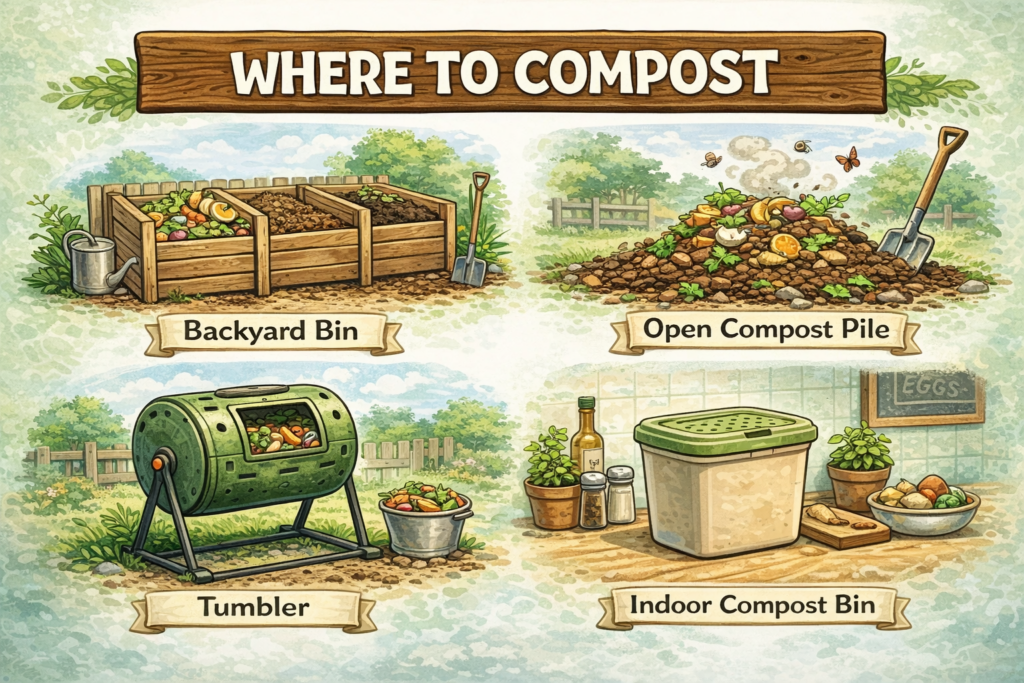
One of the nicest things about composting is that it does not have to happen in just one official, perfect way.
You do not need a fancy setup. You do not need a matching compost bin with a tiny shovel and a smug expression. You just need a place where organic matter can break down safely, reasonably, and usefully.
That said, where you compost does matter.
The location affects how easy the system is to use, how fast materials break down, how wet or dry the pile stays, whether you remember to feed it, and whether the whole thing becomes a pleasant garden habit or a nasty little problem you regret starting.
So before you build a pile or toss scraps into a bin, it helps to think about where composting actually works best.
Compost Where You Will Actually Use It
This is probably the most important rule of all.
Put the compost where you will actually use it.
A compost setup can be brilliant in theory and useless in real life if it is too far away, too inconvenient, or too annoying to bother with. If the pile is all the way out in some remote corner of the property, and you have to trek across the land every time you want to dump kitchen scraps or turn the pile, chances are good that enthusiasm will wear off.
A good composting spot is usually:
- easy to reach
- close enough to the garden to be practical
- not in the dead middle of everything
- convenient enough that you will keep using it
That sweet spot matters more than people think.
Backyard Composting Near the Garden
For many home gardeners, the best place to compost is somewhere near the garden itself.
That makes it easier to:
- carry weeds, leaves, trimmings, and spent plants to the pile
- haul finished compost back to the beds
- keep the compost process tied to the garden instead of treating it like a separate chore
A nearby compost setup can make the whole garden system feel more connected. Things leave the garden, break down, and come back to the garden. That is a good cycle.
It also helps if the site is not so close that it is in the way of foot traffic, mowing, or the look of the main yard. You want practical, not aggravating.
Composting Close to the Kitchen
If you compost a lot of kitchen scraps, it helps to think about convenience from that side too.
That does not necessarily mean putting a giant open compost pile right outside the back door. But it does mean having some easy way to move kitchen scraps to the main compost area without creating a nuisance.
A lot of gardeners use:
- a small kitchen scrap container indoors
- a covered bucket just outside
- then a larger compost setup farther out
That works well because it keeps the daily food-scrap routine simple without forcing the entire compost operation to live right under the kitchen window.
Compost in Sun or Shade?
This is one of those questions that gets more dramatic attention than it usually deserves.
A compost pile can work in sun or shade, but the location changes how you manage it.
A pile in full sun may warm up well, but it can also dry out faster, especially in hot weather.
A pile in more shade may stay evenly moist longer, but it may not heat as quickly.
In many gardens, partial shade is a very nice compromise. The pile is protected from the harshest drying heat but still gets enough warmth and light to stay active.
The best answer is usually not “sun or shade forever.” It is:
pick a spot you can manage.
If your climate is hot and dry, a little shade may help. If your climate is cool and damp, a sunnier spot may be useful.
Good Drainage Matters
Do not put your compost in a place that stays soggy all the time.
A wet, poorly drained location can lead to:
- slow breakdown
- foul smells
- anaerobic conditions
- leachate mess
- a slimy pile nobody wants to deal with
Compost should be moist, but not waterlogged. A site with decent drainage makes that much easier to manage.
That does not mean the pile has to be on perfectly dry ground. It just means you do not want it sitting in a swampy hole collecting misery every time it rains.
Ground Contact Is Usually Helpful
For many backyard compost piles, putting the pile directly on the ground is a good thing.
That allows:
- drainage
- contact with soil organisms
- access for worms and beneficial decomposers
Those are all helpful.
A pile built directly on bare ground often integrates better with the natural life already in the soil. That helps the composting process along.
There are exceptions, of course. Some people compost in tumblers, bins with floors, or paved areas. But if you are building a basic backyard pile or open bin, contact with the soil is often a plus.
Keep It Out of the Way, But Not Forgotten
A compost pile should not be in the middle of your prettiest view if that is going to bother you. At the same time, do not hide it so well that you forget it exists. That is a real danger.
A smart compost location is one that feels tucked in but still usable. Behind the garden shed, near the edge of the garden, beside the potting area, or in a utility corner of the yard can all work well, depending on the property.
The pile should feel like part of the system, not like something embarrassing that got banished to the wilderness.
Keep It Away from Places It Could Cause Trouble
Compost should not be placed where runoff, smell, pests, or mess will become a problem.
It is wise to avoid:
- low wet spots
- areas right against the house
- places where runoff could move into living areas or water features
- spots right on a property line if neighbors will hate it
- places where animals can easily turn it into a buffet
This is especially true if you compost kitchen scraps or anything likely to attract unwanted visitors.
A thoughtful location can prevent a whole lot of aggravation later.
Composting in Bins, Tumblers, and Small Spaces
If you have a smaller yard, more visible landscape, or just want a tidier system, a compost bin or tumbler may be the better choice.
In that case, where to compost becomes partly about:
- appearance
- access
- ease of turning
- ease of emptying
- keeping the setup manageable
A tumbler near the garden or near a utility path can work beautifully. A compost bin tucked into a corner but still reachable with a wheelbarrow can also be a smart setup.
In smaller spaces, the best compost location is usually wherever it is easy to use without becoming a giant eyesore or a daily nuisance.
More Than One Compost Area Can Make Sense
You do not have to have just one composting spot.
Some gardeners do well with:
- a main compost pile near the garden
- a kitchen scrap holding bin near the house
- a leaf pile somewhere else
- a brush pile or rough compost area for bigger debris
That kind of setup can actually make a lot of sense, especially on a larger property.
Different materials break down differently, and not everything has to go in the same pile at the same pace.
Final Thoughts
The best place to compost is not the place that sounds the most impressive. It is the place that is practical, manageable, and easy to keep using.
A good compost site is close enough to be convenient, far enough to stay out of the way, well-drained, and suited to the kind of composting you actually plan to do.
Because in the end, the best compost setup is the one you will keep feeding, keep managing, and keep using.