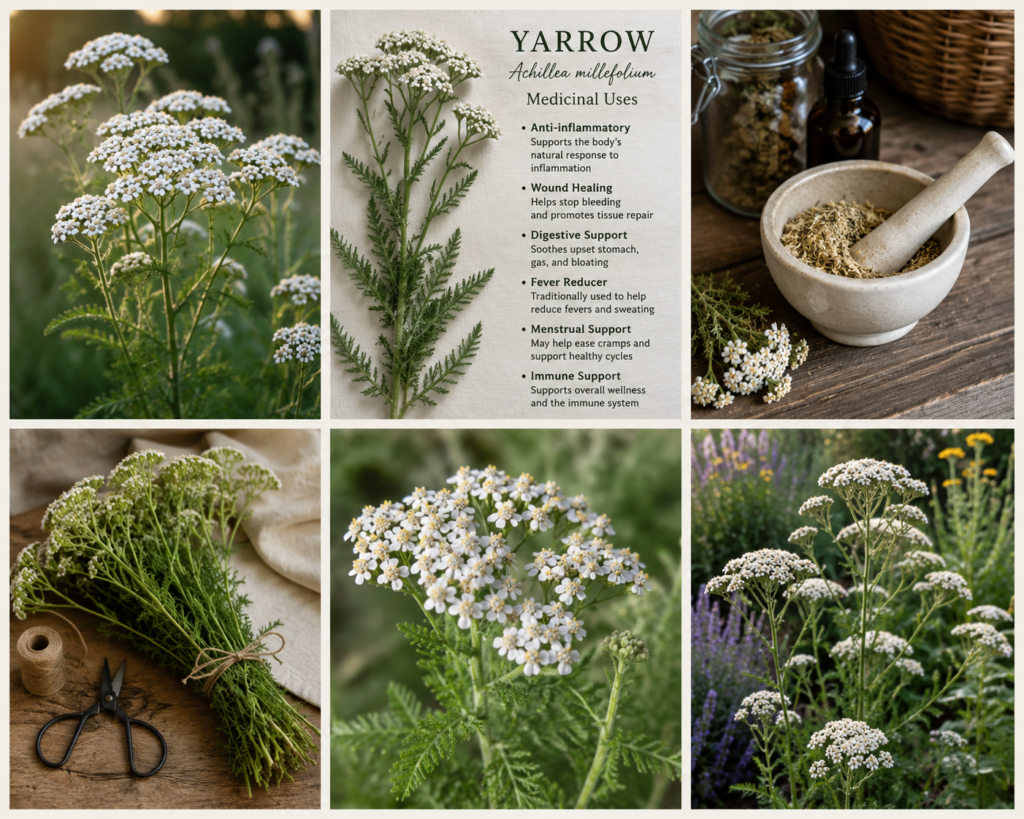
Yarrow as a Medicinal Herb
Herb Overview
| Common Names: | Yarrow, Common Yarrow, Milfoil, Soldier’s Woundwort, Nosebleed Plant |
| Botanical Name: | Achillea millefolium |
| Plant Family: | Asteraceae |
| Origins: | Native across much of the Northern Hemisphere; widely naturalized in fields, roadsides, meadows, pastures, and disturbed ground |
| Parts Used: | Flowers, leaves, aerial parts |
| Primary Preparations: | Tea, tincture, infused oil, salve, balm, poultice, compress |
Plant Identification
Full Plant (in ground):
Upright perennial with ferny leaves and flat-topped clusters of small flowers held above the foliage.
![Common yarrow in bloom with flat clusters of small white flowers and feathery green leaves on multiple stems.]`](https://lowebridgesfarm.com/wp-content/uploads/2026/05/Yarrow-Growing-in-Ground-1024x819.png)
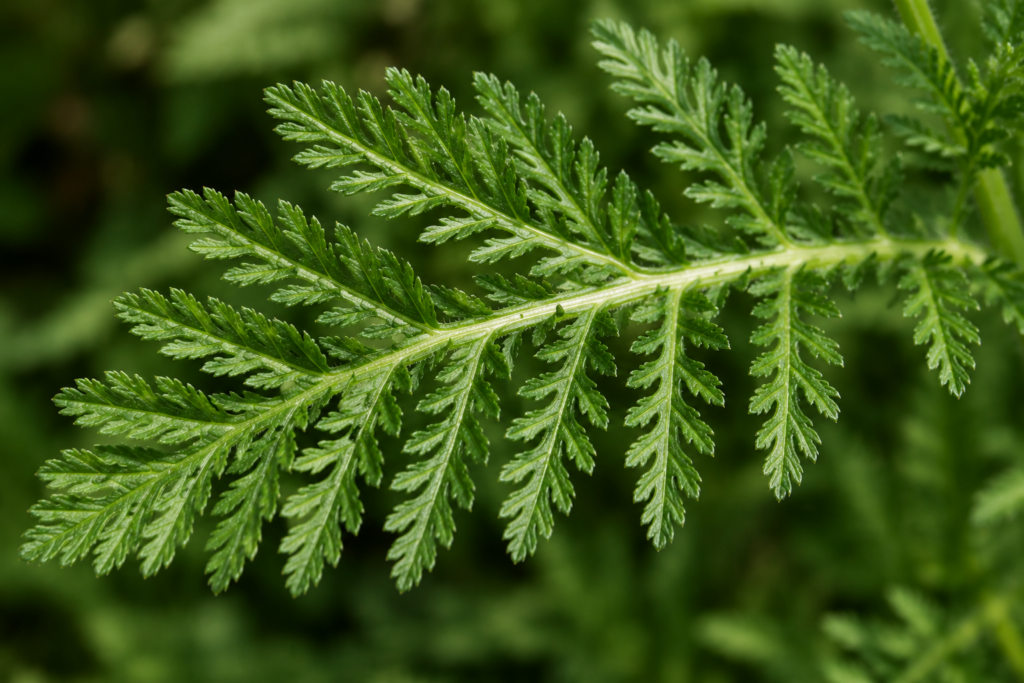
Leaves (mature):
Soft, feathery, finely divided leaves with many narrow segments, giving a fern-like appearance.
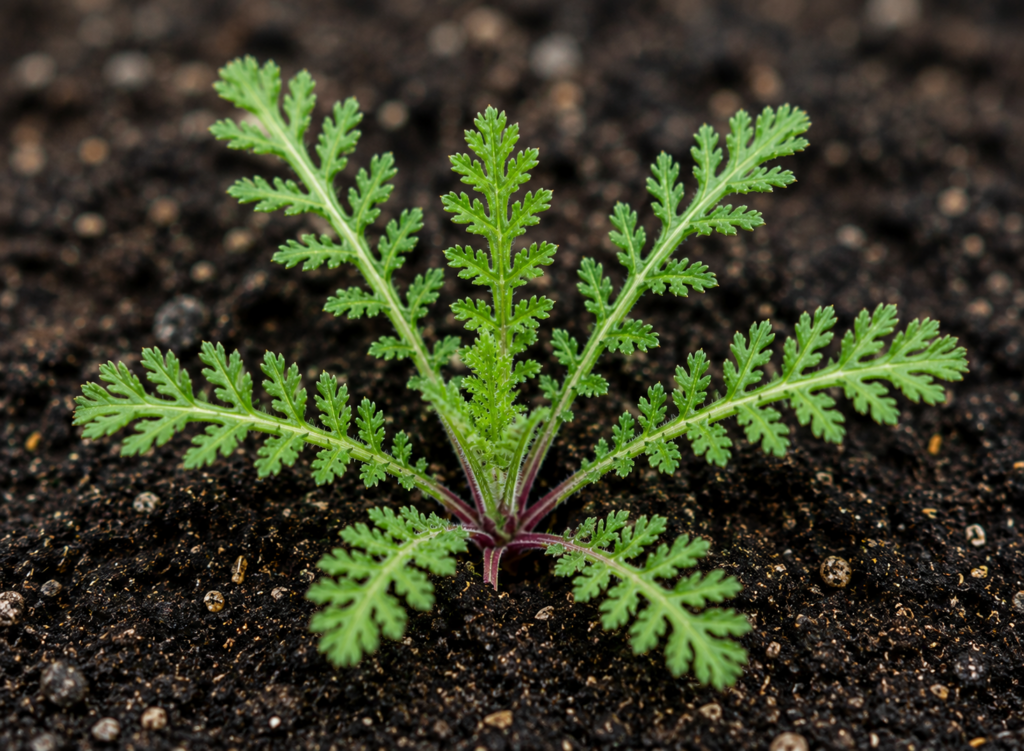
Leaves (early growth):
Young leaves form low, soft, feathery clumps close to the ground before flower stalks rise.
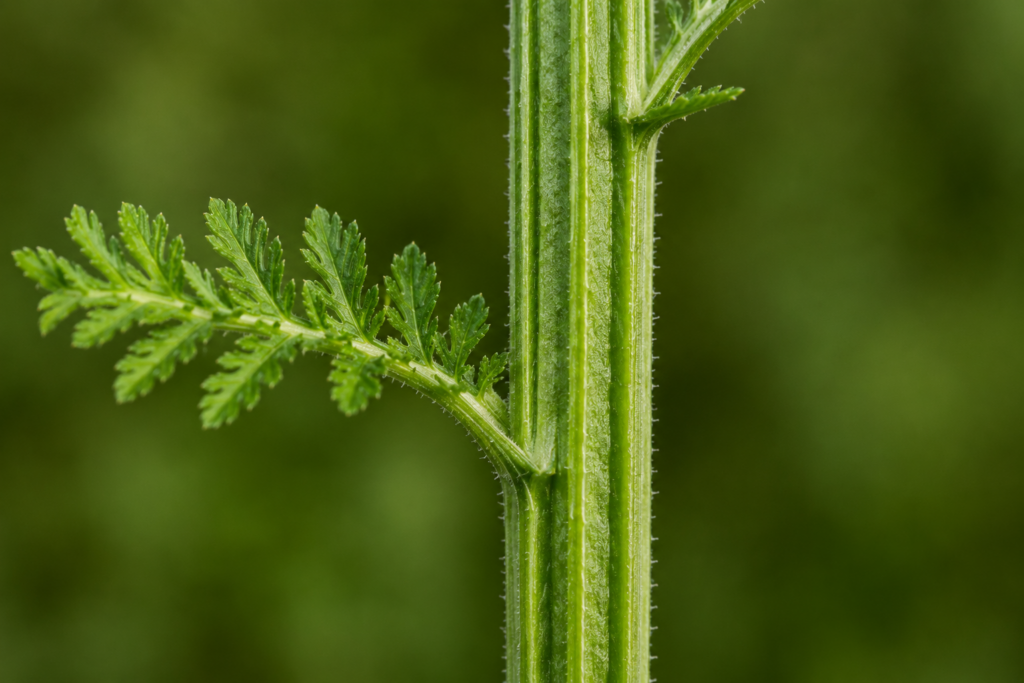
Stem:
Upright, firm, slightly hairy stems that branch near the flower clusters.
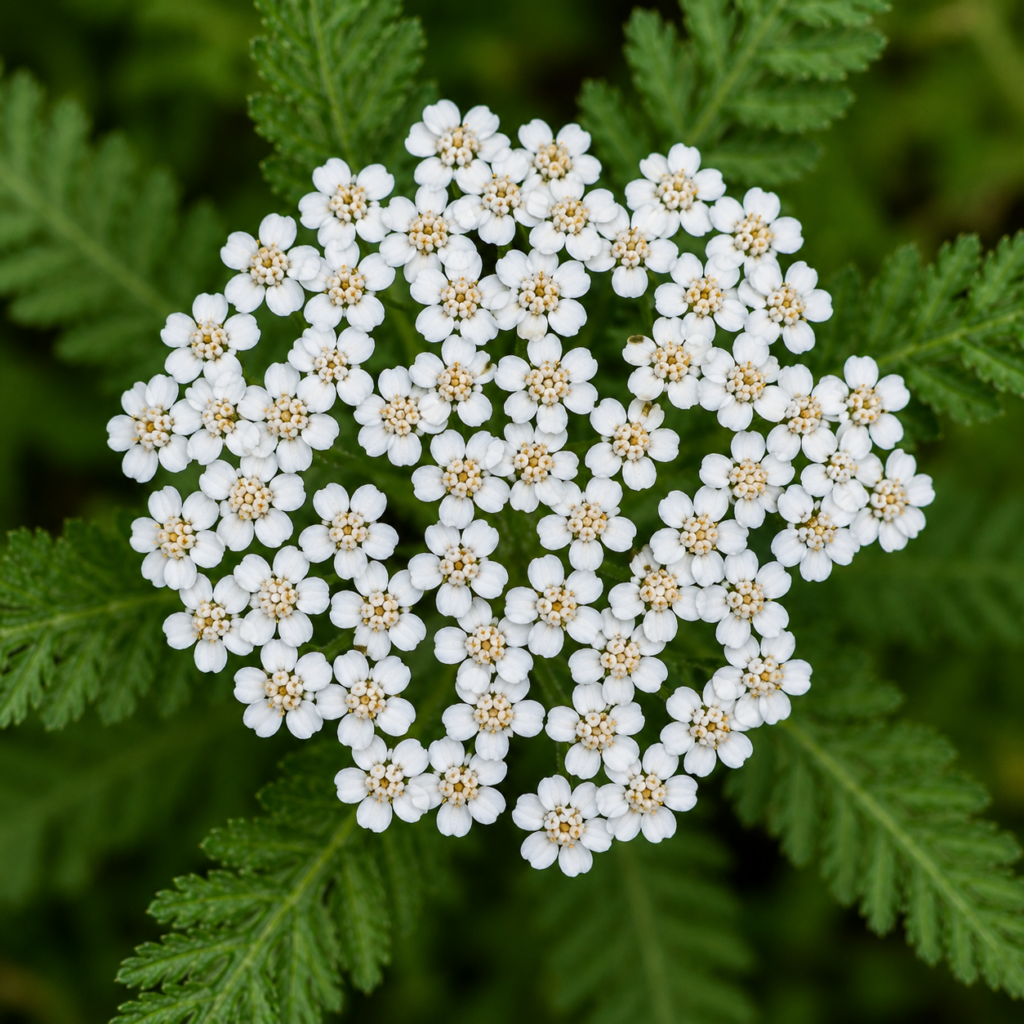
Flower (Top View):
Flat or slightly rounded flower clusters made of many tiny white, cream, pink, or yellowish flowers.
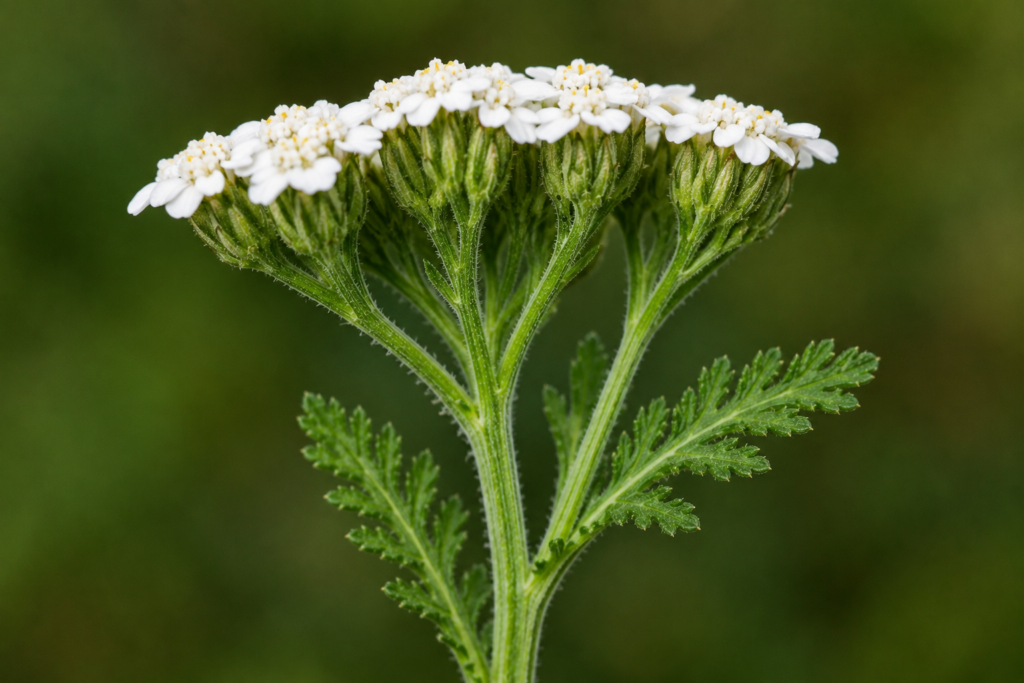
Flower (Side View):
Flower heads sit in a broad, flat-topped cluster above tall stems.
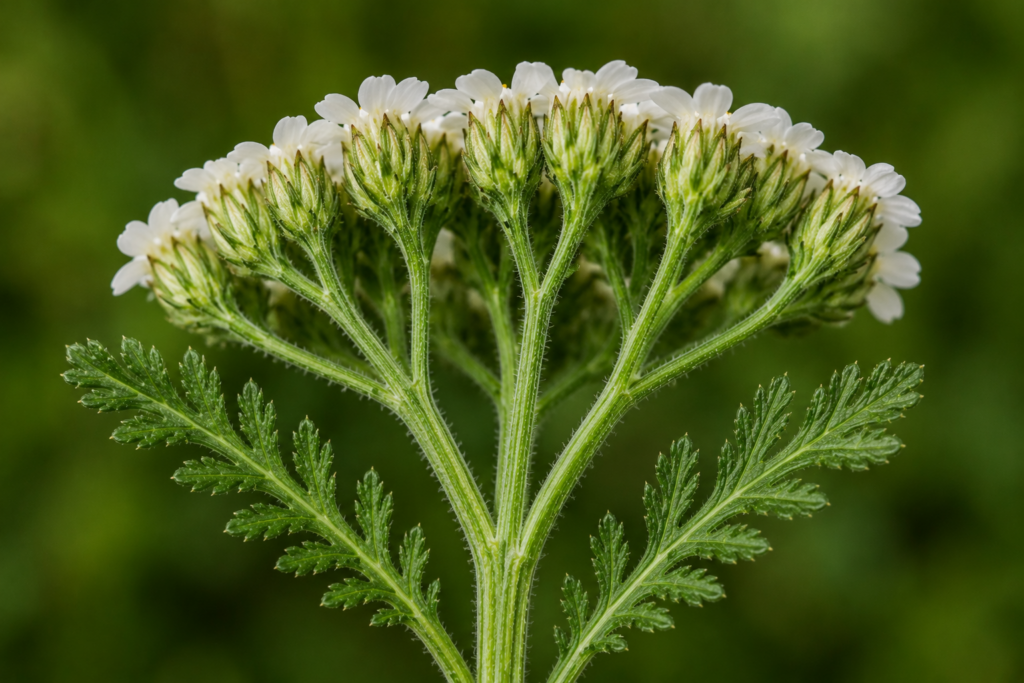
Flower Base (bracts):
Small green bracts sit tightly beneath each tiny flower head.
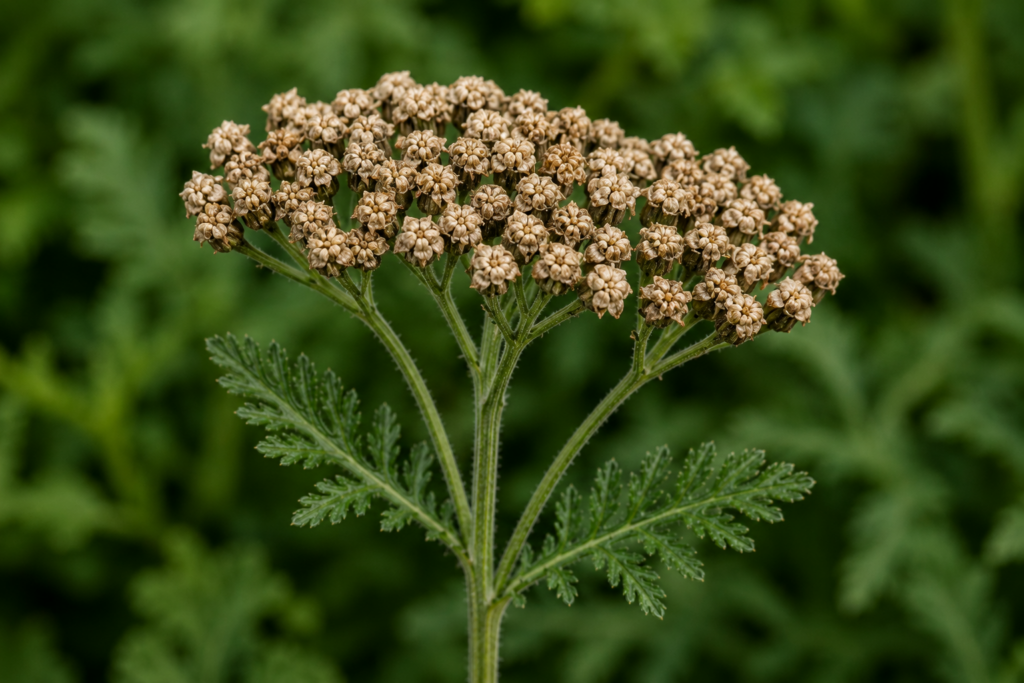
Seed Head / Seeds:
Spent flowers dry into small brown seed heads with tiny, lightweight seeds.
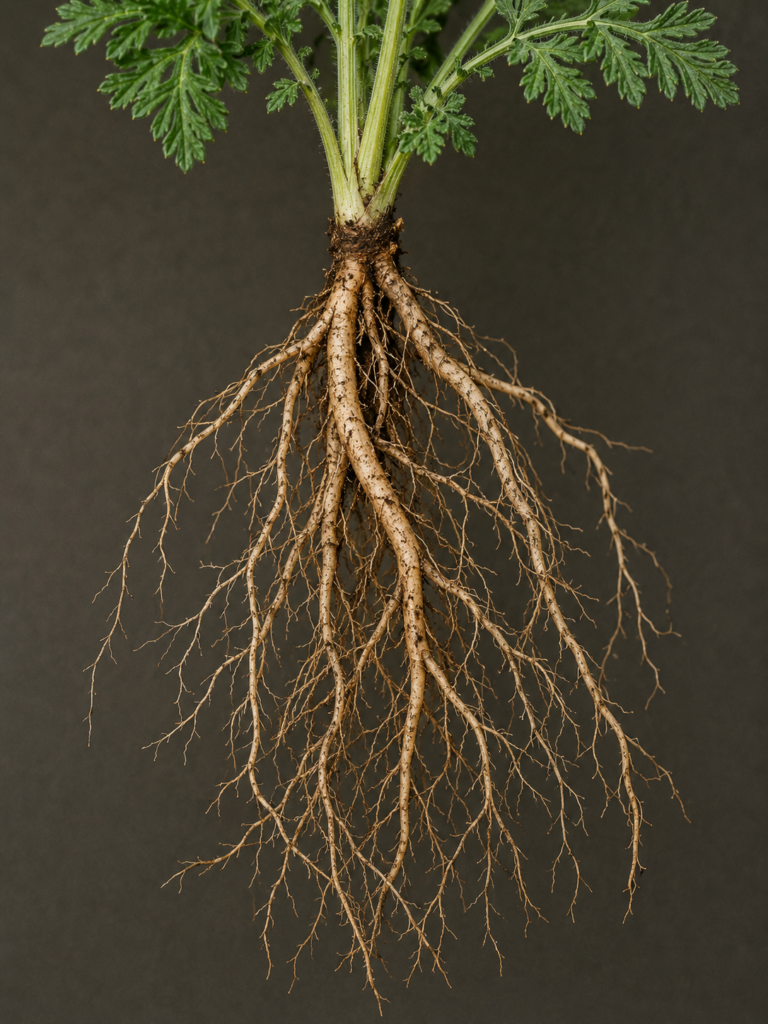
Root:
Spreading rhizomatous roots that allow the plant to slowly form patches.
| Growth Form: | Upright flowering perennial with a spreading base. |
| Typical Size: | Usually 1–3 feet tall and 1–2 feet wide |
| Aroma/Smell: | Strong, sharp, green, slightly medicinal scent when leaves or flowers are crushed. |
| Where it Commonly Grows: | Fields, roadsides, pastures, meadows, garden edges, open sunny areas, and disturbed soil. |
| Common Lookalikes: | Queen Anne’s lace has lacy umbrella-shaped flowers and carrot-like leaves, not flat yarrow clusters with ferny leaves. Poison hemlock has smooth purple-spotted stems and a bad smell; yarrow stems are not purple-blotched and the leaves smell herbal. |
| Foraging Safety Note: | Only harvest yarrow when you are fully confident in identification. Avoid roadsides, sprayed areas, contaminated soil, and any plant that may be confused with toxic lookalikes. Never forage any plant unless you are completely certain of identification. Use multiple features, not just one. |
What It’s Used For
- Minor cuts and scrapes
- Wound support
- Nosebleeds
- Bruises
- Fever support
- Colds and seasonal discomfort
- Digestive upset
- Circulation support
- Menstrual support
- Skin irritation
How It Works:
| It Works By: | Yarrow has traditionally been used because it is aromatic, bitter, astringent, and mildly warming. Its astringent qualities make it useful in traditional topical preparations, while its bitter and aromatic qualities support traditional digestive and fever-season uses. |
How to Use It
| Tea: | 1–2 teaspoons dried aerial parts per cup of hot water; steep covered 10–15 minutes. Traditionally used up to 3 times daily. |
| Decoction: | NA |
| Tincture: | Traditionally used in small amounts, often 20–40 drops up to 3 times daily. |
| Glycerite: | Traditionally used as a gentler alcohol-free extract; follow preparation strength. |
| Infused Oil: | Use dried flowers and leaves infused into carrier oil for topical use. |
| Salve/Balm: | Apply thinly to dry, irritated, or minor skin areas as needed. |
| Poultice: | Crush fresh leaves or moisten dried herb and apply externally to a specific area. |
| Compress/Fomentation: | Make a strong tea, soak a clean cloth, and apply warm or cool to the area. |
| Syrup: | NA |
| Oxymel: | Traditionally used in small amounts when combined with vinegar and honey. |
| Powder: | Dried powdered herb may be used externally in small amounts. |
| Capsule: | NA |
| Fresh Use: | Fresh leaves may be crushed and used externally as a field poultice when properly identified. |
Safety & Considerations
| Avoid If: | Avoid if allergic to ragweed, daisies, chamomile, chrysanthemums, or other Asteraceae family plants. Avoid during pregnancy unless supervised by a qualified professional. |
| Possible Side Effects: | Skin irritation, rash, allergic reaction, stomach upset, or increased sensitivity in some people. |
| Interactions with Pharmaceuticals, OTCs, and Other Herbs: | Use caution with blood-thinning medications, sedatives, blood pressure medications, and herbs with similar effects. |
| General Safety Note: | Use responsibly, start small, and discontinue use if irritation or unwanted reactions occur. This information is for educational and traditional-use purposes only and is not medical advice. |
Sourcing:
| Grow It: | – Learn how to grow Yarrow here. |
| Forage: | – Can be found in fields, pastures, meadows, roadsides, open sunny areas, and disturbed ground. – Only Harvest from areas free of chemicals and contamination. |
| Purchase: | Buy Yarrow Products |
Additional Notes & Information:
Yarrow is one of the most important traditional first-aid herbs to identify carefully. It is especially useful for topical preparations, but proper plant identification matters because several white-flowering wild plants can be dangerous.