
Anatomy of a Plant: Understanding 6 Important Parts
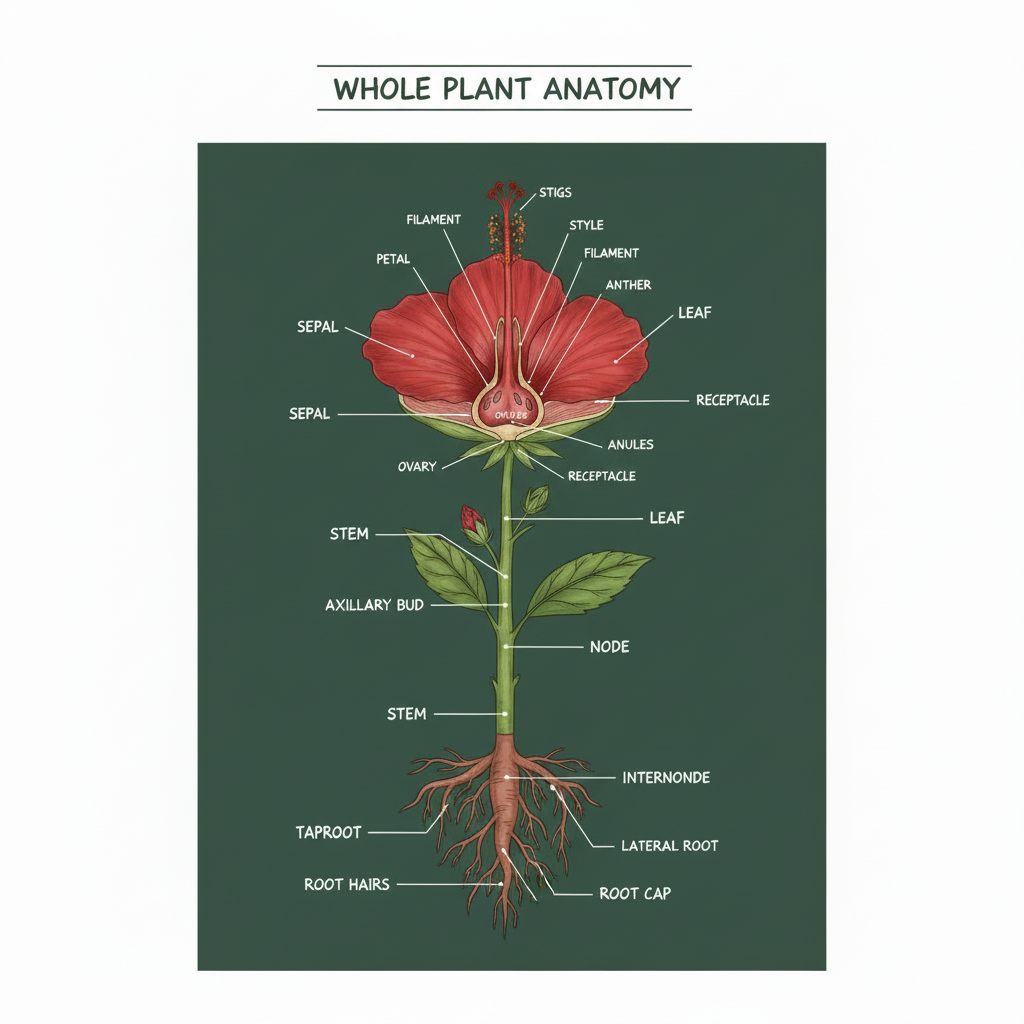
Most people look at a flower and only see the flower itself as a whole. They see the petals and possibly the center of the flower. They see the stem, and the leaves. They note the color of the flower petals. They see the beauty of the flower, but cannot see the anatomy of the whole plant.
We look at flowers much the same way as we look at people. We see the overall person, and notice things like eye color, hair color, height and weight…we can’t see the inner workings of a human being, but the anatomy of plants is so much easier to see if you take the time to look.
Plant & Human Part Anatomy Comparison
As people, we have many working parts that not only make us human beings, but also serve to keep us alive and functioning. Look at this chart that compares the parts of a plant, to the parts of a human being:
| Plant Part: | Human Part: |
| Roots – Anchor the plant in the ground while absorbing water and dissolved minerals from the soil. Some roots also store food that the plant can use later. | Digestive System – Breaks down the food we eat and absorbs nutrients and water that our bodies need to survive, grow, and function. |
| Stems – Provide physical support for leaves, flowers, and fruits while transporting important materials throughout the plant. Inside the stem, xylem carries water and dissolved minerals from the roots, while phloem transports sugars made during photosynthesis to the parts of the plant that need them. | Arteries: Carry blood away from the heart, delivering oxygen and nutrients to tissues throughout the body. Just as a plant relies on its transportation system, our bodies depend on blood vessels to move essential materials where they’re needed. |
| Leaves: This is where most of a plant’s photosynthesis takes place. Using sunlight, water, and carbon dioxide from the air, the plant produces sugars that provide energy and materials for growth. Think of leaves as the plant’s food factories. | Metabolism: Refers to the chemical processes our bodies use to obtain, transform, store, and use energy. Unlike plants, which can make sugars through photosynthesis, humans must obtain energy from the food we eat. |
| Flowers: Contain the reproductive structures of flowering plants. Pollen is produced by the stamens, while the pistil or carpels contain the structures involved in receiving pollen and producing seeds. After successful pollination and fertilization, seeds develop, and the flower’s ovary usually develops into a fruit. | Reproductive Organs: Produce reproductive cells and make human reproduction possible. Although plants and humans reproduce differently, both have specialized structures involved in creating the next generation. |
So, as you can see, if you think of plants as a culture of “people,” their systems become so much easier to understand. And like people, plants have specialized parts that must work together to keep them alive, healthy, and growing. When one part isn’t functioning properly, the entire plant can suffer.
Botany is the branch of science that focuses entirely on plants. Scientists in this field look at how plants are built, how they grow, how they make more plants, plant families and identification, and how they live in nature, as well as the entire life cycle of plants.
To understand plants, you have to look at their main parts:
- Roots: These act like anchors to hold the plant in place while soaking up water from the ground.
- Stems: These provide a strong tower to support the plant and act like a highway to move water and food up and down.
- Leaves: These are the plant’s food factories. They use a process called photosynthesis to turn sunlight into the energy the plant needs to stay alive.
- Flowers: These are the reproductive structures of flowering plants. They contain specialized parts that produce and receive pollen. After successful pollination and fertilization, seeds begin to develop, and in many plants, the flower’s ovary grows into a fruit. Flowers often attract bees, butterflies, and other pollinators that help make reproduction possible.
- Fruits: Protect developing seeds and often help spread them to new locations. Botanically speaking, tomatoes, peppers, cucumbers, and squash are all fruits because they develop from flowers and contain seeds.
- Seeds: Contain a tiny developing plant called an embryo, along with a protective seed coat and a supply of stored nutrients. Under suitable conditions, a seed can germinate and begin growing into a new plant.
Plants are essential to all life on Earth. They provide food, shelter, and oxygen, support countless living organisms, and form the foundation of many ecosystems. Once we understand how their different parts work together, we can do a better job of recognizing problems, caring for our gardens, and helping our plants thrive.
For more information, visit:
Penn State Extension Office – Edible Roots, Stems and Bulbs
PennState Extension – Seed and Seedling Biology
Affiliate Disclosure: Lowe Bridges Farm participates in the Amazon Services LLC Associates Program. As an Amazon Associate, we earn from qualifying purchases. This means we may receive a small commission when you purchase through our affiliate links, at no additional cost to you.

