
Homestead Tool Storage: Keeping Garden, Livestock, Workshop, and Repair Tools Organized
A homestead runs on tools. Garden tools, hand tools, power tools, animal-care tools, fencing tools, kitchen tools, repair tools, building tools, pruning tools, and all the little odds and ends that somehow become necessary the minute something breaks.
But tools only help if you can find them, reach them, protect them, and put them back.
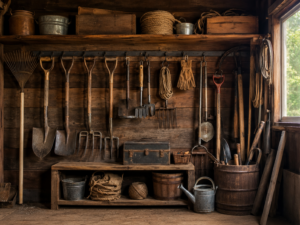
Tool storage is homestead infrastructure. It is not just about making a shed look neat. It is about saving time, protecting money, reducing frustration, and keeping daily chores from turning into a scavenger hunt. A good tool storage system helps the homesteader work faster, safer, and with less wasted energy.
A poorly organized tool system creates the same problems over and over. Gloves disappear. Pruners get left in the garden. Drill bits vanish. Hammers migrate to three different buildings. Hose washers are never where they are needed. Fence tools end up in the kitchen junk drawer. Battery chargers get buried. The right tool exists somewhere, but nobody knows where.
Good tool storage gives every tool a home.
Start With Tool Categories
The first step is sorting tools by purpose. Most homesteads need more than one tool area because all tools do not belong in the same place.
Common tool categories include:
- Garden tools
- Pruning tools
- Animal-care tools
- Fencing tools
- Woodworking tools
- Mechanic and repair tools
- Power tools
- Seed-starting tools
- Irrigation tools and parts
- Painting and finishing tools
- Fasteners and hardware
- Cleaning tools
- Emergency tools
Once tools are sorted by category, storage becomes easier. Garden tools can live near the garden. Animal tools can live near the livestock area. Workshop tools can live near the workbench. Repair supplies can stay together.
The goal is not to store everything in one perfect room. The goal is to store tools close to where they are used.
A tool that is used every day should not be stored half a property away.
Daily-Use Tools Need the Best Spots
Some tools are used constantly. These deserve the easiest storage.
Daily-use homestead tools may include:
- Gloves
- Pruners
- Scissors
- Utility knife
- Measuring tape
- Hammer
- Screwdriver
- Drill
- Buckets
- Feed scoops
- Garden trowel
- Hose nozzle
- Zip ties
- Twine
- Pliers
- Fencing pliers
- Markers
These tools should be visible, reachable, and easy to put away. If a tool is hard to return, it will get set down somewhere else. If it gets set down somewhere else often enough, it becomes lost.
Daily-use tools work well on hooks, pegboards, shallow drawers, open bins, tool belts, buckets, or small wall racks. The system does not have to be fancy. It has to be easy.
The easier it is to put tools away, the more likely the system will work.
Long-Handled Tools Need Safe Storage
Rakes, shovels, hoes, loppers, forks, brooms, post-hole diggers, and other long-handled tools can quickly become a tangled mess.
Leaning them in a corner may work for a few tools, but it becomes frustrating as the collection grows. Tools fall over. Handles block walkways. Sharp ends point the wrong direction. The one tool you need is always behind six others.
Long-handled tools are usually best stored on wall racks, standing racks, or dedicated tool holders. Keep sharp or heavy tools secure. Store them where they can dry, especially after wet garden work.
If children, elders, animals, or guests move through the area, tool safety matters. A rake on the floor or a sharp hoe leaning loose against a wall is not good infrastructure.
Small Parts Need Containers
A homestead collects small parts constantly.
These may include:
- Screws
- Nails
- Washers
- Hooks
- Hinges
- Bolts
- Hose washers
- Irrigation fittings
- Zip ties
- Staples
- Clips
- Drill bits
- Blades
- Sandpaper
- Labels
- Plant ties
- Seed markers
- Spare hardware
Small parts create big frustration when they are not organized.
Use jars, bins, drawer organizers, tackle boxes, divided cases, small parts cabinets, or labeled containers. Group similar items together. Keep frequently used parts where they can be reached quickly.
Fasteners should not be spread across five mystery boxes. Irrigation parts should not be mixed with paint supplies. Drill bits should not be rolling loose in a drawer full of nails.
A small-parts system saves money because you can use what you already have instead of buying the same thing again.
Power Tools Need Protection
Power tools are expensive and should be stored where they are protected from moisture, dust, falling objects, and damage.
Corded tools need a place where cords can be wrapped without being kinked or tangled. Battery-powered tools need space for batteries and chargers. Chargers should be easy to reach and not buried under supplies. Blades, bits, sanding pads, and accessories should be stored near the tools that use them.
Power tool storage may include:
- Shelves
- Cabinets
- Drawers
- Wall mounts
- Rolling carts
- Cases
- Dedicated tool chest
Whatever system is used, it should make the tools easy to remove and easy to return.
If a tool has a safety guard, case, wrench, blade key, or special accessory, keep those items with the tool. A tool missing its key or accessory is a tool that becomes harder to use.
Garden Tool Storage Should Be Near the Garden
Garden tools are used often and usually get dirty. They should have a practical home near the garden or near the main garden entrance.
This may be a garden shed, deck box, covered rack, porch cabinet, tool bucket, or wall-mounted system. The storage should protect tools from rain and sun while still making them easy to grab.
A good garden tool area may include:
- Hand trowels
- Pruners
- Gloves
- Plant labels
- Twine
- Scissors
- Harvest knife
- Seed packets in season
- Small fertilizer containers
- Soil scoop
- Hose repair parts
- Row cover clips
- Garden markers
- Harvest baskets
Garden tool storage should also include a place for cleaning or drying tools. A muddy tool thrown into a closed box will not stay in good condition.
Animal-Care Tools Need Their Own Space
Livestock and poultry tools should not be scattered through the workshop, garden shed, kitchen, and barn.
Animal-care storage may include:
- Feed scoops
- Buckets
- Brushes
- Hoof tools
- Poultry supplies
- Egg baskets
- First-aid items
- Syringes, if used
- Medications
- Supplements
- Bedding tools
- Waterers
- Spare clips
- Leashes
- Collars
- Halters
- Cleaning supplies
Some animal supplies need dry, pest-protected storage. Some need temperature control. Some should be kept away from children, pets, and food. Medical and health supplies should be labeled and checked for expiration dates.
A dedicated animal-care zone makes chores easier and helps during emergencies. When an animal is sick or injured, that is not the time to search six buildings for the right supplies.
Fencing Tools Should Stay Together
Fencing jobs happen often on a homestead. A weak gate, sagging wire, loose panel, broken clip, or escaping animal may need immediate attention.
Fencing tools and supplies should be stored together.
This may include:
- Fencing pliers
- Wire cutters
- Hammer
- Staples
- Clips
- T-post clips
- Zip ties
- Insulators
- Gate hardware
- Extra latches
- Wire
- Small rolls of hardware cloth
- Repair pieces
A portable fencing repair bucket or box can be very useful. Instead of gathering tools every time, keep the basics together and ready to carry.
Fencing repairs are easier when the supplies are already grouped.
Keep Tools Dry and Clean
Moisture is hard on tools. Rust, rot, mildew, swollen handles, dull blades, and damaged power tools can all come from poor storage.
Tools should be cleaned and dried before long-term storage. Cutting tools should be kept sharp. Wood handles may need occasional care. Metal tools should not be left sitting wet. Power tools should not be stored in damp conditions if avoidable.
This does not mean every tool must be polished like a museum piece. Homestead tools are working tools. But basic care extends their life.
A tool that lasts ten years is cheaper than one that has to be replaced every season.
Label What Matters
Labels are useful when more than one person uses the space or when there are many similar containers.
Label bins, drawers, shelves, and boxes clearly.
Use simple words:
- Screws
- Hinges
- Hose parts
- Seed starting
- Goat supplies
- Poultry tools
- Paint brushes
- Sandpaper
- Drill bits
- Fencing clips
Labels also help tools return to the right place. Without labels, systems slowly fall apart.
If a person can walk into the storage area and know where something belongs, the system is more likely to survive busy seasons.
Do Not Let Tool Storage Become Junk Storage
Tool storage can easily turn into “everything storage.” Broken tools, empty boxes, random cords, old parts, mystery hardware, and things that might be useful someday can slowly take over.
A homestead does need useful spare parts. But it also needs clear work areas.
Set limits. Keep what is useful, safe, and likely to be used. Get rid of items that are broken beyond repair, duplicated too many times, unsafe, or impossible to identify.
A storage area packed so full that nothing can be reached is not storage. It is a problem waiting for a cleanup day.
Make Tools Easy to Put Away
A storage system fails when putting tools away is too much trouble.
If the hammer belongs inside a box under another box behind a cabinet, it will end up on the nearest flat surface. If pruners have to be cleaned, walked across the property, and tucked into a drawer, they will probably stay in the garden.
Design storage for real behavior. Frequently used tools should have quick homes. Rarely used tools can be stored deeper. Seasonal tools can be rotated.
The best tool storage system is not the prettiest one. It is the one people actually use.
Review the System Each Season
Tool needs change through the year.
Spring may need seed-starting tools, pruners, trellis supplies, irrigation parts, and planting tools. Summer may need harvest baskets, shade cloth clips, hose repair parts, and pruning supplies. Fall may need canning tools, leaf rakes, compost tools, and winter prep supplies. Winter may need firewood tools, repair tools, and indoor project supplies.
A seasonal review helps keep the right tools easy to reach.
This is also a good time to sharpen, oil, repair, replace, or reorganize tools before the next busy season.
Tool Storage Saves Time and Energy
A homestead already has enough work. Tool storage should not add to the burden. It should make work smoother.
Good tool storage saves steps. It protects expensive tools. It prevents duplicate purchases. It helps chores move faster. It makes repairs easier. It reduces stress during emergencies. It keeps work areas safer and more usable.
Start with the tools you use most. Give them a clear home. Group similar tools together. Store tools near the work. Protect them from weather and damage. Label the system. Keep one small-parts area under control. Build better storage as the homestead grows.
A tool you can find is a tool that can help you.
On a working homestead, tool storage is not about perfection. It is about making sure the tools that support the land, animals, garden, kitchen, and household are ready when needed.