
Animal Infrastructure on the Homestead: Shelters, Fencing, Pens, and Safe Livestock Spaces
Animals can be one of the most useful parts of a homestead, but they also add a whole new layer of responsibility. Chickens need protection. Goats need fencing that actually means something. Rabbits need safe hutches. Pigs need sturdy pens. Livestock guardian dogs need room to work. Bees need good placement.
Every animal on the homestead needs a space that keeps it safe, contained, healthy, and manageable.
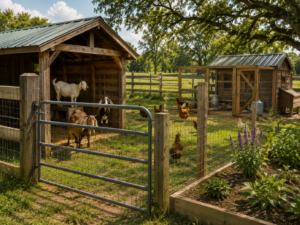
Animal infrastructure is not just about building cute coops, rustic barns, or pretty fence lines. It is about creating working systems. A good shelter protects animals from weather, predators, stress, injury, and overcrowding. Good fencing keeps animals where they belong and helps keep trouble out. Good layout makes daily chores easier instead of turning every feeding, watering, cleaning, and emergency into a wrestling match.
Before bringing home livestock, poultry, rabbits, or working animals, the shelter and fencing should be ready. Not mostly ready. Not “we’ll figure it out after they get here.” Ready.
Animals have a way of finding every weak spot you meant to fix later.
Start With the Animal’s Needs
Different animals need different spaces. A chicken coop will not work for goats. A rabbit hutch will not work for pigs. A dog kennel is not a sheep shelter. Every animal has its own needs for shade, ventilation, bedding, predator protection, dry ground, feeding space, and room to move.
Before building, ask the practical questions:
- How much space does this animal need?
- Does it need shelter from rain, wind, heat, or cold?
- Does it climb, dig, chew, jump, root, squeeze, or fly?
- What predators are common in the area?
- How will food and water be handled?
- How will manure and bedding be cleaned out?
- Can this animal be safely handled in this setup?
- Can a sick or injured animal be separated if needed?
Those answers should shape the shelter and fence, not the other way around.
A good animal setup begins with the animal’s behavior. Goats climb and test fences. Pigs root and push. Chickens scratch and need predator protection. Ducks make water messes. Rabbits chew and need airflow. Sheep need calm handling areas. Dogs need secure boundaries and shade. Each species tells you what the infrastructure must do.
Shelter Must Protect Without Trapping Heat and Moisture
A livestock shelter should protect animals from harsh weather while still allowing fresh air. One of the biggest mistakes in animal housing is making a shelter too closed up. Stale air, ammonia, damp bedding, and poor ventilation can cause health problems.
Animals need dry bedding, shade, air movement, and a place to get out of wind and rain. In hot climates, shade and ventilation can matter more than thick walls. In cold climates, wind protection and dry bedding become more important. In wet areas, drainage may matter most.
A good shelter is not always a big barn. Depending on the animal, it may be a coop, hutch, run-in shed, hoop shelter, three-sided shelter, mobile tractor, barn stall, shade structure, or simple covered pen. The best shelter is the one that fits the animal, the climate, the land, and the daily work.
A shelter that looks beautiful but is hard to clean will become a problem. A shelter that is easy to clean, easy to access, and easy to repair will serve you, the animals and the homestead much better.
Fencing Is Not One-Size-Fits-All
Fencing is one of the most important pieces of animal infrastructure. It is also one of the easiest places to underbuild.
A fence that works for cattle may not hold goats. A fence that holds goats may not protect chickens. A fence that keeps sheep in may not keep predators out. A fence that works fine in dry weather may sag or fail after storms, digging, pressure, or fallen branches.
Fence choice depends on the animal and the job. Common options include woven wire, welded wire, cattle panels, hog panels, electric fence, poultry netting, hardware cloth, board fence, field fence, high-tensile fence, and combinations of several types.
The fence has two jobs:
- Keep the wanted animals in.
- Keep the unwanted animals out.
Sometimes one fence cannot do both jobs well. A chicken yard may need wire fencing plus hardware cloth at the base and a covered top. A goat pen may need sturdy woven wire or panels plus strong gates. A pig pen may need electric wire low to the ground. A livestock guardian dog area may need height and strength. A garden area may need fencing separate from livestock fencing.
The right fence is not the cheapest fence. It is the fence that works.
Gates Matter More Than People Think
A good fence with a bad gate is not a good fence.
Gates are used every day. They need to open easily, close securely, and hold up to repeated use. They should be wide enough for the work that happens in that area. A person carrying feed buckets needs room. A wheelbarrow needs room. A wagon, mower, small tractor, or trailer may need more room.
Gate latches should be simple for humans and difficult for animals. Some animals learn latches faster than expected. Goats especially should never be trusted around weak gate hardware.
Place gates where they make chores easier. A badly placed gate turns daily work into wasted steps. A well-placed gate can save time every single day.
Think About Daily Chores Before You Build
Animal infrastructure should be designed around daily work.
Feeding, watering, egg collecting, milking, grooming, moving animals, cleaning bedding, hauling manure, checking fences, and handling emergencies all require access. If the setup is awkward, chores become harder than they need to be.
Before building, walk through the daily routine in your mind.
- Where will feed be stored?
- How far will you carry water?
- Can hoses reach?
- Can bedding be brought in easily?
- Can dirty bedding be removed easily?
- Can animals be moved from one area to another?
- Can one person do the chores alone?
- Can the setup be used in rain, heat, mud, or darkness?
A homestead animal area should not require heroic effort every day. Good design reduces wasted steps, heavy carrying, and unnecessary frustration.
Predator Protection Is Part of the Plan
Predators are not a maybe. They are part of homestead life.
Depending on location, predators may include raccoons, coyotes, foxes, bobcats, hawks, owls, snakes, stray dogs, weasels, opossums, rats, and even neighborhood pets. Small livestock and poultry are especially vulnerable.
Predator protection may include buried wire, hardware cloth, covered runs, strong latches, electric fencing, livestock guardian animals, secure night housing, motion lights, and regular fence checks.
Chicken wire is not predator-proof. It may keep chickens in, but many predators can tear through it or reach through it. For vulnerable animals, especially poultry and rabbits, hardware cloth is often much safer than flimsy wire.
Predator protection should be built before loss happens. After an attack, the lesson is more painful and more expensive.
Separate Spaces Make Management Easier
A good animal system includes more than one space.
Even small homesteads benefit from separate areas for quarantine, sick animals, babies, broody hens, breeding groups, new arrivals, injured animals, and temporary holding. Without separation space, every problem becomes harder.
A quarantine pen helps protect existing animals when new animals arrive. A sick pen allows closer care. A small holding area makes hoof trimming, vet care, loading, or sorting easier. A separate brooder area protects chicks. A kidding, lambing, or farrowing space may be needed for breeding animals.
These areas do not all have to be large or expensive, but they need to exist before an emergency.
Plan for Manure, Bedding, and Drainage
Animals produce waste every day. That waste has to go somewhere.
Shelters and pens should be planned with bedding, manure removal, composting, drainage, and mud control in mind. A pen that turns into a swamp is unhealthy for animals and miserable for the person doing chores.
Good drainage keeps animals drier and reduces odor, flies, and hoof problems. Bedding should be easy to add and remove. Manure should be handled in a way that supports composting, garden fertility, or safe disposal.
Animal infrastructure should connect to the larger homestead system. Bedding and manure can become compost. Compost can feed the garden. The garden can feed the household and sometimes the animals. But this only works if waste is managed intentionally.
Build Stronger Than You Think You Need
Animals are hard on infrastructure. They rub, chew, scratch, climb, dig, push, lean, peck, root, and test everything.
A fence that looks strong on day one may not survive a bored goat, a determined pig, a heavy dog, or years of weather. A shelter door that works in summer may swell, drag, or fail in wet weather. A latch that seems fine may loosen over time. Lightweight materials may become expensive if they have to be replaced repeatedly.
It is usually better to build a little stronger than to rebuild the same weak setup three times.
That does not mean everything has to be fancy. It means posts should be sturdy, gates should be secure, roofs should shed water, hardware should match the animal, and shelters should be repairable.
Keep Expansion in Mind
Most homesteaders start with one animal project and then add more later. Chickens may come before goats. Rabbits may come before pigs. A livestock guardian dog may come after predator problems. Bees may be added near the garden or orchard.
When possible, place shelters and fencing so the system can grow. Leave room for additional pens, compost areas, feed storage, water lines, shade, and access paths.
The first animal setup does not have to be the final setup. But it should not block every future improvement.
Safe Animals, Easier Chores, Better Homesteading
Animal shelters and fencing are not glamorous, but they decide how smoothly the livestock side of the homestead runs. Poor fencing causes escapes. Poor shelter causes stress and health problems. Poor layout makes chores harder. Poor predator protection leads to heartbreak.
Good infrastructure does the opposite. It keeps animals safer. It makes chores more manageable. It supports health, cleanliness, and long-term planning. It gives the homesteader more confidence and fewer emergencies.
Before bringing animals home, build the space first. Think through shelter, fencing, gates, water, feed, cleaning, predators, drainage, and handling. Start with the animal’s needs and build from there.
A strong animal system is not built by accident. It is built one safe pen, one solid gate, one dry shelter, and one thoughtful decision at a time.