
Medical Profile of Elderberry
Elderberry is one of the best-known traditional herbs for seasonal wellness, especially during cold and flu season. On the homestead, elderberry is valued because it is useful, beautiful, wildlife-friendly, and practical to grow. The berries are commonly cooked into syrup, tea, oxymel, tincture, jelly, and other preparations, while the flowers are traditionally used in teas, infusions, and syrups.
Elderberry must be handled with respect. The ripe berries are not eaten raw, and the leaves, stems, bark, roots, and unripe berries are not used casually. Proper cooking and careful preparation matter with this plant.
Herb Overview
| Common Names: | Elderberry, American Elderberry, Black Elderberry, Common Elder, Elder, Elder Flower |
| Botanical Name: | Sambucus canadensis / Sambucus nigra subsp. canadensis |
| Plant Family: | Adoxaceae |
| Origins: | Native to North America; commonly found in moist areas, field edges, creek banks, ditches, and woodland margins. |
| Parts Used: | Ripe cooked berries, flowers |
| Primary Preparations: | Syrup, tea, infusion, tincture, glycerite, oxymel, jelly, powder, capsules |
Plant Identification
Full Plant (in ground): 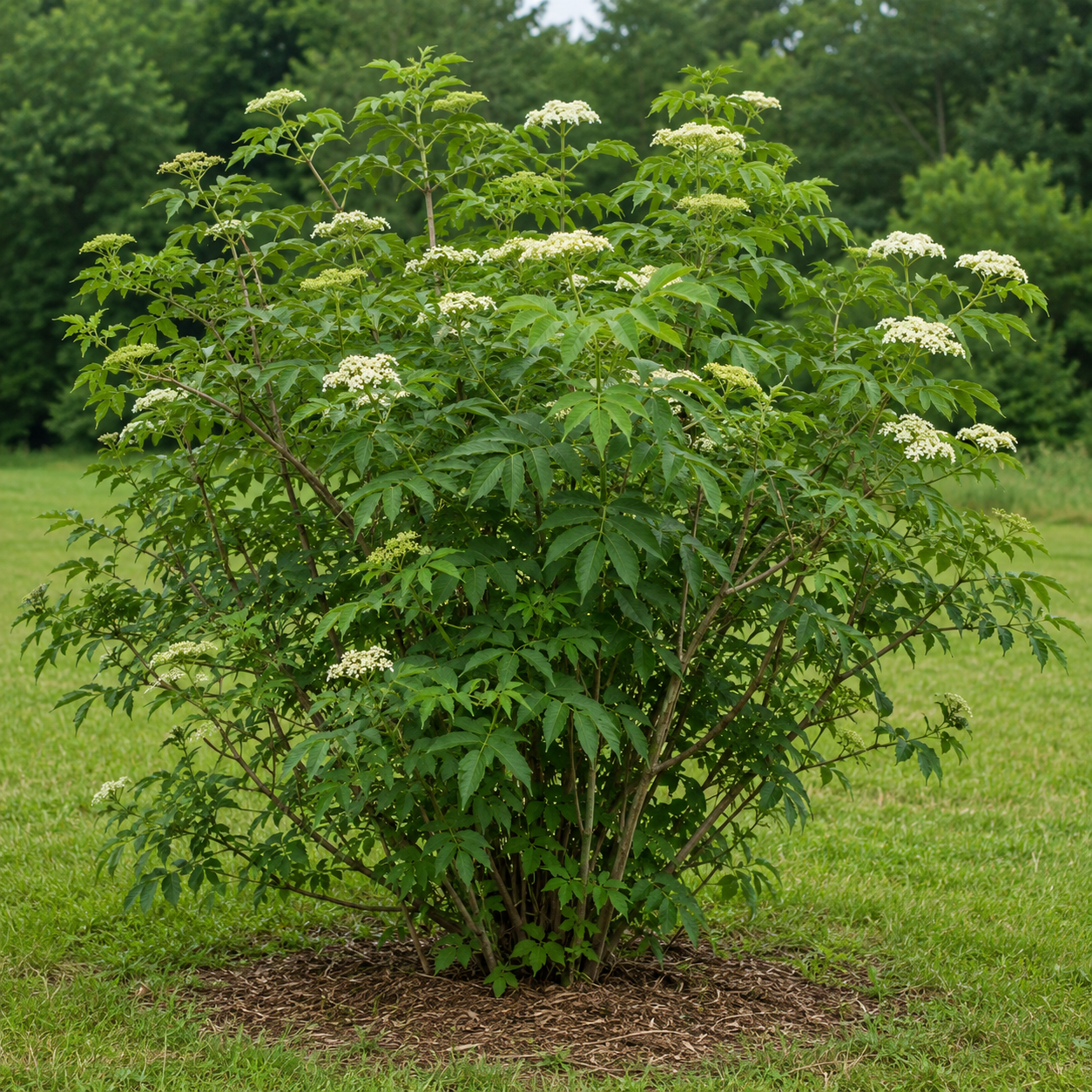
Elderberry grows as a multi-stemmed shrub or small tree with arching stems, compound leaves, flat-topped clusters of white to cream flowers, and dark purple-black berry clusters later in the season.
Leaves (mature): 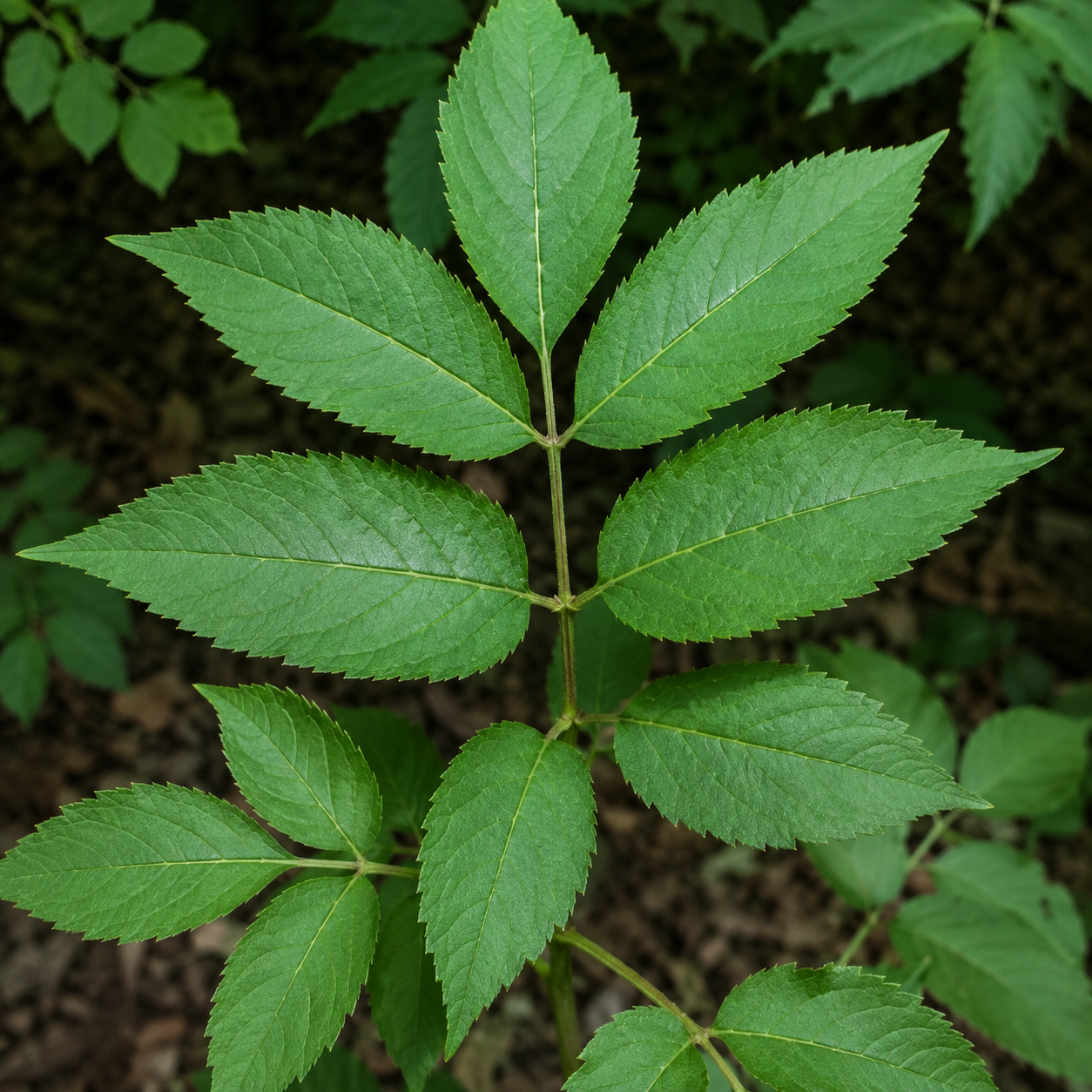
Mature leaves are compound and usually made of 5–11 leaflets arranged opposite each other along a central stem. Leaflets are green, oval to lance-shaped, sharply toothed along the edges, and pointed at the tips.
Leaves (early growth): 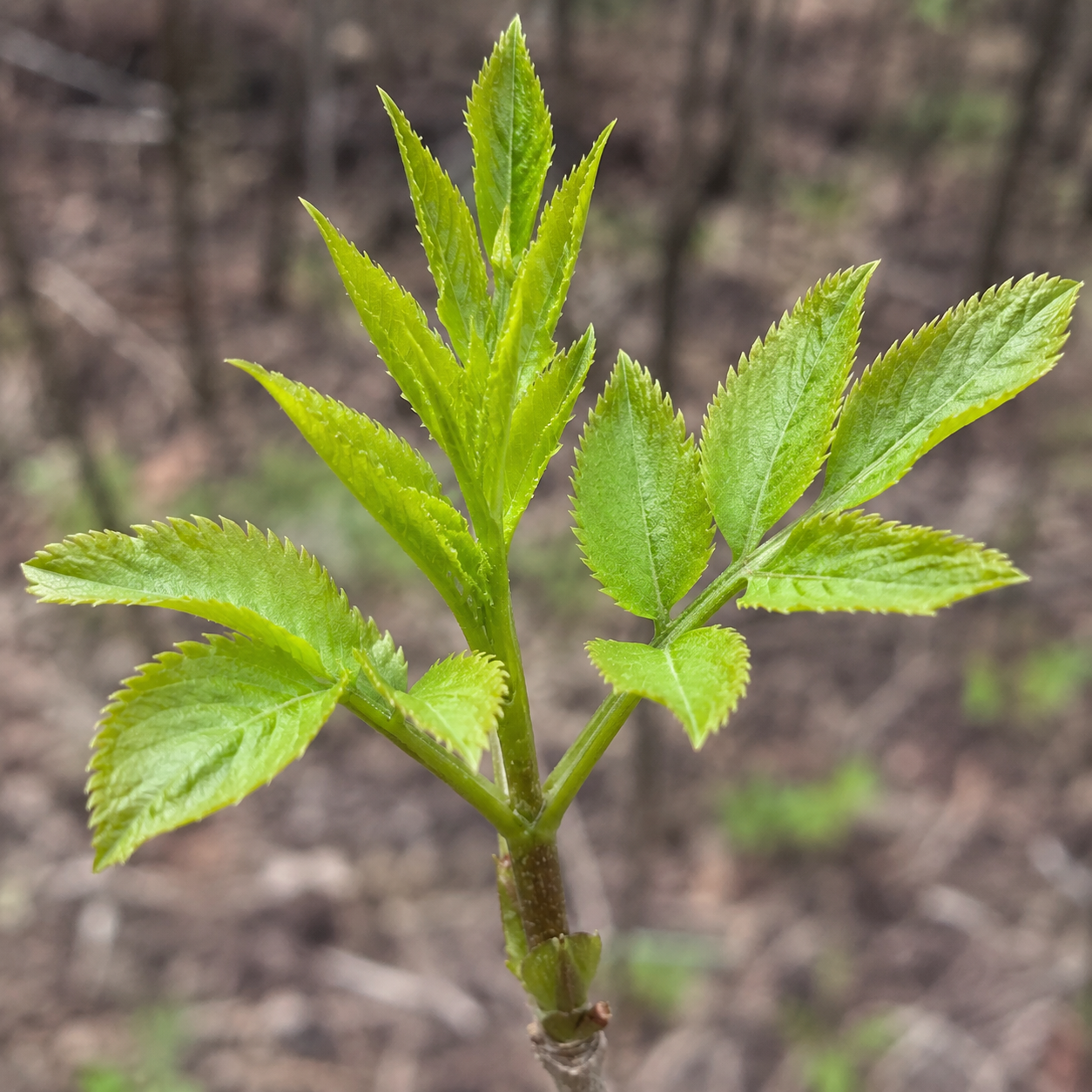
Early leaves emerge bright green and tender. Young elderberry growth may look delicate at first, but it quickly becomes vigorous once the plant is established.
Stem: 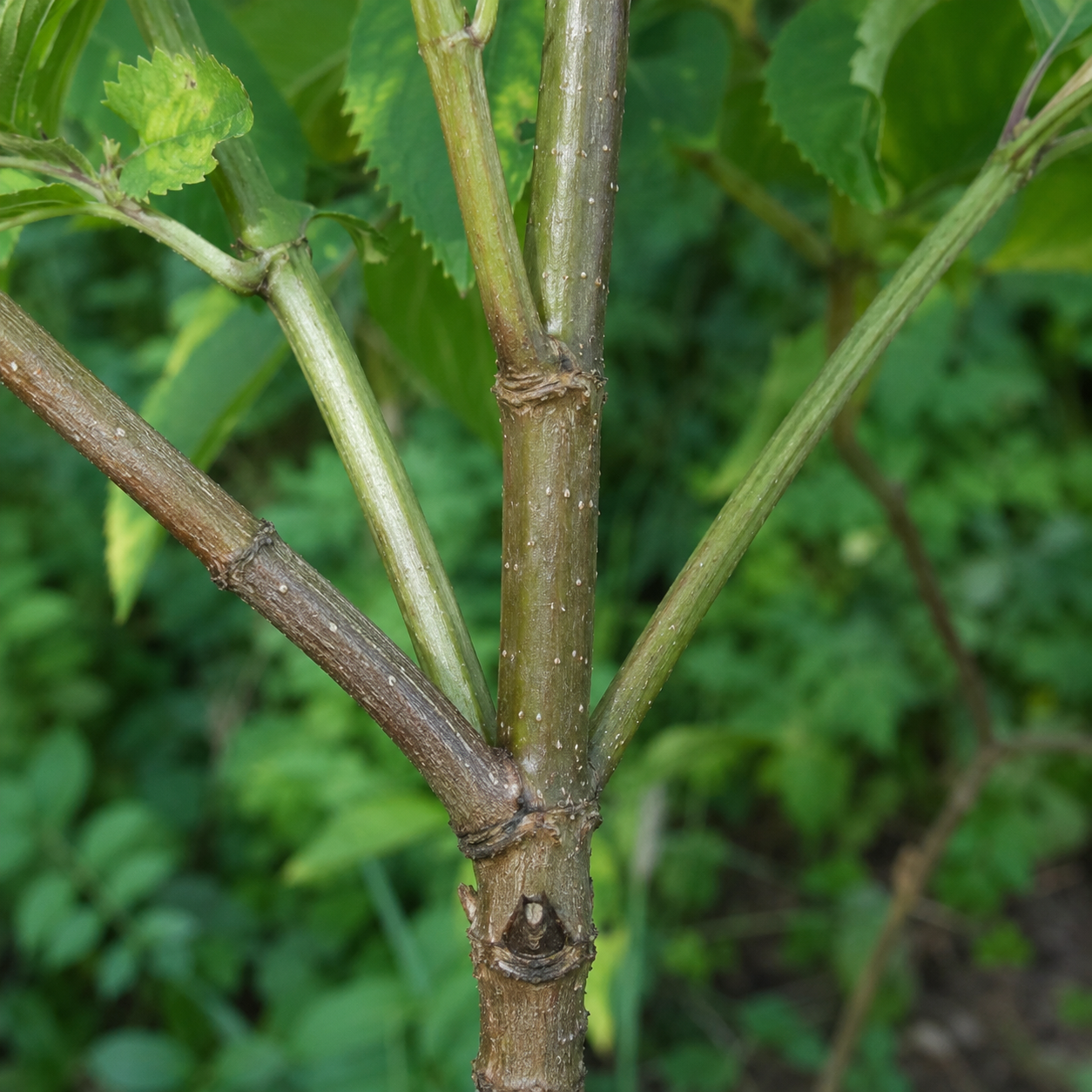
Stems are woody, branching, and somewhat hollow or pithy inside. Younger stems are green to light brown, while older stems become gray-brown and woody.
Flower (Top View): 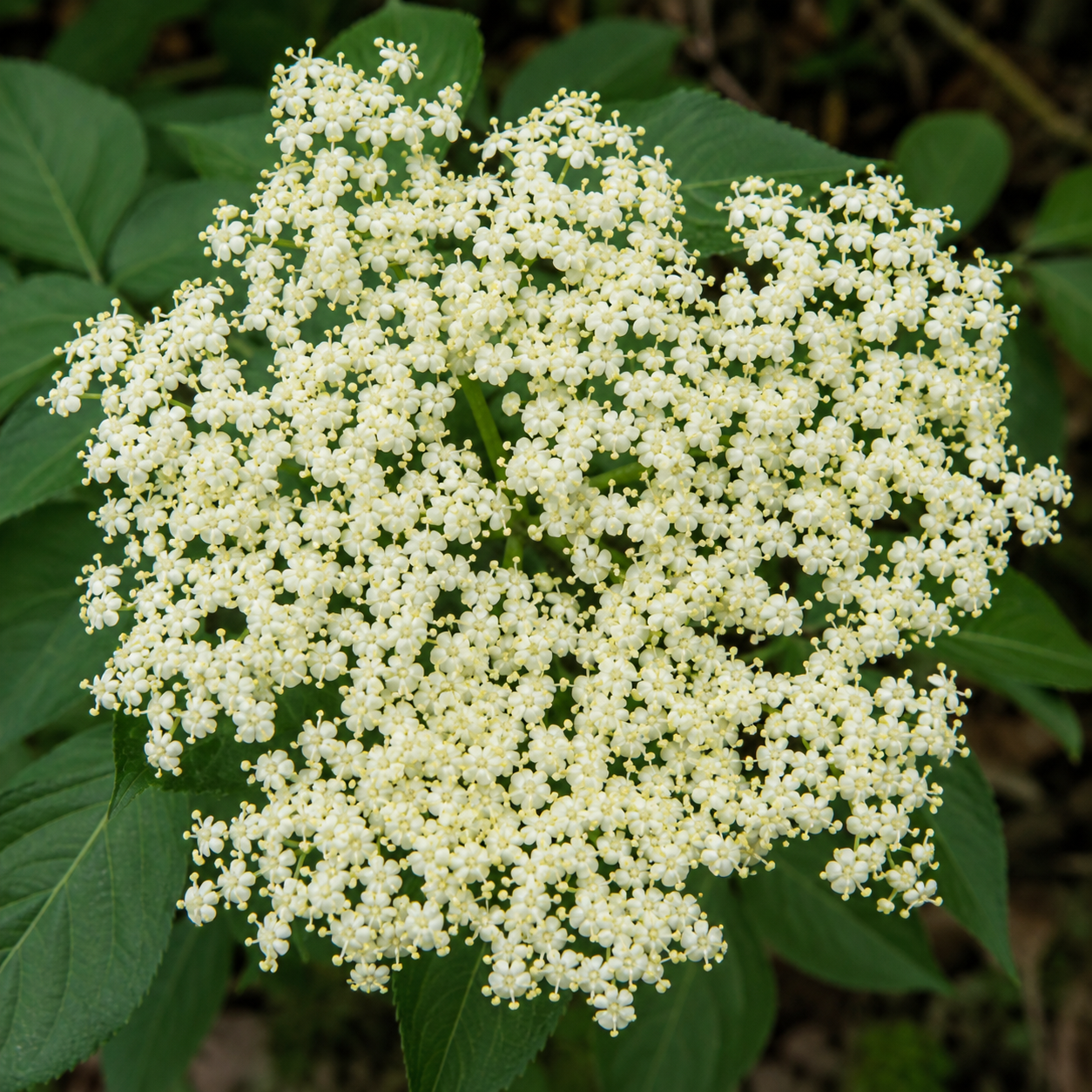
From above, elderberry flowers appear in broad, flat-topped clusters made of many tiny cream-white star-shaped blooms.
Flower (Side View): 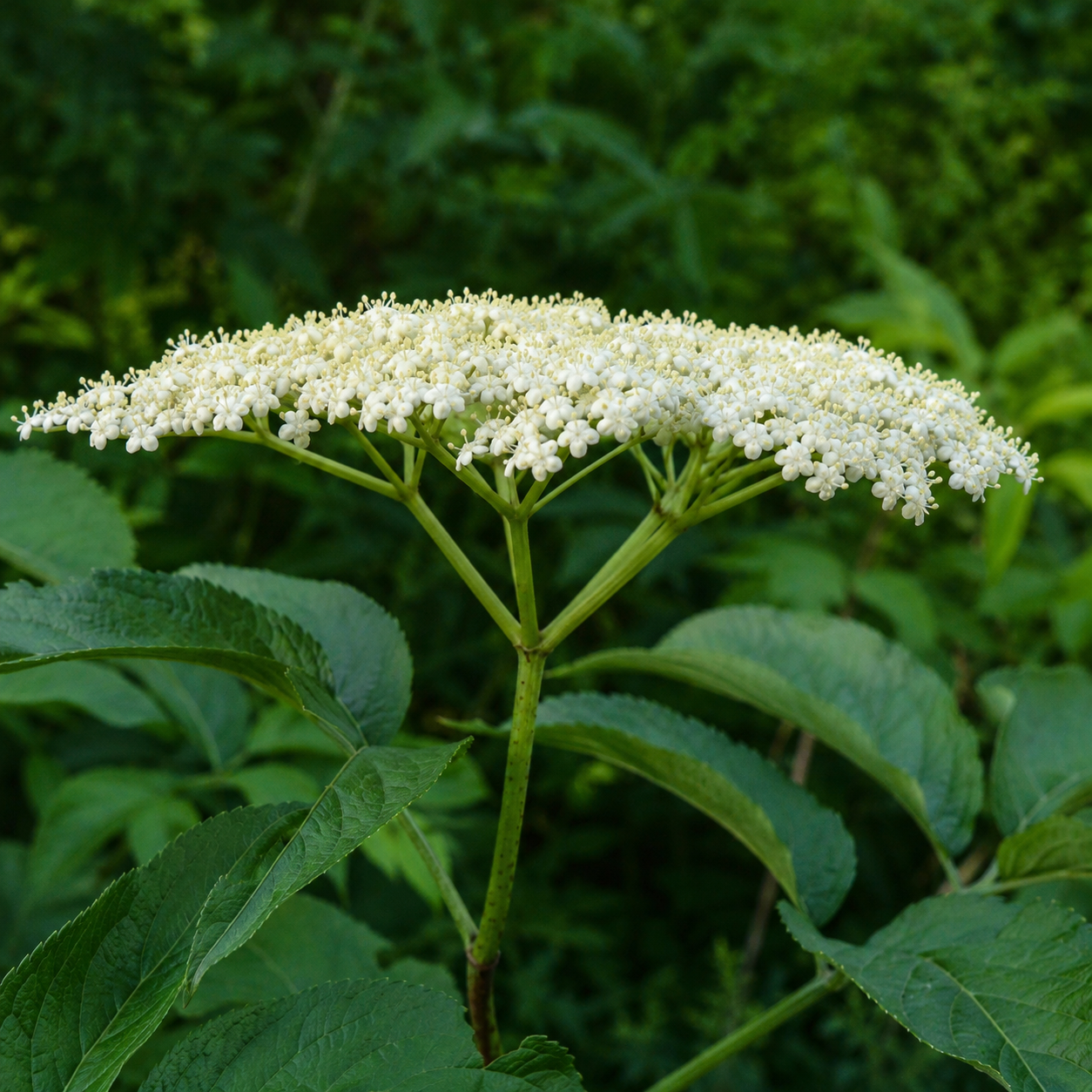
From the side, flower clusters look like shallow umbrellas or flattened domes held above the foliage on branching stems.
Flower Base (bracts):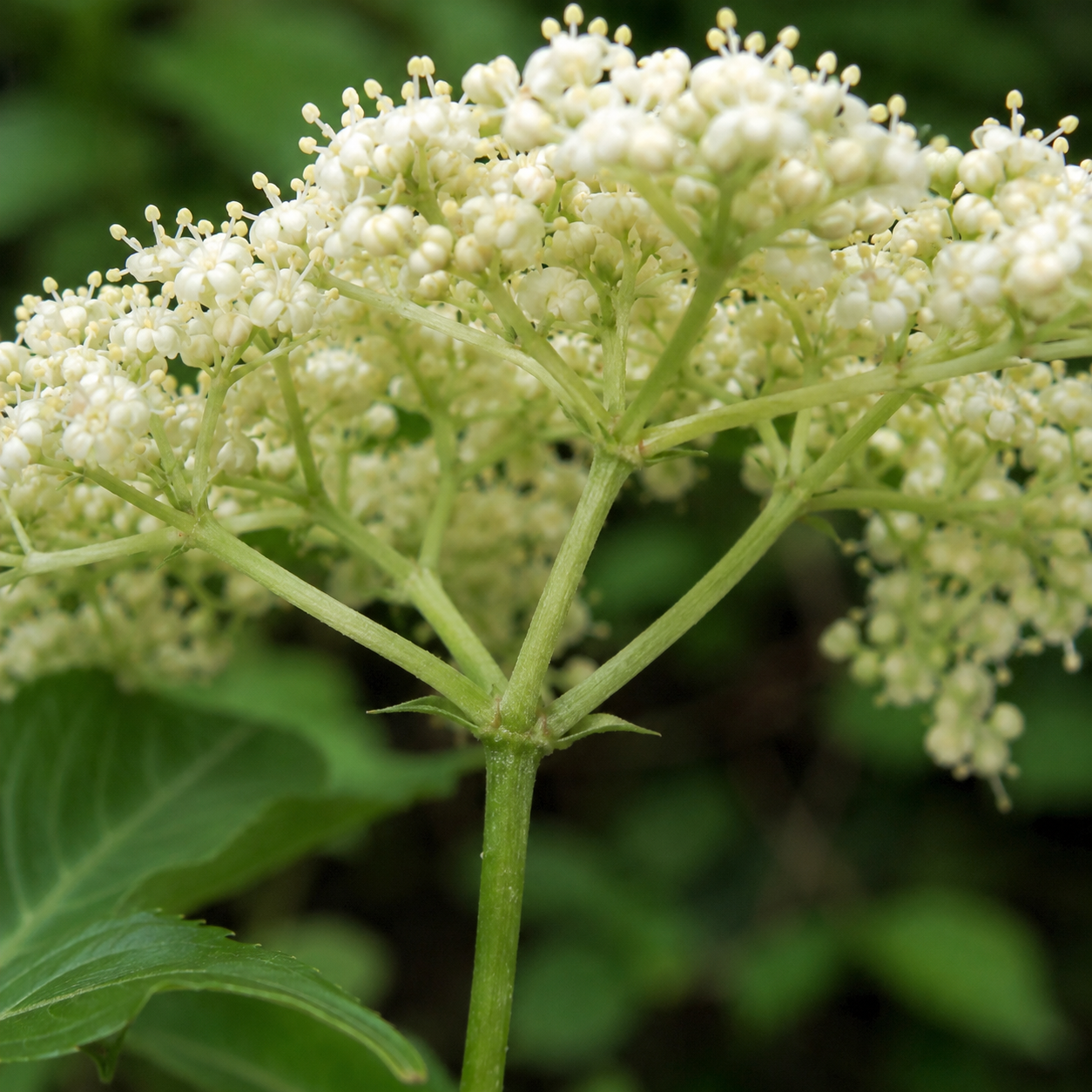
The flower cluster branches from small green stems. Individual flowers are tiny and delicate, with five small petals.
Seed Head / Seeds: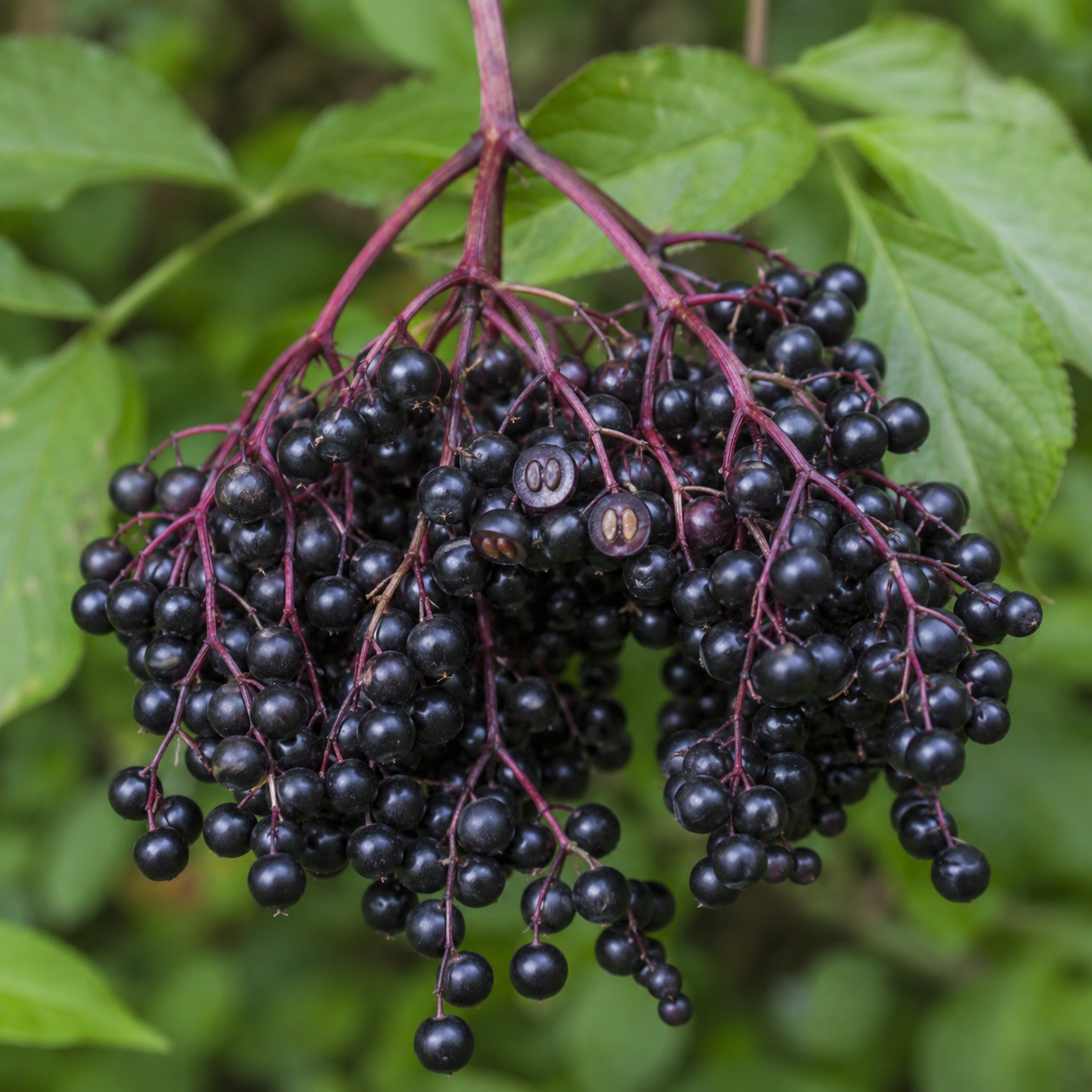
After flowering, clusters develop into small round berries. Ripe elderberries are deep purple to nearly black and hang in heavy clusters. Seeds are inside the berries.
Root: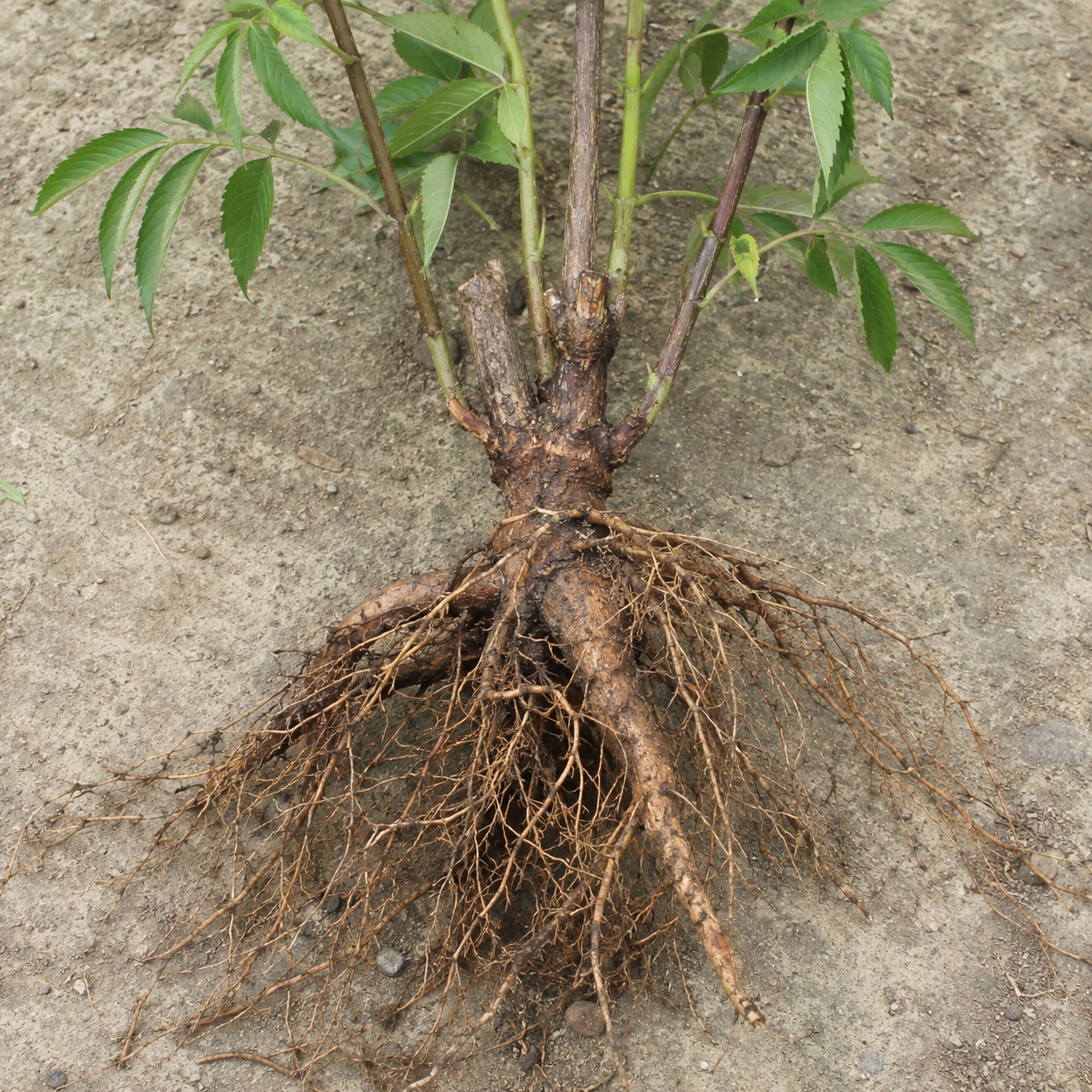
Elderberry has a spreading root system and may sucker, forming colonies over time.
| Growth Form: | Deciduous, multi-stemmed shrub or small tree |
| Typical Size: | Usually 5–12 feet tall and 6–10 feet wide, depending on variety and growing conditions. |
| Aroma/Smell: | Flowers have a sweet, musky floral scent. Leaves and stems may have a strong green or slightly unpleasant odor when crushed. |
| Where it Commonly Grows: | Moist soil, creek banks, drainage areas, ditches, field edges, woodland edges, fence lines, and disturbed areas with enough moisture. |
| Common Lookalikes: | Elderberry may be confused with pokeweed or water hemlock by beginners. Pokeweed has simple leaves, thick reddish stems, and berries along drooping racemes instead of flat elderberry clusters. Water hemlock is extremely poisonous and has umbrella-like white flower clusters, but it is herbaceous rather than woody and has very different leaves. Never forage elderberry unless identification is certain. |
| Foraging Safety Note: | Do not harvest from roadsides, sprayed areas, polluted ditches, or unknown land. Only harvest fully ripe dark berries or flowers from a positively identified elderberry plant. Do not use leaves, stems, bark, roots, or unripe berries. Never forage any plant unless you are completely certain of identification. Use multiple features, not just one. |
What It’s Used For
| Traditionally Used For: | Elderberry has traditionally been used for: – Seasonal immune support – Colds and flu-season wellness – Sore throat support – Coughs and upper respiratory discomfort – Feverish conditions – General winter wellness – Homemade syrups and oxymels – Food uses such as jelly, jam, wine, and cooked berry preparations – Elderflower has traditionally been used for: – Tea and infusions – Feverish seasonal illness – Gentle sweating support – Sinus and respiratory comfort – Skin washes and cosmetic preparations |
How It Works:
| It Works By: | Elderberry is traditionally valued because the berries contain deeply colored plant compounds, including anthocyanins, which are associated with antioxidant activity. Elderberries also contain flavonoids and other plant compounds that support their traditional use during seasonal illness. Elderflower is traditionally used as a gentle diaphoretic herb, meaning it is used to support the body’s natural sweating process during feverish seasonal illness. Elderflower is also commonly paired with yarrow and peppermint in traditional cold and flu-season teas. Elderberry is not a cure, and it should not replace medical care when symptoms are serious, worsening, or prolonged. |
How to Use It
| Tea: | Use elderflower for tea more often than elderberries. Traditional adult amount: 1–2 teaspoons dried elderflower per 8 ounces hot water. Steep covered for 10–15 minutes. Drink warm. |
| Decoction: | For dried elderberries, simmer 1 tablespoon dried berries per cup of water for 15–20 minutes, then strain well. Berries should be cooked, not simply steeped raw. |
| Tincture: | Traditionally made from ripe berries or flowers. Use according to the specific tincture recipe or product directions. Common adult traditional use is small amounts taken short-term during seasonal illness. |
| Glycerite: | Often used when an alcohol-free preparation is preferred. Follow the recipe or product directions. Elderberry glycerites are commonly made for families, but children’s use should be handled carefully and only with properly prepared products. |
| Infused Oil: | NA for berries. Elderflower may be infused into oil for cosmetic or topical preparations, but this is not the primary use. |
| Salve/Balm: | NA for elderberries. Elderflower may be included in gentle skin salves, but this is not elderberry’s main traditional use. |
| Poultice: | NA for berries. Elderflower may be used externally in traditional skin preparations, but it is not a primary poultice herb. |
| Compress/Fomentation: | Elderflower infusion may be used as a wash or compress for traditional skin-soothing use. Let the infusion cool before applying to skin. |
| Syrup: | This is one of the most common elderberry preparations. Ripe berries are simmered, strained, and combined with honey or sugar. Traditional adult use is commonly 1 tablespoon daily during seasonal wellness routines or several times daily for short periods during seasonal illness. Use properly prepared cooked syrup only. |
| Oxymel: | Elderberry oxymel combines elderberry with vinegar and honey. Traditionally used by the spoonful during cold and flu season. Use properly prepared elderberries and strain well. |
| Powder: | Dried elderberry powder may be used in capsules, teas, syrups, or recipes, but it should still be used in preparations that account for proper heating or product safety. |
| Capsule: | Use according to product directions. Choose reputable products and avoid long-term daily use unless guided by a qualified professional. |
| Fresh Use: | Do not eat fresh raw elderberries. Fresh ripe berries should be cooked before use. Do not use unripe berries, leaves, stems, bark, or roots. |
Safety & Considerations
| Avoid If: | Avoid elderberry if you are allergic to elder or related plants. Avoid internal medicinal use during pregnancy or breastfeeding unless guided by a qualified healthcare provider. Avoid use in babies and very young children unless under professional guidance. Use caution with autoimmune conditions or immune-suppressing medications. |
| Possible Side Effects: | Improperly prepared elderberry can cause nausea, vomiting, stomach cramps, and diarrhea. Raw or unripe berries and other plant parts can be toxic. Some people may experience digestive upset or allergic reactions. |
| Interactions with Pharmaceuticals, OTCs, and Other Herbs: | Use caution with immune-suppressing medications, diabetes medications, diuretics, laxatives, and medications for serious chronic conditions. People taking prescription medications should ask a qualified healthcare provider before using elderberry medicinally. |
| General Safety Note: | Elderberry is a useful traditional herb, but it is not casual snack food straight from the plant. Cook ripe berries before use. Do not use leaves, stems, bark, roots, or unripe berries. Seek medical care for high fever, breathing trouble, dehydration, chest pain, severe symptoms, symptoms in very young children, or illness that does not improve. |
Sourcing:
| Grow It: | How to Grow Elderberry |
| Forage: | Can be found in moist areas, creek banks, ditches, field edges, woodland margins, and fence lines where elderberry grows naturally. |
| Purchase: | Lowe Bridges Farm |
Additional Notes & Information:
Elderberry is one of the most useful plants to add to a homestead apothecary because it can support both herbal preparations and wildlife plantings. The flowers feed pollinators, the berries feed birds, and the shrub can become part of a useful living edge or moist-area planting.
For home use, elderberry is best treated as both a food plant and a medicinal herb. The berries are excellent for syrup, jelly, oxymel, and winter wellness preparations, but the plant must be correctly identified and properly prepared.
For more information about the use of Elderberry, please visit the NCCIH.